
Introduction
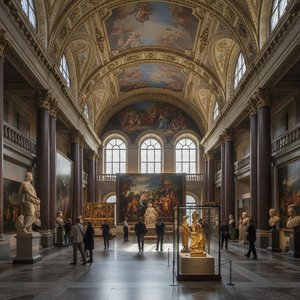
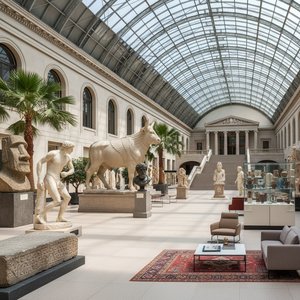
To step across the threshold of the British Museum is to leave the frantic pace of modern London behind and enter a sanctuary where time itself seems to decelerate. It is not merely a visit to a gallery; it is an odyssey through the collective memory of our species. From the moment you stand beneath the soaring, light-drenched glass canopy of the Great Court—a modern architectural marvel by Norman Foster—you are enveloped in a narrative that spans millennia, continents, and the very dawn of human consciousness.
The museum’s soul was forged from the 18th-century curiosity of Sir Hans Sloane, evolving from a private cabinet of wonders into a global repository of human achievement. Within these walls, the boundaries between eras dissolve. You might find yourself tracing the linguistic mysteries of the Rosetta Stone one moment, and contemplating the silent, stoic majesty of ancient sculptural fragments the next. These objects are more than mere artifacts; they are the survivors of fallen empires, the witnesses to religious revolutions, and the enduring echoes of artistic innovation that have traveled across oceans and centuries to reach us.
In our contemporary world, these works remain profoundly meaningful because they remind us of our shared heritage. They challenge us to grapple with complex histories of ownership, discovery, and cultural identity, yet they also offer a universal language of beauty and resilience. Whether it is the intricate precision of ancient craftsmanship or the raw emotional power of a carved deity, each piece serves as a bridge connecting the modern observer to the ancestors who first breathed life into stone, clay, and ink.
As we prepare to journey through this curated selection, we invite you to look beyond the glass cases. We have identified twenty-five of the most transformative masterpieces within the collection—works that do not just represent history, but actively shape our understanding of what it means to be human. From the monumental to the intimate, these are the treasures that define the British Museum’s incomparable legacy.
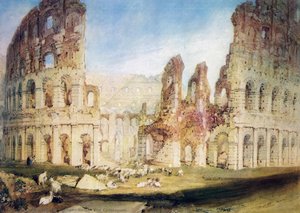
Rome: The Colosseum - Joseph Mallord William Turner
 Rome: The Colosseum - Joseph Mallord William Turner
In Rome: The Colosseum , J.M.W. Turner transcends mere architectural documentation to offer a visceral meditation on the sublime. As one of the top 25 artworks in the British Museum, London, this 1820 watercolor exemplifies the Romantic movement's shift from topographical precision toward emotional truth. Turner utilizes his signature expressive brushwork to dissolve the Roman monument into a hazy silhouette, where swirling ochre clouds and piercing shafts of light collide.
The painting’s power lies in its profound symbolism; the juxtaposition of vulnerable, grazing sheep against the decaying imperial grandeur of the Colosseum serves as a poignant reminder of nature's endurance over human ambition. This mastery of atmosphere—capturing the very breath of history—is why Turner remains an essential figure for any serious collector. For those seeking to infuse a modern space with historical depth, a high-quality oil reproduction of this piece brings a sense of timelessness and dramatic light into the home, turning a wall into a window onto the eternal struggle between light and shadow.
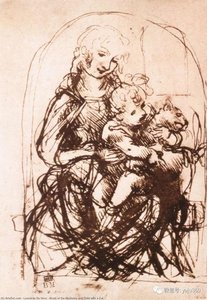
Study of the Madonna and Child with a Cat - Leonardo da Vinci
 Study of the Madonna and Child with a Cat - Leonardo da Vinci
In the Study of the Madonna and Child with a Cat , Leonardo da Vinci offers us more than a mere preparatory sketch; he presents a moment where the lines of life are not simply drawn, but choreographed . Within this delicate pen and ink work from 1478, the artist captures a dance frozen in time—the tender, rhythmic sway of maternal devotion intertwined with the playful, fluid movements of two cats weaving through the composition.
As you observe this masterpiece among the top 25 artworks in the British Museum, London, notice how Leonardo uses subtle chiaroscuro to breathe life into the shadows. The interplay of light and dark creates a profound sense of harmony, transforming a domestic scene into an intellectual exploration of anatomy and emotion. It is a work that makes chaos feel like perfect balance. Imagine if your own living room could hold that same equilibrium; what if your walls could breathe rhythm ? For those seeking to bring this Renaissance soul into their homes, our hand-painted oil reproductions capture every meticulous stroke and emotional depth of Da Vinci’s original genius.
Crucified Christ with Mary and John - Michelangelo Buonarroti
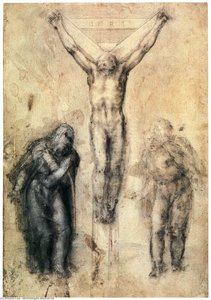 Crucified Christ with Mary and John - Michelangelo Buonarroti
In the quiet corridors of the British Museum, London, few works command the spiritual gravity of Michelangelo Buonarroti’s Crucified Christ with Mary and John . This monumental chalk drawing is far more than a religious depiction; it is a profound meditation on human vulnerability and the weight of divine sacrifice. Through masterful hatching and cross-hatching, Michelangelo breathes life into the paper, using light and shadow to sculpt figures that feel as much like marble as they do flesh.
The composition captures a moment of eternal sorrow, where the anatomical precision of the High Renaissance meets an almost palpable emotional depth. As we navigate the top 25 artworks in the British Museum, this piece stands out for its ability to bridge the gap between the 16th century and the modern viewer. Its themes of compassion and resilience resonate deeply within our contemporary era, making it a vital cultural touchstone. For those seeking to bring this level of Renaissance mastery into their own collections, our museum-quality oil reproductions capture every delicate line and dramatic tonal shift of Michelangelo’s original vision.
The Entombment - Hieronymus Bosch
 The Entombment - Hieronymus Bosch
To stand before Hieronymus Bosch’s The Entombment is to enter a realm of profound, shadowed intimacy. The air around this 1507 masterpiece feels heavy with the weight of Northern Renaissance sorrow, as the monochromatic etching pulls you into a tightly framed ritual of grief. Through meticulous lines and delicate cross-hatching, Bosch captures the stark textures of mourning—the coarse fabric of burial shrouds and the harrowing detail of the crown of thorns. There is no vibrant color to distract; instead, a somber dance of light and shadow sculpts a scene of claustrophobic emotional intensity, where every etched stroke vibrates with the anxiety of an era caught between faith and the grotesque.
While the subject matter explores the depths of mortality, the technical precision of this work offers a captivating focal point for the modern collector. The stark, graphic quality of Bosch’s linework provides a sophisticated, intellectual anchor for any curated space, inviting moments of quiet reflection and deep contemplation. Much like the legendary treasures found within the British Museum, London, bringing a high-quality reproduction of such a seminal work into your home allows you to surround yourself with the enduring power of art history's most hauntingly beautiful visions.
Study for an Annunciation (recto) - Michelangelo Buonarroti
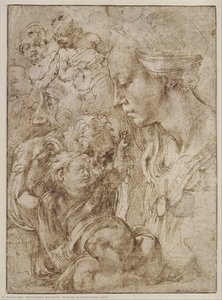 Study for an Annunciation (recto) - Michelangelo Buonarroti
In the quiet corridors of the British Museum, one encounters a moment of profound spiritual suspension within Michelangelo’s Study for an Annunciation (recto) . To gaze upon this 1547 chalk masterpiece is to witness the artist's breath held in anticipation; the central figure’s posture, caught in a delicate turn toward the celestial, radiates a vulnerability that transcends the Renaissance era. There is an incredible psychological depth in the way the light catches the contours of the man's face, mirroring our own universal search for meaning and divine connection.
The subtle interplay of shadow and soft chalk lines creates a meditative atmosphere, making this work a cornerstone among the top 25 artworks in British Museum, London . This piece does more than depict a biblical event; it captures the very essence of human receptivity. Bringing the emotional resonance of such a masterwork into your own home through a hand-painted oil reproduction can transform a personal sanctuary into a space for profound reflection and stillness, allowing Michelangelo’s timeless dialogue between the earthly and the divine to dwell within your walls.
Sitting Male Nude (recto) - Michelangelo Buonarroti
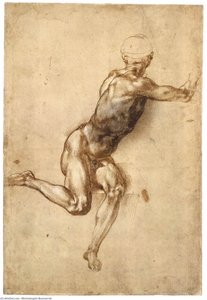 Sitting Male Nude (recto) - Michelangelo Buonarroti
To stand before the Sitting Male Nude (recto) is to witness the very pulse of the High Renaissance captured in a single, breathless moment of creation. Before your eyes, the heavy, rhythmic lines of Michelangelo’s pen breathe life into muscle and sinew, evoking the raw energy of a master at work. Created in 1504, this study was born from the intense political fervor of Florence, serving as a preparatory window into his unfinished masterpiece, The Battle of Cascina .
This drawing earns its place among the top 25 artworks in the British Museum because it transcends mere anatomical study; it is an embodiment of human potential and classical heroism. The interplay of light and shadow through meticulous hatching reveals a profound fascination with the idealized form, capturing both monumental strength and quiet vulnerability. Such timeless mastery reminds us that art is not just decoration, but a way to invite depth and intellectual prestige into our modern spaces. Bringing the spirit of Michelangelo into your home through a hand-painted oil reproduction allows this enduring sense of human dignity and sculptural beauty to grace your daily environment.
Head of a Satyr - Michelangelo Buonarroti
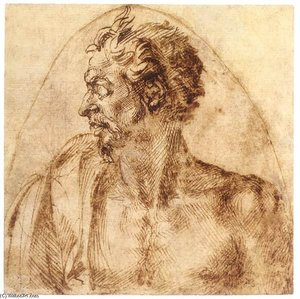 Head of a Satyr - Michelangelo Buonarroti
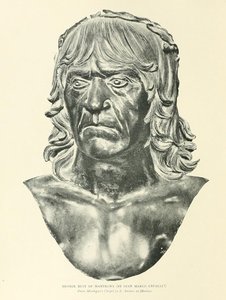
In the Head of a Satyr , the lines of Michelangelo Buonarroti are not merely drawn; they are choreographed . This 1501 masterpiece, held within the hallowed halls of the British Museum, London, is far more than a mythological study; it is a dance frozen in time . Through a sophisticated mastery of pen and ink, Michelangelo uses rhythmic hatching and deep cross-hatching to sculpt light from shadow, transforming paper into a visceral exploration of anatomical tension and psychological turmoil.
The subject—a bearded figure with an averted, brooding gaze—transcends the playful woodland spirits of folklore, offering instead a profound meditation on raw, primal emotion. As you observe the intricate textures of the weathered skin and coiled hair, you feel the weight of the Renaissance spirit. What if your own sanctuary could hold this same balance? If your walls could breathe rhythm through the presence of such monumental history, you might find that even a single, powerful line can command an entire room. For those seeking to bring this museum-grade intensity into their homes, our hand-painted oil reproductions capture every deliberate, sculptural stroke of the master.
Photograph of a drawing of Quiriguá taken by A.P. Maudslay - alfred percival maudslay
 Photograph of a drawing of Quiriguá taken by A.P. Maudslay - alfred percival maudslay
In this evocative black-and-white photograph, the lines of history are not merely captured; they are choreographed . Alfred Percival Maudslay, a pioneer of archaeological photography, presents us with more than a record of the Mayan site of Quiriguá; he offers a dance frozen in time . Through the lens of his advanced dry-plate process, we witness a moment of profound scholarly engagement where the textures of ancient stone meet the quiet presence of the explorer himself.
Maudslay stands before the towering stepped pyramids, an umbrella in hand, embodying the meticulous spirit of 19th-century scientific inquiry. The composition avoids dramatic flourish, opting instead for a grounded realism that allows the light and shadow of the Guatemalan landscape to breathe. It is a window into a vanished civilization, preserved with such clarity that one can almost feel the humid air of 1894. As you explore the top 25 artworks in the British Museum, London, this piece serves as a vital bridge between discovery and documentation. Much like a masterfully placed painting in a curated home, this image brings a sense of rhythmic history and intellectual depth to any space it inhabits.
The Lamentation of Christ (recto) - Michelangelo Buonarroti
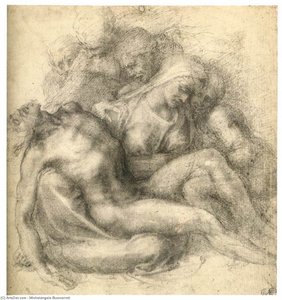 The Lamentation of Christ (recto) - Michelangelo Buonarroti
In the quiet, monochromatic depths of The Lamentation of Christ (recto) , Michelangelo Buonarroti captures a moment of profound, eternal sorrow that transcends the boundaries of ink and paper. As one of the most significant works within the British Museum's collection in London, this drawing serves as a raw, visceral window into the soul of the High Renaissance master. Though executed in stark black and white, the composition breathes with an intense, sculptural energy; the interplay of light and shadow carves anatomical precision out of the void, evoking the same monumental gravity found in his marble Pietà .
The figures emerge from the darkness with a tragic grace, their forms heavy with the weight of grief and divine sacrifice. This piece is immortalized among the top 25 artworks because it reveals the artist's ability to translate complex human emotion into pure, rhythmic line. For the modern collector, such a masterpiece offers more than historical insight; its profound sense of balance and dramatic chiaroscuro provides a sophisticated focal point that brings a contemplative, museum-grade elegance to any contemporary space.
Antique Warrior - Leonardo da Vinci
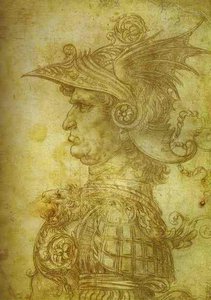 Antique Warrior - Leonardo da Vinci
In the quiet corridors of the British Museum, London, one encounters a figure that seems to pulse with a latent, rhythmic energy: Leonardo da Vinci’s Antique Warrior . This 1472 masterpiece is far more than a mere portrait; its lines are not simply drawn, they are choreographed . The warrior stands in a state of controlled readiness, his hand gripping a sword with a tension that feels like a dance frozen in time. Through the early application of sfumato , Leonardo softens the edges of the horned helmet, allowing light and shadow to merge into a hazy, atmospheric mystery.
As you observe the meticulous glazes and the lifelike intensity of the face, you realize this work is a precursor to the Renaissance's greatest psychological depths. It possesses a structural harmony that commands attention, making the chaos of history feel balanced and profound. Imagine if your own living room could hold that same equilibrium—where your walls do not just decorate, but breathe rhythm . For those seeking to bring this era of genius into their homes, our museum-quality oil reproductions capture every subtle brushstroke and historical soul of this iconic piece.
The Sixth Month (Right) - Utagawa Kuniyoshi
 The Sixth Month (Right) - Utagawa Kuniyoshi
In Utagawa Kuniyoshi's 1849 masterpiece, The Sixth Month (Right) , the composition achieves a breathtaking structural harmony that exemplifies why this piece remains a cornerstone of the British Museum’s collection. The artwork is anchored by a sophisticated geometric balance; the central figure, draped in rich autumnal silks, creates a vertical axis that stabilizes the surrounding movement of attendants and seasonal elements. Kuniyoshi utilizes soft, radiating lines from lanterns and the organic silhouettes of fall foliage to frame the subject, guiding the eye through a meticulously layered landscape of light and shadow.
This internal equilibrium possesses a striking resonance with modern minimalist design, where the intentional use of negative space and focused subjects creates a sense of profound stillness. The way Kuniyoshi balances the weight of the pumpkin and ceremonial offerings against the delicate textures of the ukiyo-e style offers a timeless perfection that transcends its Edo-period origins. For collectors seeking to ground a contemporary interior, this print provides an elegant bridge between historical narrative and a clean, sophisticated aesthetic, making it a standout among the top artworks in London.
Profile of a warrior in helmet - Leonardo da Vinci
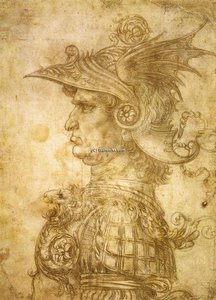 Profile of a warrior in helmet - Leonardo da Vinci
In the quiet corners of the British Museum, Leonardo da Vinci’s Profile of a Warrior in Helmet (c. 1472) offers a profound moment of stillness. This silverpoint study is not merely a portrait; it is a dance of precision frozen in time. The lines are not simply drawn; they are choreographed with an anatomical rigor that reveals the young Da Vinci’s burgeoning obsession with the mechanics of life and protection. As the silver stylus glides across the prepared surface, it captures the metallic sheen of the visor and the subtle, human vulnerability hidden beneath the steel.
The composition possesses a rhythmic balance, where the delicate presence of a bird and intricate decorative flourishes harmonize with the heavy, martial subject matter. It is a masterclass in how light and shadow can transform a military study into a meditation on identity. For those seeking to bring this same sense of Renaissance equilibrium into their own environments, our museum-quality oil reproductions allow you to capture the tactile depth and soulful precision of Da Vinci’s early genius, turning any modern wall into a space that breathes history.
Small Passion: 6. Christ's Entry into Jerusalem - Albrecht Dürer
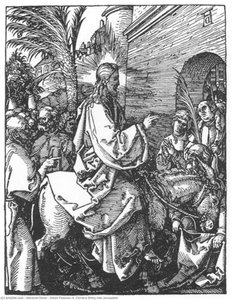 Small Passion: 6. Christ's Entry into Jerusalem - Albrecht Dürer
While many view the woodcut as a mere medium for mass distribution, Albrecht Dürer utilized it to achieve a level of sculptural depth that rivaled the finest engravings. In his 1511 masterpiece, Small Passion: 6. Christ's Entry into Jerusalem , the German Renaissance master performs a feat of technical alchemy. Through the rigorous application of cross-hatching , Dürer carves light directly into the paper, creating a symphony of velvety blacks and brilliant whites that animate the bustling Jerusalem crowd.
The composition is a marvel of Northern Renaissance precision; every line serves to guide the eye from the humble donkey toward the solemnity of Christ’s expression. This work stands as one of the most significant pieces among the top 25 artworks in the British Museum, London, because it captures the intersection of divine narrative and human movement. The same meticulous focus and disciplined energy required to execute such intricate linework can serve as a profound inspiration for a modern study or home office, fostering an environment of deep concentration and intellectual sophistication.
Pattern from the Series of Six Knots 3 - Albrecht Dürer
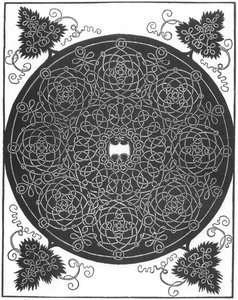 Pattern from the Series of Six Knots 3 - Albrecht Dürer
To witness Albrecht Dürer’s Pattern from the Series of Six Knots 3 is to observe a master performing a feat of mathematical alchemy. While many recognize Dürer for his profound religious imagery, this 1505 woodcut reveals a different facet of his genius: the ability to translate the rigid laws of geometry into a breathing, rhythmic dance of ink. The artist had to meticulously carve away every sliver of white space from a dense woodblock, leaving only the raised ridges that would capture the black pigment. This grueling process creates an intricate web of interlocking loops and continuous lines that seem to defy the physical limitations of the medium.
The composition is anchored by a monumental central circle, symbolizing eternal unity, while the stark monochromatic contrast forces the viewer to confront the pure architecture of the design. There is a profound, meditative order found within this complexity—a sense of structured harmony that transcends time. Much like the focused discipline required for such precision, bringing a high-quality reproduction of this masterpiece into a modern study or home office can foster an atmosphere of intellectual clarity and sophisticated productivity.
King David Playin a Psaltery - Fra Angelico
 King David Playin a Psaltery - Fra Angelico
To encounter Fra Angelico’s King David Playing a Psaltery within the British Museum is to witness a serene meditation on Renaissance piety. This masterpiece, dating to 1430, transcends mere illustration; it is a spiritual dialogue captured in ink and grace. The figure of David sits in contemplative repose, his gaze lifted toward the divine, while his hands cradle the psaltery—a symbol of musical praise and celestial communion. Angelico, a Dominican friar, imbues the work with a luminous, quiet prestige, using meticulous detail in the royal embroidery to ground the spiritual subject in a tangible, opulent reality.
Owning a piece of this caliber is not merely a purchase; it is an inheritance of a lineage of taste. While the original resides in London, the soul of this Florentine devotion can be brought into your own sanctuary. At ArtsDot.com, our artisans meticulously recreate this work as a handmade oil reproduction on cotton canvas. By capturing every delicate stroke and the profound, earthy tones of the original, we allow you to hang a piece of history upon your walls, ensuring the master's spiritual essence remains palpable for generations.
Mosaic of a Double-headed Serpent - aztec empire
 Mosaic of a Double-headed Serpent - aztec empire
To encounter the Mosaic of a Double-headed Serpent by the Aztec Empire is to witness a profound convergence of divinity and craftsmanship. As one wanders through the halls of the British Museum, London, this masterpiece emerges as a vibrant echo of a civilization that saw the sacred in every texture. Created around 1521, the mosaic utilizes meticulous tesserae—tiny tiles of turquoise and stone—to form a sinuous, undulating body that seems to pulse with life. The palette is a mesmerizing dance of deep blues and cool teals, punctuated by sudden, fiery flashes of red and orange upon the serpent's heads.
This work stands among the top 25 artworks in the British Museum because it embodies the Aztec concept of duality: the balance between opposing cosmic forces. The tactile surface, with its rhythmic, overlapping scales, invites a sensory connection to the era of Quetzalcoatl. Today, such an extraordinary display of symbolic power continues to transform modern spaces, offering a timeless window into the soul of Mesoamerican antiquity and reminding us that true art transcends the boundaries of time.
Christian II of Denmark - Albrecht Dürer
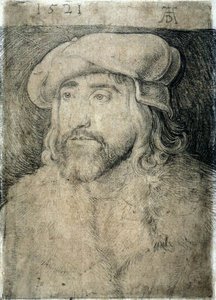 Christian II of Denmark - Albrecht Dürer
In Albrecht Dürer’s 1521 portrait of Christian II of Denmark , the master of the German Renaissance employs a profound command of light to sculpt the very essence of sovereignty. The illumination does not merely rest upon the surface; it emerges from a sophisticated interplay of light and shadow, where a soft, directional glow catches the intricate textures of royal velvet and the metallic sheen of gold embellishments. This careful use of chiaroscuro creates a dramatic tension, casting deep, velvety shadows that seem to hold the weight of the King’s political anxieties, while highlighting the meticulous detail of his facial features with an almost tactile realism.
This masterful manipulation of light is precisely why this work remains one of the top 25 artworks in the British Museum, London. The way Dürer captures the subtle glint in the subject's gaze and the atmospheric depth of the background offers a sense of quiet prestige that transcends centuries. When brought into a modern interior as a high-quality oil reproduction, this dramatic play of light and shadow adds an incomparable layer of luxury and intellectual depth to any wall, inviting viewers to lose themselves in the luminous history of the Renaissance.
Studies of grotesque heads - Michelangelo Buonarroti
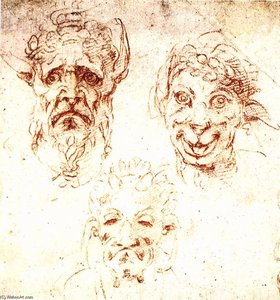 Studies of grotesque heads - Michelangelo Buonarroti
To encounter the Studies of grotesque heads by Michelangelo Buonarroti is to witness the raw, unmasked psyche of a Renaissance titan. This work stands as a profound entry among the top 25 artworks in the British Museum, London, offering a rare glimpse into the master's experimental spirit during the transition into Mannerism. Through the delicate yet powerful medium of chalk on paper, Michelangelo transcends mere anatomical study to explore the extremes of human emotion—from furrowed, displeased brows to haunting, distorted grins.
The interplay of light and shadow captured in these sketches possesses a visceral intensity that continues to captivate the modern eye. For the discerning collector or lover of classical history, such works represent the pinnacle of intellectual depth and technical mastery. The dramatic tension found in these grotesque forms provides a sophisticated focal point for refined interiors, where the legacy of the High Renaissance meets contemporary aesthetic elegance. It is not merely a drawing; it is a profound meditation on the complexity of the human soul, preserved for eternity.
Scene from Shakespeare's Winter's Tale - John Opie
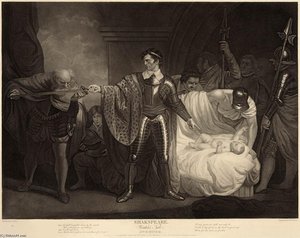 Scene from Shakespeare's Winter's Tale - John Opie
In the quiet shadows of the British Museum, Scene from Shakespeare's Winter's Tale by John Opie exists as a frozen moment of theatrical tension, where the weight of Shakespearean tragedy meets the precision of Enlightenment artistry. This engraving is immortalized among the top 25 artworks in the British Museum because it transcends mere illustration; it captures the very pulse of human conflict and reconciliation. Through masterful etching, Opie breathes life into the interplay of light and dark, using sharp lines to render the cold glint of armor and the soft, urgent gesture of a hand pleading for mercy.
The composition draws the viewer into a regal, somber court, where the textures of heavy fabrics and metallic weaponry evoke a palpable sense of historical grandeur. For the modern collector, such a piece offers more than historical insight; its dramatic chiaroscuro and classical poise bring a sophisticated, intellectual depth to any contemporary interior. It serves as a profound reminder that even in our fast-paced world, the timeless echoes of drama, authority, and emotion remain eternally resonant.
Small Passion: 2. Expulsion from the Paradise - Albrecht Dürer
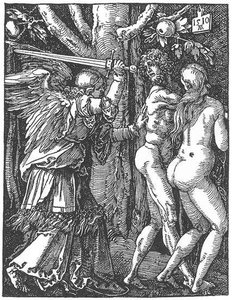 Small Passion: 2. Expulsion from the Paradise - Albrecht Dürer
In the hallowed halls of the British Museum, Albrecht Dürer’s Small Passion: 2. Expulsion from Paradise stands as a profound meditation on the fragility of innocence. As a cornerstone of the Northern Renaissance, this 1510 woodcut transcends mere biblical illustration; it is a masterclass in the tension between divine justice and human fallibility. Dürer utilizes a breathtakingly precise linework to sculpt light and shadow from nothingness, creating a monochromatic drama where every etched groove tells a story of loss.
The composition’s dynamic diagonals—the angel’s forceful descent and Adam’s retreating shame—capture a moment of eternal consequence that still resonates with the human psyche today. This work earns its place among the top 25 artworks in the British Museum through its unparalleled technical mastery and its ability to evoke deep, visceral empathy. For the discerning collector, the essence of Dürer’s precision offers a timeless inspiration; much like a carefully curated home, this print reminds us that true beauty often lies in the intricate details of our most complex narratives.
Death and the Landsknecht - Albrecht Dürer
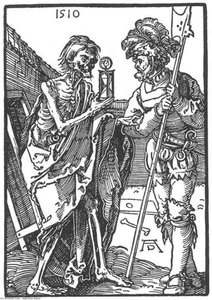 Death and the Landsknecht - Albrecht Dürer
To stand before Albrecht Dürer’s Death and the Landsknecht is to confront the chilling, inescapable heartbeat of mortality. There is a profound, unsettling tension in this woodcut; it captures that universal moment of realization when we recognize that time, much like the sand in the hourglass held by the skeletal figure, is relentlessly slipping away. The stark, monochrome intensity of Dürer’s linework creates a landscape of shadows where the opulent, defiant glory of the warrior meets the cold, impartial reality of the grave.
This work earns its place among the top 25 artworks in the British Museum through its unparalleled technical mastery and its ability to evoke deep existential dread centuries after its creation. Dürer’s intricate cross-hatching breathes life into bone and fabric alike, making the ephemeral feel permanent. At ArtsDot.com, we believe such powerful emotions should not be confined to museum walls. Our master artists recreate this very texture—the sharp, dramatic shadows and heavy, expressive strokes—on 100% cotton canvas, allowing you to bring this profound meditation on human existence into your own private collection through a faithful, hand-painted oil reproduction.
The Plum-Pudding in Danger - james gillray
 The Plum-Pudding in Danger - james gillray
In James Gillray’s 1805 masterpiece, The Plum-Pudding in Danger , the composition achieves a striking structural harmony that anchors its place among the top 25 artworks in the British Museum, London. The visual weight is masterfully distributed around the central axis of the dining table, where the heavy, circular form of the plum pudding acts as a gravitational center. Gillray utilizes strong diagonal lines—the angle of the knife and the leaning postures of the two gentlemen—to direct the viewer’s gaze inward, creating a closed loop of intense, focused energy. This geometric balance creates a sense of timeless perfection, capturing a fleeting moment of Regency conviviality with permanent stability.
Interestingly, this internal equilibrium mirrors the principles of modern minimalist design; the way Gillray strips away peripheral chaos to focus on essential shapes and light allows the work to ground a clean, contemporary aesthetic in any collection. For those looking to bring this historical depth into a modern home, our hand-painted oil reproductions capture every satirical nuance and textural detail of Gillray’s original etching, offering a sophisticated narrative piece for the discerning decorator.
Solicitudo Rustica (Country Concerns) - Pieter Bruegel the Elder
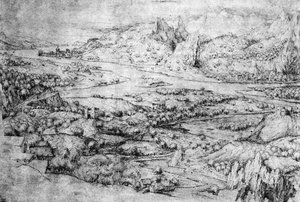 Solicitudo Rustica (Country Concerns) - Pieter Bruegel the Elder
To gaze upon Pieter Bruegel the Elder’s Solicitudo Rustica is to feel the sudden chill of an approaching storm over the Brabant countryside. In this masterful pen-and-ink work, the atmosphere is thick with a palpable, quiet tension; the fine hatching and cross-hatching create a world of textured shadows and rugged terrain, where every line whispers of the toil required to survive. Bruegel does not offer an idealized pastoral dream, but rather a profound meditation on human vulnerability amidst the vast, indifferent majesty of nature.
The composition utilizes a breathtaking atmospheric perspective, pulling the viewer’s eye past winding rivers and laboring figures toward distant, hazy mountains that seem to dissolve into the grey sky. It is a scene of deep contemplation, capturing the very essence of "country concerns"—the anxieties of harvest and weather. Bringing such a piece into a modern home offers more than mere decoration; it introduces a sense of historical weight and scholarly depth. Whether through a museum-quality oil reproduction or a detailed print, the somber, monochrome elegance of Bruegel’s vision can anchor a room, inspiring a space for quiet reflection and a connection to the enduring resilience of the human spirit.
Laughing Peasant Woman - Albrecht Dürer
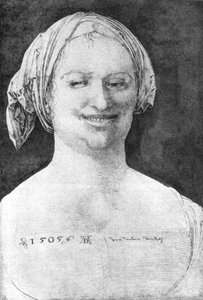 Laughing Peasant Woman - Albrecht Dürer
In the 1505 masterpiece “Laughing Peasant Woman” by Albrecht Dürer, structural harmony meets raw human emotion. The composition is a masterclass in organic geometry; the gentle tilt of the subject's head creates a dynamic diagonal that breaks the stillness of the frame, while the intricate web of hatching and cross-hatching builds a sense of three-dimensional volume. This meticulous use of line creates a balanced, rhythmic texture that guides the eye across the weathered contours of her face, finding a perfect equilibrium between the chaotic energy of laughter and the disciplined precision of Renaissance technique.
This internal balance offers a profound connection to modern minimalist design, where the power of a single, well-placed element can ground an entire space. Much like a contemporary monochrome print, Dürer’s use of sepia tones and graphic linework provides a sophisticated anchor for clean, modern interiors. As one of the most captivating works within the British Museum, London , this piece transcends its era, offering collectors a way to infuse a contemporary home with the soulful, unpretentious grace of the Northern Renaissance.
Landscape with a Goatherd - claude lorrain (claude gellée)
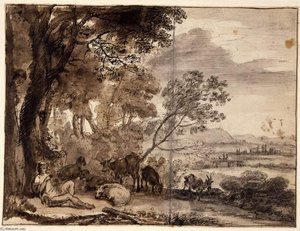 Landscape with a Goatherd - claude lorrain (claude gellée)
In the quietude of Landscape with a Goatherd , created in 1637, Claude Lorrain invites us into a realm where time suspends its forward march. As one of the most evocative works within the British Museum’s collection, this masterpiece captures the very essence of the Baroque era's fascination with the Arcadian ideal —a vision of a harmonious paradise where humanity and nature exist in perfect equilibrium. The canvas unfolds as a pastoral symphony, where dappled light filters through textured foliage to illuminate a solitary goatherd tending his flock amidst lush, verdant expanses.
Lorrain’s technical brilliance lies in his unparalleled manipulation of luminosity, creating a sense of depth that feels almost tactile. For the modern collector or interior designer, this painting offers more than historical significance; its serene atmosphere and classical beauty provide a timeless focal point for sophisticated interiors. Whether through a large-scale oil reproduction or a curated print, bringing this window into the Roman countryside into a home allows one to infuse a living space with profound tranquility and an eternal sense of peace.
Conclusion
As the light fades over the Great Court and the echoes of footsteps retreat from the galleries, we are left with a profound realization: these masterpieces are far more than mere relics of a bygone era or silent inhabitants of a London institution. They are living presences, breathing through every textured brushstroke and vibrant pigment. To stand before them—or to hold their essence within one's own home—is to participate in a timeless conversation that spans centuries, bridging the gap between the ancient soul of the artist and the modern heart of the admirer.
Each work we have explored serves as a vessel for human emotion, carrying the weight of history and the lightness of inspiration into our contemporary lives. Whether it is the quiet dignity of a classical portrait or the sweeping narrative of a historical landscape, these works possess a unique power to shape our interiors and stir our creativity, transforming a simple room into a sanctuary of reflection. They remind us that while civilizations may rise and fall, the impulse to capture beauty and truth remains unshakeable.
We invite you to continue this journey of discovery and bring a piece of this eternal dialogue into your personal space. You may explore our full collection to find the masterpiece that speaks most deeply to your own story, ensuring that the profound legacy of the British Museum continues to inspire generations to come.