
Introduction
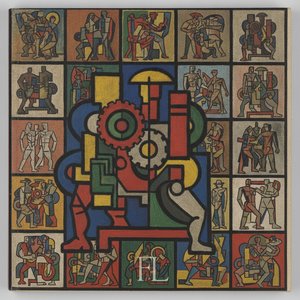
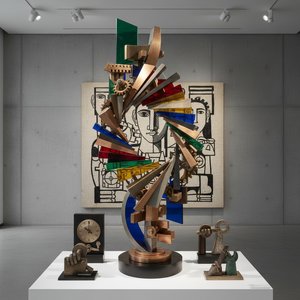
To step into the world of Fernand Léger is to witness the rhythmic pulse of the modern age captured in pigment and form. As you wander through this curated selection of his top twenty-five masterpieces, you are not merely observing paintings; you are entering a vibrant, mechanical ballet where the boundaries between humanity and industry begin to dissolve. There is a profound, muscular energy in his work—a sense that every cylinder, every bold stripe of primary color, and every metallic sheen vibrates with the heartbeat of the twentieth century.
Born in the pastoral landscapes of Normandy, Léger underwent a radical transformation as he moved into the industrial heart of Paris. He did not look away from the smoke, the steel, and the gears of the machine age; instead, he embraced them. Through his unique development of 'Tubism' , he taught us to find beauty in the structural solidity of our changing world. His canvases serve as a historical bridge, connecting the traditional weight of classical composition with the frenetic, fragmented dynamism of the avant-garde movements like Cubism and the Section d'Or.
These works remain deeply resonant today because they capture a universal truth about our relationship with progress. In an era where we are increasingly surrounded by digital interfaces and sleek automation, Léger’s celebration of tangible, geometric, and functional forms feels strikingly contemporary. He reminds us that even within the rigid lines of a machine, there is room for poetry, color, and human spirit.
In the following pages, we will guide you through a chronological and thematic journey across his most significant achievements. From his early structural experiments to his monumental, colorful celebrations of urban life, each piece in this list offers a window into a vision that redefined what it means to be modern. Prepare to encounter the strength, the light, and the enduring legacy of a true master of form.
The City - Fernand Léger
 The City - Fernand Léger
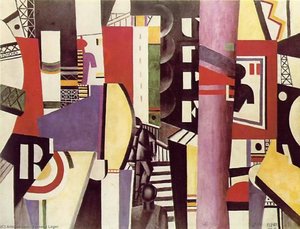
Owning The City by Fernand Léger is not merely a purchase; it is an inheritance of the machine age. As one of the most profound entries in our collection of the top 25 artworks of Fernand Léger , this 1919 masterpiece serves as a rhythmic, pulsating monument to modernity. Léger deconstructs the urban landscape into a vibrant dance of cylinders and bold geometric planes, utilizing his signature Tubist aesthetic to celebrate the industrial pulse of the post-war era.
The canvas vibrates with intense color blocks and interlocking shapes that evoke both the structural energy of a metropolis and the underlying tension of a changing world. To hang such a work is to invite a lineage of sophisticated taste into your home, where the mechanical beauty of the 20th century meets contemporary elegance. For those seeking to bring this museum-grade vision to their own space, our hand-painted oil reproductions capture every essential brushstroke and structural nuance, ensuring that Léger’s monumental urban vision remains a living, breathing part of your personal gallery.
Three Women - Fernand Léger
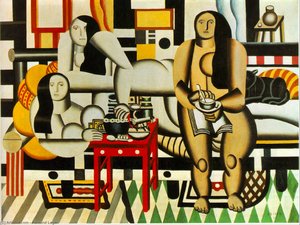 Three Women - Fernand Léger
In 1921, Fernand Léger gifted the world Three Women , a breathtaking intersection where the fractured geometry of Cubism meets the sleek, rhythmic elegance of Art Deco. As you stand before this composition, you are not merely observing a domestic scene; you are witnessing the pulse of a new era. The three figures, arranged in a harmonious triangular formation, exist within a world of bold primary colors and striking black outlines that celebrate the mechanical vitality of the early 20th century.
Léger transforms the mundane—a chair, a book, a moment of repose—into a dynamic architectural event. The heavy, tubular forms and flattened planes create a visual rhythm that feels both monumental and intimate. To possess a reproduction of this masterpiece is to invite the spirit of modernism into your own sanctuary, turning a simple wall into a gallery of the soul . Whether through a textured oil painting that captures every deliberate brushstroke or a high-quality print, Three Women serves as a profound transformation for any sophisticated interior.
Nudes in the Forest - Fernand Léger
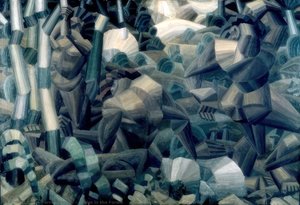 Nudes in the Forest - Fernand Léger
Before the world recognized him as a master of the machine age, Fernand Léger was a young artist wrestling with the very foundations of sight. In 1910, during the creation of Nudes in the Forest , he began to move away from the soft shadows of tradition toward a radical, structural truth. This work serves as a breathtaking manifesto of his early experimentation, where the human form is no longer a delicate subject of beauty, but a series of interlocking, cylindrical volumes. By deconstructing figures into what critics famously termed "Tubism," Léger achieved a monumental conceptual leap: he proved that even the most organic subjects could be reimagined through the lens of geometric strength.
The painting’s cool palette of blues, greys, and whites creates a contemplative, almost architectural atmosphere. As you observe the fragmented planes and the tension between flesh and foliage, you feel the same intellectual rigor that defined the Cubist revolution. Bringing such a profound piece into your personal space—perhaps as a hand-painted oil reproduction on your study wall—invites that same spirit of structural clarity and disciplined focus, fostering an environment of sophisticated productivity and modern elegance.
Walking Flower (La fleur qui marche) - Fernand Léger
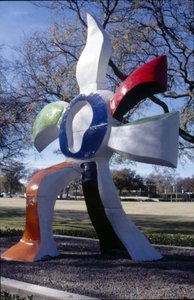 Walking Flower (La fleur qui marche) - Fernand Léger
In the pantheon of Fernand Léger’s greatest achievements, Walking Flower (La fleur qui marche) stands as a vibrant, sculptural symphony that defies the boundaries between the organic and the industrial. Completed in 1952, this ceramic masterpiece captures the artist at his most optimistic, reconciling the delicate resilience of nature with the rhythmic pulse of the machine age. Léger masterfully juxtaposes the soft, curving petals of a floral form against an angularity reminiscent of modern machinery, utilizing a breathtaking palette of primary reds, greens, and blues.
To possess a reproduction of such a work is to invite a transformative energy into your home; it is not merely decor, but a celebration of life’s enduring vitality amidst technological progress. As you observe the interplay of light on its textured surfaces, you are witnessing Léger's profound philosophical quest for harmony. For those seeking to curate a gallery of the soul, this piece offers a window into a world where beauty and industry dance in perfect, colorful unison.
Dance - Fernand Léger
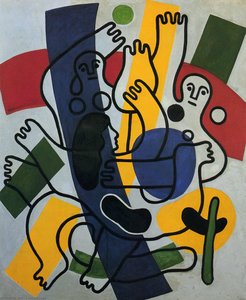 Dance - Fernand Léger
While the world was fractured by the shadows of 1942, Fernand Léger was busy constructing a sanctuary of rhythm through Dance . It is a profound historical paradox: at the height of World War II, amidst global chaos, Léger utilized his signature Constructivist aesthetics to forge a vision of unyielding vitality. This masterpiece stands as a cornerstone in the top 25 artworks of Fernand Léger because it transcends mere movement; it is a pulsating symphony where deep blues and striking reds collide with geometric precision.
The technical genius of this work lies in its ability to reimagine the human form through the lens of the machine age, using flattened planes and bold, primary colors to create a sense of structural strength. The figures do not merely move; they exist as rhythmic components within a larger, mechanical harmony. For the modern professional, bringing a reproduction of Dance into a home office or study provides more than just decor; it introduces an atmosphere of disciplined energy and resilient focus, serving as a timeless visual anchor for a space dedicated to creativity and strength.
Smokers - Fernand Léger
 Smokers - Fernand Léger
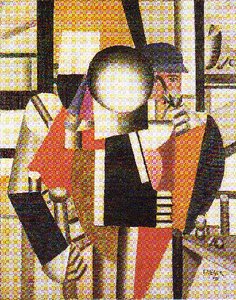
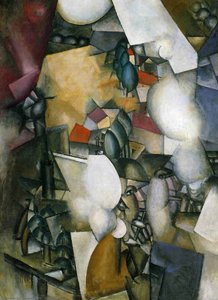
In the pantheon of the top 25 artworks of Fernand Léger, Smokers (1912) stands as a monumental bridge between traditional portraiture and the fractured, mechanical pulse of the twentieth century. This masterpiece captures a moment of quiet social ritual—the shared act of smoking—yet reimagines it through a radical Cubist lens. Rather than soft human silhouettes, Léger presents an architecture of cylinders, cones, and intersecting planes , where the figures and scattered birds dissolve into a rhythmic dance of geometry.
The painting’s placement in this essential collection is earned through its visceral energy; the bold primary palette and thick, impasto brushstrokes evoke the very spirit of the industrial age. It challenges our perception of beauty, finding harmony in the rigid and the mechanical. For the discerning collector or interior designer, a hand-painted oil reproduction of Smokers offers more than mere decoration; it introduces a commanding, avant-garde focal point that invites a timeless conversation between historical innovation and modern architectural elegance.
Plungers II - Fernand Léger
 Plungers II - Fernand Léger
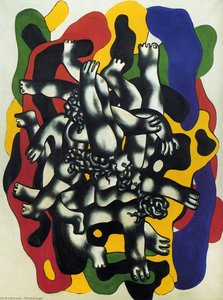
Created in 1942, while the shadows of the Second World War loomed heavily over Europe, Plungers II stands as a defiant, rhythmic response to a world fractured by conflict. In this masterpiece, Fernand Léger achieves a profound conceptual leap, moving beyond his signature 'Tubism' to explore a fragmented identity. He presents a group of figures whose bodies are deconstructed into angular, mechanical shapes, yet they retain a hauntingly human presence through recognizable limbs and vibrant, pulsating energy.
The technical genius of this work lies in Léger’s sculptural approach to the canvas; his use of thick, tactile impasto and a bold palette of primary yellows, deep reds, and striking blues creates a visual symphony that feels forged in an industrial foundry. This interplay of heavy contours and energetic color makes it one of the most vital entries in the top 25 artworks of Fernand Léger. For the discerning collector, bringing such a powerful, structured composition into a modern home office or study can inspire a sense of disciplined creativity and sophisticated, rhythmic vitality.
Trouville - Fernand Léger
 Trouville - Fernand Léger
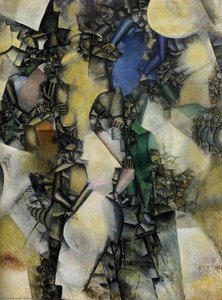
To encounter Trouville by Fernand Léger is to witness the precise moment where the serenity of a coastal landscape meets the rhythmic pulse of the machine age. As one of the most significant works within the top 25 artworks of Fernand Léger, this 1911 masterpiece serves as a profound laboratory for his early Cubist explorations. The composition deconstructs the seaside architecture into a vibrant interplay of yellow and blue planes, where the windows and facades become geometric puzzles of light and shadow.
Léger’s genius lies in his ability to infuse a static cityscape with an almost mechanical vitality, using overlapping forms to suggest the movement of people and the passage of time—symbolized by the prominent clock. For the discerning collector, this piece offers more than historical importance; its bold, structural aesthetic provides a sophisticated anchor for modern luxury interiors, bridging the gap between classical depth and contemporary abstraction. Owning a reproduction of such a pivotal work allows one to bring the transformative energy of the early 20th-century avant-garde into the private sanctuary of the home.
Still life - Fernand Léger
 Still life - Fernand Léger
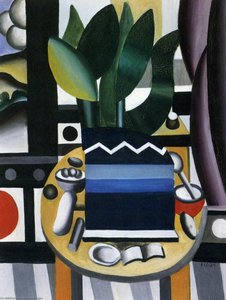
In Still Life by Fernand Léger, the interplay of light does not merely illuminate; it constructs. Rather than the soft, atmospheric glow of Impressionism, Léger utilizes a sharp, rhythmic light that strikes his geometric forms with the precision of a spotlight on a stage. This controlled illumination defines the edges of the blue and white vase and the scattered bowls, creating a profound sense of sculptural weight. The way light catches the metallic sheen of the spoon and the crisp planes of the vessels creates a dramatic chiaroscuro that was revolutionary for 1922, securing this work's place among the top 25 artworks of Fernand Léger .
This masterful command of shadow and brilliance transforms a simple tabletop into a symphony of industrial grace. When captured in a handmade oil reproduction , the visible brushstrokes and deep tonal range bring this energetic atmosphere to life, offering a sophisticated anchor for any modern interior. A faithful reproduction of such light-drenched geometry adds an unmistakable layer of luxury and intellectual depth to a contemporary wall, inviting the viewer to rediscover the dawn of the machine age.
Study for, The Creation Of The Earth - Fernand Léger
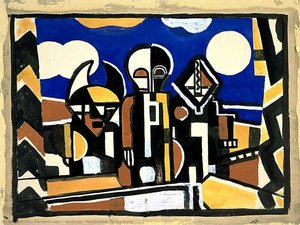
To encounter Study for The Creation of the Earth by Fernand Léger is to witness the very moment the industrial pulse of the twentieth century was captured on canvas. As one of the most profound entries in our collection of the top 25 artworks of Fernand Léger, this 1924 masterpiece serves as a breathtaking bridge between the structural rigor of Cubism and the rhythmic energy of Tubism.
Léger orchestrates a mesmerizing cityscape where monumental, geometric structures—reminiscent of simplified cubes and cylinders—dominate the visual field. Amidst these architectural titans, subtle symbols emerge: a soaring bird representing aspiration, a delicate vase, and a clock that anchors the composition in time. The palette, rich with muted reds and warm yellows, breathes life into the cold precision of the machine age, offering a sense of hope amidst industrial rigidity. For the discerning collector, this work is more than a historical document; its bold, rhythmic planes and sophisticated interplay of form make it an unparalleled statement piece for modern luxury interiors, embodying a timeless aesthetic of strength and progress.
Untitled - Fernand Léger
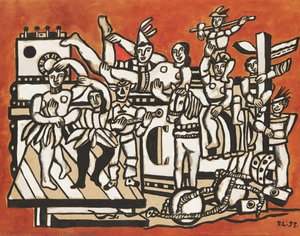 Untitled - Fernand Léger
A rhythmic dance of color and human connection, Untitled by Fernand Léger captures the vibrant pulse of social vitality. In this masterpiece, Léger transcends mere portraiture to create a symphony of geometric energy, where thirteen figures coalesce into a lively tableau of shared experience. The presence of guitars, drums, and even a solitary umbrella punctuates the composition, weaving a narrative of spontaneous joy and communal harmony.
This work earns its place among the top 25 artworks of Fernand Léger through its masterful integration of his signature 'Tubism' with a profound sense of human warmth. It serves as a bridge between the mechanical precision of the machine age and the organic spontaneity of life, making it an irreplaceable pillar of modern visual culture. The painting’s bold, contrasting colors and dynamic arrangement offer a timeless aesthetic that breathes life into contemporary spaces.
At ArtsDot.com, we believe in democratizing such profound beauty. You can bring this transformative presence into your own home or office through our hand-painted oil reproductions , meticulously crafted to preserve every vigorous brushstroke and luminous tone of Léger’s original vision.
Machine elements - Fernand Léger
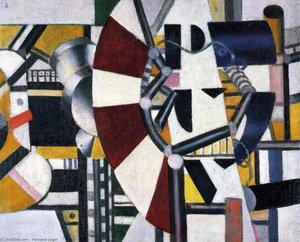 Machine elements - Fernand Léger
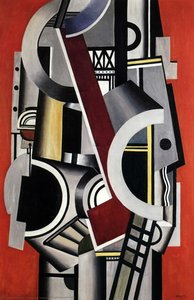
In 1920, Fernand Léger unveiled Machine Elements , a work that functions less like a painting and more like a rhythmic, percussive heartbeat of the industrial age. As you stand before this masterpiece, you are not merely observing shapes; you are caught in a swirling vortex of progress. The composition is anchored by a commanding wheel, its surface vibrating with striking red and white stripes that pull the eye into a dance of mechanical motion. Léger masterfully deconstructs the familiar—a clock, a chair, various cogs—reassembling them into a Cubist symphony where metal feels tactile and steel possesses a pulse.
To possess a hand-painted reproduction of Machine Elements by Fernand Léger is not simply a purchase; it is an inheritance of the avant-garde spirit. It is a lineage of taste that brings the energy of the machine age into the quiet prestige of your home. Through our meticulous six-step oil painting process, we capture every bold plane and structural edge, allowing you to host this legendary fragment of modern history on your own walls.
The Mona Lisa with keys - Fernand Léger
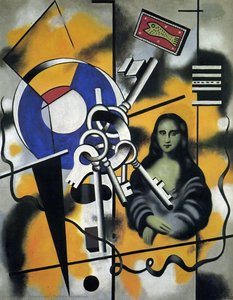 The Mona Lisa with keys - Fernand Léger
To encounter the Mona Lisa with keys by Fernand Léger is to witness a daring act of artistic alchemy. In this 1953 masterpiece, Léger performs a profound deconstruction of Leonardo da Vinci’s Renaissance icon, stripping away the soft, mysterious sfumato to reveal the rhythmic, mechanical pulse of the twentieth century. As one of the most striking entries in our collection of the top 25 artworks of Fernand Léger, this piece serves as an audacious collision between classical grace and industrial energy.
Léger utilizes a fractured perspective, replacing soft edges with a constellation of intersecting planes and bold, angular lines characteristic of his unique style. The serene gaze of the Florentine lady remains an emotional anchor amidst a sea of metallic keys, fish, and clocks that drift through the composition like fragments of a dream. For the discerning collector, this painting offers a sophisticated tension; its vibrant, structural geometry provides a provocative focal point that transforms any contemporary space into a dialogue between history and the machine age.
Staircase 19 - Fernand Léger
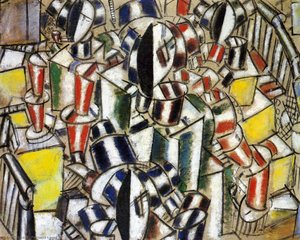 Staircase 19 - Fernand Léger
In Staircase 19 , Fernand Léger invites us into a rhythmic, fragmented world where the mundane becomes monumental. There is a captivating, structural energy in how he deconstructs a simple stairwell, transforming everyday objects—scattered cups, bottles, and a solitary clock—into a dynamic dance of geometric precision. As you gaze upon this 1914 masterpiece, you feel the pulse of the machine age through its sharp edges and overlapping planes, reflecting the profound transition from Proto-Cubism to a fully realized Cubist vision.
The painting offers more than just visual complexity; it provides a window into the organized chaos of modern life. The way light interacts with these fractured forms creates a sense of architectural depth that can transform any room into a space of intellectual stimulation and structured calm. For collectors seeking the top 25 artworks of Fernand Léger , this piece serves as an essential cornerstone. Bringing a high-quality, hand-painted oil reproduction of this work into your home allows you to surround yourself with the bold, tubular textures and avant-garde spirit that defined a century of modern art.
Acrobats polychrome - Fernand Léger
 Acrobats polychrome - Fernand Léger
In the rhythmic pulse of Fernand Léger’s 1951 masterpiece, Acrobats polychrome , we encounter a world where human intimacy and mechanical precision perform a breathtaking duet. As you stand before this canvas, the vibrant, saturated reds of the central figures draw you into an embrace that feels both sculptural and profoundly tender. Léger utilizes his signature "Tubist" technique, transforming the acrobats into monumental, cylindrical forms that possess the strength of industrial components yet retain a pulsing, organic warmth.
The composition is a visual symphony; scattered chairs and the silhouette of a horse hint at the circus ring, but the true subject is the structural rhythm of connection. There is a gaze in Acrobats polychrome that follows you—not with judgment, but with an understanding of life's fleeting, energetic beauty. It acts as a mirror to our own dynamism. To possess a hand-painted oil reproduction of this work is to invite that very vitality into your home, reminding you that even in the most structured forms, there is a soul waiting to be seen.
Sacred Heart of Audincourt - Fernand Léger
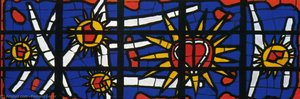 Sacred Heart of Audincourt - Fernand Léger
In the hallowed Saint-Joseph Chapel in Audincourt, Fernand Léger’s Sacred Heart of Audincourt (1951) performs a miracle of light and geometry. To witness this work is to realize that Léger did not merely design stained glass; he composed a visual sonata where light acts as the primary instrument. As a master of the machine age, Léger brings his signature Tubist sensibility to this sacred commission, replacing ethereal softness with a robust, structural divinity. The composition is anchored by a magnificent sunburst—a core of fiery oranges and brilliant yellows that radiates outward, transforming the chapel into a living, breathing entity.
The surrounding arrangement of geometric squares and circles, rendered in earthy ochres and muted greys, provides a grounded architectural weight that contrasts beautifully with the weightless, luminous rays. This interplay of heavy form and radiant light is why this piece remains one of the top 25 artworks of Fernand Léger. It is a profound lesson in balance, inviting the viewer to experience a moment where the industrial and the divine converge. For those seeking to bring this same transformative energy into their own space, our museum-quality oil reproductions capture the vibrant, light-drenched essence of Léger’s monumental vision.
Mechanical compositions - Fernand Léger
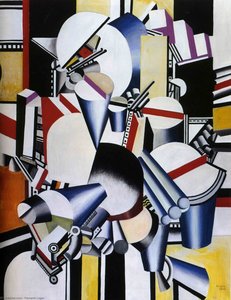 Mechanical compositions - Fernand Léger
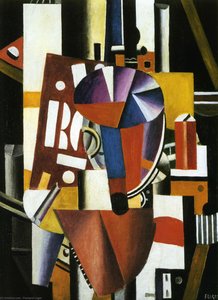
While many remember Fernand Léger for his vibrant depictions of urban life, Mechanical Compositions (1923) reveals a more profound, quiet obsession: the belief that a simple spoon or chair could possess the same rhythmic dignity as a locomotive. In this masterpiece, Léger achieves a monumental conceptual leap, transcending traditional Cubism to bridge the gap between domestic intimacy and industrial power. He meticulously arranges everyday utensils—a cup, bowl, and cutlery—within a structural framework of bold, geometric volumes that pulse with the energy of the machine age.
The technical brilliance lies in his ability to use thick, expressive brushstrokes and a palette of earthy tones punctuated by striking primaries to create a sense of palpable weight. This work is not merely an arrangement of objects; it is a rhythmic symphony of form and function. For the modern collector, possessing such a pivotal piece from the top 25 artworks of Fernand Léger offers more than aesthetic beauty. The disciplined, structural harmony found in this composition provides an intellectually stimulating and focused atmosphere, making it an unparalleled centerpiece for a sophisticated home office or a professional study dedicated to clarity and progress.
String Constructors - Fernand Léger
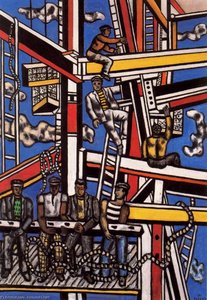 String Constructors - Fernand Léger
While many view the industrial era through a lens of cold steel, Fernand Léger saw a rhythmic dance of light and geometry. In String Constructors , completed in 1923, Léger achieves a profound conceptual leap by transforming a construction site into a symphony of movement. He does not merely paint workers; he deconstructs the very essence of labor into a vibrant arrangement of cylinders and fractured planes. The canvas vibrates with a predominantly blue palette, punctuated by urgent flashes of red and yellow that mirror the pulse of a modernizing world.
The technical genius lies in his ability to use thick, almost sculptural brushstrokes to imbue these geometric forms with a sense of weight and permanence. This masterpiece stands as one of the top 25 artworks of Fernand Léger because it captures the tension between human collaboration and mechanical precision. For the discerning collector, displaying such a dynamic work in a modern home office or study provides an atmosphere of disciplined creativity and structural sophistication, reminding all who view it of the beauty found in organized progress.
Divers on a Yellow Background - Fernand Léger
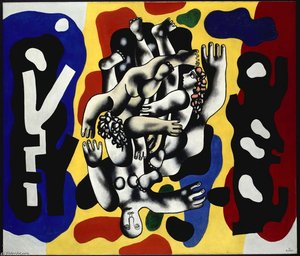 Divers on a Yellow Background - Fernand Léger
To encounter Divers on a Yellow Background is to witness a dance frozen in time. In this masterful entry within our collection of the top 25 artworks of Fernand Léger, the lines are not merely drawn; they are choreographed . The figures do not simply sit or stand; they move through a geometric arrangement that transforms a social gathering into a rhythmic, mechanical ballet. Léger utilizes his signature 'Tubist' vocabulary—cylinders and bold planes—to weave human anatomy into the very fabric of the industrial age.
The composition is anchored by an arresting, luminous yellow field that acts as an emotional amplifier, bathing the assembly in an electric, optimistic glow. This vibrant backdrop creates a striking dialogue between the organic curves of the subjects and the sharp, decisive edges of modern design. As you contemplate this piece, consider how its structured energy could transform your own environment. What if your walls could breathe rhythm ? For those seeking to bring this sense of sophisticated harmony into a home, our museum-quality, hand-painted oil reproductions capture every essential brushstroke and tonal depth of Léger’s visionary spirit.
Discs - Fernand Léger
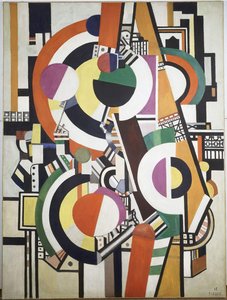 Discs - Fernand Léger
What if I told you that Discs by Fernand Léger was born from a moment of profound rhythmic rebellion—a stroke of defiance against the chaotic aftermath of the Great War? This masterpiece does not merely sit on a canvas; it pulses with the mechanical heartbeat of a new era. As one of the most significant works in our collection of the top 25 artworks of Fernand Léger, Discs redefined beauty by finding it within the precision of geometry and the vibrant energy of the machine age.
The composition is a symphony of overlapping circles, triangles, and rectangles that dance across the surface in a bold, Constructivist arrangement. Through thick, textured impasto, Léger captures the very essence of industrial dynamism, turning cold, mechanical shapes into a warm, harmonious visual language. To possess a hand-painted reproduction of this work is to invite that same sense of structured optimism into your own environment. Whether placed in a modern office or a refined personal sanctuary, this painting serves as a powerful statement: that even in an age of steel and gears, there is an enduring, soulful harmony to be found.
Leisures on red bottom - Fernand Léger
 Leisures on red bottom - Fernand Léger
In Leisures on red bottom by Fernand Léger, the commanding, saturated crimson of the ground serves as a pulse for the entire composition, instilling an immediate sense of warmth and post-war vitality. This bold use of color, paired with the stark black outlines characteristic of his Naïve Art style, is precisely why this work stands among the top 25 artworks of Fernand Léger . The palette does not merely decorate; it vibrates, transforming a simple gathering of figures and bicycles into a rhythmic celebration of modern life and social joy.
For the discerning collector, integrating such a masterpiece into a contemporary interior offers a profound way to curate emotional lighting. The painting’s energetic red tones can act as a focal point in a dining room, providing a sense of conviviality and warmth that stimulates conversation. Whether you are seeking a hand-painted oil reproduction to anchor a large-scale wall or a textured piece to complement modern architectural lines, Léger's mastery of primary hues brings an unmistakable spirit of optimism and structural elegance to any sophisticated living space.
Composition with aloe No. 3 - Fernand Léger
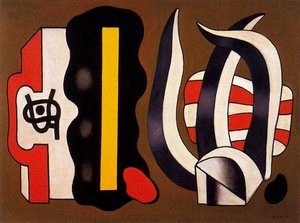 Composition with aloe No. 3 - Fernand Léger
In Composition with Aloe No. 3 , Fernand Léger masterfully manipulates the interplay of light and saturated pigment to create a sense of structural illumination. Rather than relying on traditional chiaroscuro, Léger uses the brilliance of a vibrant yellow against stark black and resolute red to simulate a rhythmic, internal glow. This technique allows the geometric forms to appear as if they are catching the artificial light of a modernizing cityscape, a feat that secured this work's place among the top 25 artworks of Fernand Léger . The way the light seems to emanate from the yellow mass provides a visceral energy that defies static abstraction.
For the collector, owning a high-quality oil reproduction of this piece means bringing that same luminous tension into your home. When captured on 100% cotton canvas with visible, textured brushstrokes, the interplay of these primary colors adds an incredible layer of depth and architectural luxury to any contemporary wall. It is not merely a painting, but a window into the pulsing, light-drenched spirit of the machine age.
The Woman and the child - Fernand Léger
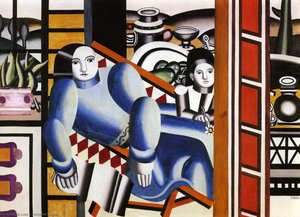 The Woman and the child - Fernand Léger
To encounter The Woman and the Child by Fernand Léger is to witness a profound moment in the evolution of modernism, where the intimacy of a domestic scene meets the rhythmic pulse of the machine age. As one of the top 25 artworks of Fernand Léger, this 1922 masterpiece stands as a testament to his ability to deconstruct reality into a symphony of geometric precision and emotional depth. The canvas presents a striking tableau: figures are rendered through a Cubist lens, their forms fragmented into bold, cylindrical shapes that echo the industrial vitality of the early twentieth century.
Léger utilizes a powerful palette of earthy ochres and deep reds, contrasted against cool, structural blues, creating a tactile experience through thick, impasto brushstrokes. This work transcends mere representation, offering a sophisticated interplay of light and shadow that resonates beautifully within contemporary luxury interiors. For the discerning collector, owning a reproduction of this piece is not just about decor; it is about preserving a legacy of innovation. Whether you seek a hand-painted oil reproduction or a museum-quality print, this painting brings the avant-garde spirit of the 1920s into the modern home.
Two Women Holding Flowers - Fernand Léger
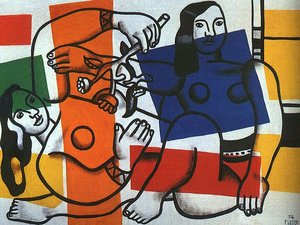 Two Women Holding Flowers - Fernand Léger
What story does the vibrant, fragmented background of Two Women Holding Flowers by Fernand Léger tell about the intersection of human intimacy and the mechanical pulse of the modern era? In this captivating work, Léger moves beyond mere portraiture to weave a narrative where organic life meets the structured rhythm of his signature Cubist style. The composition is a sensory feast; bold primary reds, deep blues, and sun-drenched yellows collide with geometric precision, creating a rhythmic energy that feels both avant-garde and profoundly alive.
As one of the top 25 artworks of Fernand Léger , this piece breaks ground by transforming a simple moment—women sharing flowers—into a complex symphony of overlapping planes and cylindrical forms. The presence of secondary figures scattered throughout the scene adds a layer of social depth, suggesting a bustling, interconnected world. For the modern collector, bringing such a masterpiece into a home offers more than just decoration; it provides a curated escape into a historical moment where art embraced the machine age. Whether through a handmade oil reproduction that captures every thick, impasto brushstroke or a high-quality print, this painting serves as a powerful window into the heart of 20th-century modernism.
The level crossing (final state) - Fernand Léger
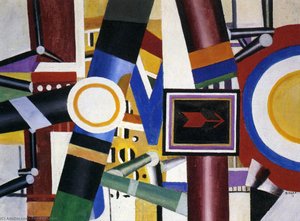 The level crossing (final state) - Fernand Léger
Acquiring The Level Crossing (Final State) by Fernand Léger is an investment in a profound legacy of modernism and a testament to a collector's discerning taste. As one of the top 25 artworks of Fernand Léger, this 1919 masterpiece serves as a vibrant manifesto of 'Tubism,' where the artist translates the rhythmic pulse of the machine age into a symphony of geometric precision. The canvas vibrates with primary reds, yellows, and blues, utilizing interlocking cylindrical volumes and sharp-edged rectangles that evoke the industrial energy of a locomotive crossing. There is a palpable sense of motion within its flattened planes, capturing the very essence of progress through bold, unmodulated color.
Beyond its historical significance in the evolution of Cubism, this work possesses an unparalleled aesthetic authority that anchors any curated space. Its striking composition and high-contrast palette offer a sophisticated focal point for modern luxury interiors, providing a sense of structured dynamism. Owning a high-quality, hand-painted oil reproduction allows you to bring this museum-grade prestige into your home, preserving the tactile depth of Léger's visionary industrial landscape.
Conclusion
As we conclude our journey through the vibrant, mechanical, and profoundly human world of Fernand Léger, we are reminded that these masterpieces are far more than mere relics of the early twentieth century. They are living presences, pulsing with the rhythmic energy of a modern age that continues to shape our very perception of form and motion. To stand before a Léger work is to enter into a timeless conversation—one where the rigid geometry of the machine meets the soft, enduring pulse of the human spirit. Each bold stroke and cylindrical form serves as a bridge across decades, connecting the industrial fervor of his era to the contemporary soul seeking beauty in structure and clarity.
These paintings do not simply exist within the silent halls of museums; they possess the power to breathe life into our personal spaces, transforming interiors into galleries of thought and inspiration. Whether through the striking contrasts of his 'Tubism' or the dynamic interplay of color and light, Léger’s legacy invites us to find wonder in the everyday and strength in the essential. We invite you to continue this exploration and bring a piece of this avant-garde history into your own home by browsing our full collection . In every hand-painted reproduction, we strive to preserve that original spark—the tactile depth of the brushstroke and the profound emotion of the artist—ensuring that the dialogue between Léger and the admirer remains as vibrant today as it was when the paint first met the canvas.