
Introduction
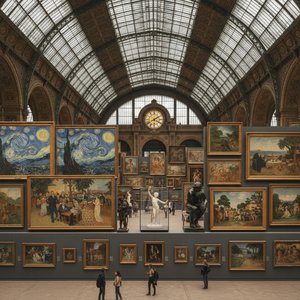
To step through the grand entrance of the Musée d’Orsay is to witness one of history’s most breathtaking transformations. Once the bustling Gare d’Orsay, a Beaux-Arts railway station defined by the rhythmic arrival of steam engines and the heavy iron of the industrial age, this sanctuary now breathes with a different kind of energy—the luminous, ephemeral pulse of the Impressionist revolution. The architecture itself, a masterpiece of Charles Garnier, serves as a magnificent vessel for art that sought to break free from the rigid shadows of tradition and embrace the fleeting brilliance of light.
The collection housed within these walls represents a pivotal moment in the human story, where the focus of painting shifted from meticulous, photographic accuracy to the capture of atmosphere, emotion, and movement. Within this vast, glass-covered concourse, the works of masters such as Claude Monet, Edgar Degas, and Pierre-Auguste Renoir invite us to experience the world not as a static image, but as a sensory experience of color and light. These paintings remain profoundly meaningful in our modern era because they mirror our own ephemeral existence; they remind us that beauty often resides in the most transient moments—a sunbeam hitting a lily pond, or the rhythmic grace of a dancer in mid-motion.
As we embark on this curated journey, we will navigate through the layers of history and emotion found within these galleries. The following selection of twenty-five artworks has been chosen to guide you through the heart of the museum’s soul, tracing the evolution from the delicate textures of Impressionism to the visceral, expressive power of Post-Impressionism. Prepare to encounter the masterpieces that forever altered the course of human perception.
Olympia - Édouard Manet
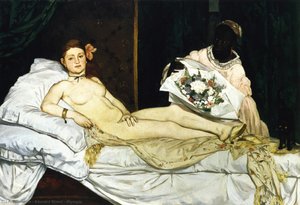 Olympia - Édouard Manet
To stand before Olympia in the Musée d'Orsay is to experience a sudden, breathless confrontation. In 1863, this painting did not merely enter the gallery; it disrupted it. Manet strips away the soft, mythological veils of his predecessors, presenting a woman whose direct, unapologetic gaze meets yours with startling modern realism. The composition is defined by a stark, almost clinical light that catches the rumpled texture of the white linens and the bold, dark outlines of her form.
Every element—from the symbolic black cat to the vibrant bouquet of flowers—speaks to the complex social realities of 19th-century Paris. As one of the most essential pieces among the top 25 artworks in Musée d'Orsay, Paris , its power lies in its refusal to be a passive object of beauty. For the discerning collector, owning a hand-painted oil reproduction of this masterpiece brings more than just decor into a room; it introduces an enduring spirit of defiance and intellectual depth, serving as a profound focal point that continues to challenge and inspire.
Arrangement in Grey and Black. Portrait of the Painter's Mother - James Abbott McNeill Whistler
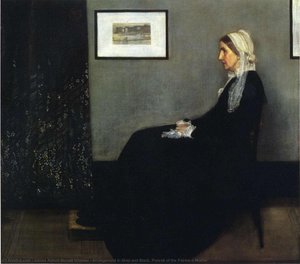 Arrangement in Grey and Black. Portrait of the Painter's Mother - James Abbott McNeill Whistler
Imagine standing within the hushed, hallowed galleries of the Musée d’Orsay, where the vibrant energy of Paris suddenly yields to a profound, monochromatic silence. Before you rests Arrangement in Grey and Black , a work that transcends simple portraiture to become a definitive manifesto of the Aesthetic movement.
Whistler does not merely depict his mother; he composes a visual symphony of restraint. The canvas is a masterclass in Tonalism, utilizing a disciplined palette of charcoal, slate, and bone white to create a rhythmic interplay of light and shadow. There is a haunting, geometric harmony in the way the dark silhouette of Anna McNeill Whistler balances against the soft, patterned textures of the background, evoking a sense of stoic dignity and quiet melancholy.
As one of the most essential pieces among the top 25 artworks in Musée d'Orsay, Paris , this masterpiece offers a sanctuary of stillness. Its understated elegance provides a perfect anchor for modern interiors, inviting a sense of contemplative calm and sophisticated architectural depth into any curated space.
Gare Saint Lazare, Pari - Claude Monet
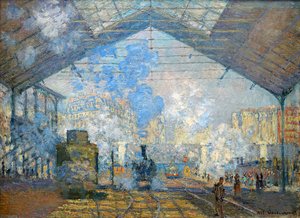 Gare Saint Lazare, Pari - Claude Monet
What story does the swirling, locomotive-filled atmosphere of Gare Saint Lazare, Paris by Claude Monet tell us about the pulse of a changing world?
Painted in 1877, this masterpiece emerged from a period of rapid industrialization, where the expansion of railways redefined Parisian life. As one of the top 25 artworks in Musée d'Orsay , it broke ground by abandoning academic rigidity to capture the ephemeral essence of modernity. Monet masterfully renders the station not as cold iron, but as a dance of light and steam, using a palette of muted blues, grays, and warm ochres to evoke the hazy, energetic spirit of the era.
Integrating such an atmospheric work into your interior design provides a profound sense of historical escape. The painting’s ability to transform a functional industrial scene into a poetic vision of movement makes it an ideal centerpiece for those seeking to add depth, texture, and a touch of nineteenth-century elegance to their modern sanctuary.
The Great Bathers (The Nymphs) - Pierre-Auguste Renoir
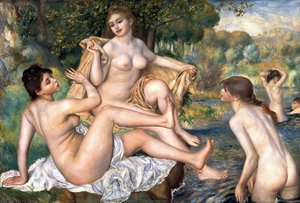 The Great Bathers (The Nymphs) - Pierre-Auguste Renoir
Within the hallowed halls of the Musée d’Orsay, few works radiate such profound serenity as The Great Bathers (The Nymphs) . There is a gaze in this masterpiece by Pierre-August::Auguste Renoir that follows you—not with judgment, but with understanding . This isn’t merely a portrait; it is a mirror . Its inclusion among the top 25 artworks in Musée d’Orsay, Paris, is a testament to its power to make the invisible visible. Now, imagine that gaze in your own space. Not watching you, but reminding you: you are seen. You are part of the story.
Painted in 1919, this work captures Renoir's late-career evolution, where the fleeting light of Impressionism meets a new, sculptural monumentality. The canvas is a symphony of soft pastels—dappled pinks, lush greens, and shimmering blues—applied with a masterful impasto that gives the skin of the nymphs a tactile, luminous quality. Amidst the post-war search for peace, Renoir offers an idyllic sanctuary of nature and grace, inviting us to lose ourselves in the eternal rhythm of the river.
Two Women on the Beach - Eugène Henri Paul Gauguin
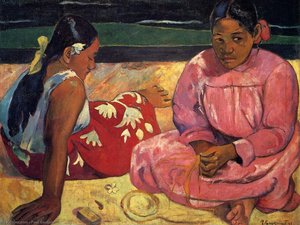 Two Women on the Beach - Eugène Henri Paul Gauguin
Within the luminous galleries of the Musée d’Orsay, Gauguin’s 1891 masterpiece, Two Women on the Beach , serves as a profound window into his Tahitian odyssey. This work stands as a cornerstone of Post-Impressionism, where the artist famously abandoned Western naturalism in favor of the bold, flat planes characteristic of Cloisonnism. A vibrant tapestry of warm ochres, deep reds, and sun-drenched pinks envelops the two figures, creating an atmosphere of quiet, ritualistic intimacy. Through textured brushstrokes, Gauguin captures not merely a landscape, but an emotional essence—a dreamlike escape into a perceived primitive paradise.
To possess such a work is more than a mere acquisition; it is an inheritance . It represents a lineage of taste that connects your private sanctuary to the very heart of art history. At ArtsDot.com, we allow this legacy to reside on your walls , offering meticulously hand-painted oil reproductions that preserve the soul and tactile depth of Gauguin’s revolutionary vision.
Dance at the Moulin de la Galette - Pierre-Auguste Renoir
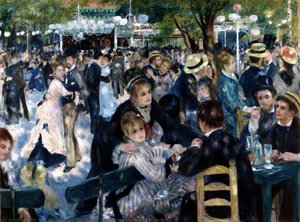 Dance at the Moulin de la Galette - Pierre-Auguste Renoir
What story does the dappled sunlight and swirling crowd in Dance at the Moulin de la Galette by Pierre-Auguste Renoir tell us about a vanished era of Parisian joy? As one of the most celebrated pieces among the top 25 artworks in Musée d'Orsay, Paris , this 1876 masterpiece captures the very heartbeat of Montmartre. Renoir broke the shackles of academic precision, instead using broken brushstrokes and a luminous palette of pinks, blues, and lavenders to evoke the fleeting sensation of a summer afternoon. The painting transcends mere depiction; it is an immersive experience of light filtering through trees onto a sea of dancing figures. For the modern collector, such a work serves as a profound architectural escape. Integrating this impressionistic vision into your home decor allows you to reclaim that sense of historical warmth and spontaneous beauty, transforming a contemporary room into a sanctuary of light and timeless Parisian charm.
The Card Players - Paul Cézanne
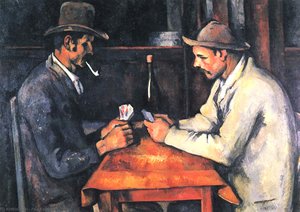 The Card Players - Paul Cézanne
Paul Cézanne’s The Card Players captures a profound moment of quietude, where the simple act of a game becomes a heavy meditation on fate and human connection. As one of the most essential masterpieces in the Musée d'Orsay, this work stands as a pivotal bridge between the fleeting light of Impressionism and the structured revolution of Cubism.
Through his signature use of earthy ochres, deep browns, and deliberate, geometric forms, Cézanne imbues these Provençal figures with a sculptural permanence that feels both timeless and grounded. The visible, textured brushstrokes create a tactile depth that invites the viewer into the hushed atmosphere of the tavern. For the modern collector, this painting offers more than historical significance; its muted, sophisticated palette and emphasis on structural stability provide an unparalleled anchor for contemporary interiors, bringing a sense of calm, intellectual weight to any curated space.
The origin of the world - Gustave Courbet
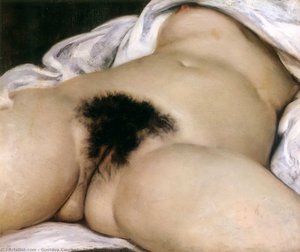 The origin of the world - Gustave Courbet
Imagine standing before a canvas that refuses to look away, a work that strips away the veil of mythology to confront the raw essence of existence. In The origin of the world by Gustave Courbet , we encounter one of the most provocative milestones in the history of the Musée d'Orsay . Emerging from the height of the Realist movement, this 1866 masterpiece shattered academic conventions by rejecting idealized, romanticized beauty in favor of an unapologetic, anatomical truth.
The painting offers a startlingly intimate encounter; the composition tightly crops the figure, forcing a direct confrontation with the subject. Through masterful chiaroscuro , Courbet uses deep shadows and muted, earthy ochres to sculpt the flesh, making the texture of skin and fabric feel almost tactile. There is no face to provide a narrative—only the visceral presence of light dancing across curves and the deliberate, scandalous rendering of nature unadorned. This radical commitment to realism continues to resonate today, proving how art can transform a space by challenging our very definition of what is worthy of being seen.
Three Muses - Denis Maurice
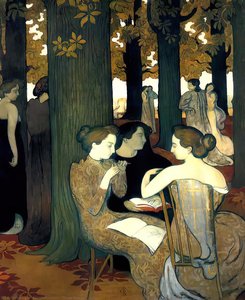 Three Muses - Denis Maurice
In the quiet, sun-dappled galleries of the Musée d'Orsay, Three Muses by Maurice Denis offers a portal into a dreamlike realm. Look closer: the lines in Three Muses by Maurice Denis aren’t drawn; they’re choreographed . This is not a composition; it’s a dance frozen in time , where the organic curves of ancient tree trunks and the soft silhouettes of women blend seamlessly into an enchanted forest. Bathed in filtered light, the scene utilizes a palette of deep mossy greens, rich ochres, and shimmering gold accents to evoke a sense of sacred intimacy. As a pioneer of the Nabis movement, Denis masterfully bridges the gap between Impressionist light and the symbolic depth of modern art. The figures seem to breathe with the rhythm of the landscape, creating a profound harmony that transcends the canvas. Imagine your own walls breathing with this same rhythmic grace, bringing the tranquil, mystical energy of a Parisian masterpiece into your home.
Family Reunion - Frédéric Bazille
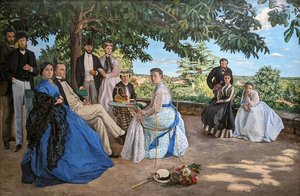 Family Reunion - Frédéric Bazille
The lines in Family Reunion by Frédéric Bazille aren’t merely drawn; they are choreographed . Within this essential piece from the Musée d'Orsay’s top 25 artworks, we find more than a simple social gathering; it is a dance frozen in time . Under the dappled shade of a sprawling tree, Bazille captures a rhythmic interplay of light and texture, where the vibrant hues of mid-19th-century fashion meet the soft, natural breath of the French countryside. As a close contemporary to Monet and Renoir, Bazille brings a precision that balances academic detail with the burgeoning spirit of Impressionism. The composition breathes with a sense of communal harmony, inviting the viewer into a moment of shared joy and sun-drenched leisure. What if your living room could hold that same delicate balance? What if your walls could breathe rhythm ? Bringing a high-quality oil reproduction of this masterpiece into your space allows you to reclaim that lost era of elegance and social grace, transforming a modern interior into a sanctuary of historical beauty.
Luxe, Calme, et Volupté (compositional study) - Henri Matisse
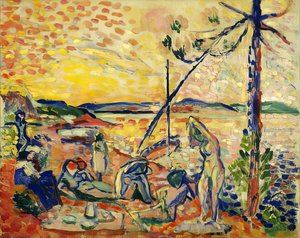 Luxe, Calme, et Volupté (compositional study) - Henri Matisse
Within the luminous galleries of the Musée d'Orsay, Henri Matisse’s 1904 study, Luxe, Calme, et Volupté , serves as a breathtaking threshold to the Fauvist revolution. This work captures a sun-drenched coastal symphony, marking the pivotal moment when Matisse transitioned from academic tradition toward a bold, color-driven language of pure emotion. The painting vibrates with an intense palette and rhythmic energy, where thick, visible brushstrokes create a textured landscape of light and leisure.
As you observe the figures immersed in this tranquil, seaside atmosphere, you encounter the very essence of Fauvism —the use of color not to mimic reality, but to evoke visceral feeling. The warmth of the composition radiates a sense of profound joy and an intimate connection to the natural world. Bringing a high-quality, handmade oil reproduction of this masterpiece into your home does more than decorate a wall; it transforms your space into a sanctuary of light, allowing the vibrant, historical spirit of Matisse to reside within your daily life.
Young Girls at the Piano - Pierre-Auguste Renoir
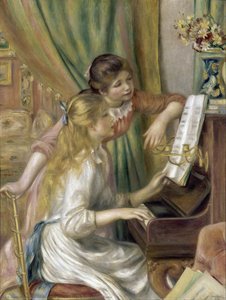 Young Girls at the Piano - Pierre-Auguste Renoir
There is a gaze in Young Girls at the Piano by Pierre-Auguste Renoir that follows you—not with judgment, but with understanding . This isn’t merely a portrait; it is a mirror reflecting our own longing for peace. As one of the most cherished pieces among the top 25 artworks in Musée d'Orsay, Paris, this 1892 masterpiece invites you into a world of soft, sun-drenched intimacy.
Renoir’s brushwork dances across the canvas, blending delicate whites, pale pinks, and gentle blues to capture a fleeting moment of childhood innocence. The piano anchors the composition, its dark weight balanced by the luminous, airy atmosphere of the room. To stand before it is to feel the warmth of a summer afternoon through layers of masterful oil paint. For those seeking to bring this sense of serene domesticity into their own homes, a hand-painted reproduction allows the soft light and rhythmic textures of Renoir’s genius to become a permanent part of your personal sanctuary, reminding you daily of the simple, quiet joys of life.
Camille Monet On Her Deathbed - Claude Monet
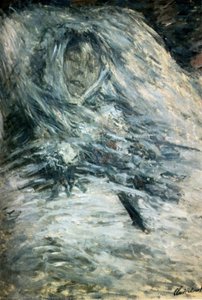 Camille Monet On Her Deathbed - Claude Monet
A whisper of grief frozen in the pale, ethereal light of 1879, Camille Monet On Her Deathbed remains one of the most profoundly moving pieces within the collection. It stands as a vital pillar among the top 25 artworks in Musée d'Orsay, Paris , not merely for its technical mastery, but for its ability to capture the very essence of human vulnerability and the fleeting nature of life.
Monet employs a somber, muted palette of blues, grays, and ghostly whites, where heavy, impasto brushstrokes create a textured shroud that seems to pulse with the weight of mourning. The blurred edges and diffused lighting evoke a dreamlike state, inviting viewers into a space of deep introspection and spiritual transcendence. This hauntingly beautiful tribute brings a sense of soulful stillness and historical gravity to contemporary living; integrating such a masterpiece into a modern interior offers an unparalleled touch of elegance and contemplative calm for the discerning collector.
Red Roofs, Corner of a Village, Winter - Camille Pissarro
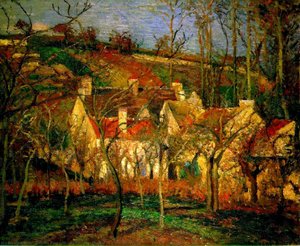 Red Roofs, Corner of a Village, Winter - Camille Pissarro
In Red Roofs, Corner of a Village, Winter , Camille Pissarro masterfully orchestrates a geometric dance of diagonal lines and organic forms. The steeply pitched rooftops create a rhythmic cadence that guides the eye across the sloping terrain, balanced perfectly by the vertical punctuations of bare, skeletal trees. This structural harmony provides a sense of timeless perfection, securing its place among the top 25 artworks in Musée d'Orsay, Paris .
There is an inherent, quiet strength in this composition; much like the principles of modern minimalist design, Pissarro strips away unnecessary detail to focus on the essential interplay of shape and color. The warm ochres and burnt oranges, applied with a rich, tactile impasto, ground the scene in a cozy, nostalgic warmth that contrasts beautifully with the muted blue-gray sky. For the contemporary collector, this painting offers more than just a glimpse into 19th-century rural life; it provides a sophisticated anchor for a clean, modern aesthetic, bringing the serene, light-drenched soul of Impressionism into the heart of a contemporary home.
Starry Night Over the Rhone - vincent willem van gogh
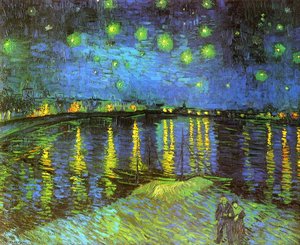 Starry Night Over the Rhone - vincent willem van gogh
The lines in Starry Night Over the Rhone aren’t merely drawn; they are choreographed . This is not simply a landscape; it is a dance frozen in time. Within the hallowed halls of the Musée d'Orsay, Van Gogh’s 1888 masterpiece invites us into a nocturnal symphony where the deep, cobalt sky and the shimmering reflections of Arles' gaslights perform a silent, luminous ballet. Through his signature thick impasto technique, the stars become tactile, pulsating with an energy that transcends the canvas.
The composition achieves a breathtaking equilibrium, balancing the heavy, dark waters of the Rhône with the brilliant, swirling celestial lights above. It is a profound study in contrast—the weight of the night balanced by the brilliance of the heavens. What if your living room could hold that same balance? What if your walls could breathe rhythm ? Our master artists specialize in recreating this very movement, offering hand-painted oil reproductions that capture every expressive brushstroke and emotional depth of Van Gogh’s extraordinary vision.
Cart on the Snow Covered Road with Saint-Simeon Farm - Claude Monet
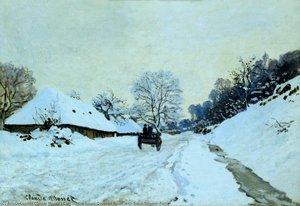 Cart on the Snow Covered Road with Saint-Simeon Farm - Claude Monet
Imagine the muffled silence of a French countryside blanketed in frost, where the only movement is the slow progress of a horse-drawn carriage through the drifts. In Cart on the Snow Covered Road with Saint-Simeon Farm , Claude Monet captures this profound stillness with an early, masterful touch. As a standout among the top 25 artworks in Musée d'Orsay, Paris , this 1865 piece utilizes a palette of cool whites, ethereal blues, and soft grays to evoke the biting chill of winter. The loose, textured brushwork—a precursor to his later Impressionist triumphs—allows light to dance across the snow-covered path, guiding the viewer toward the distant, tranquil farmstead. This landscape does more than depict a scene; it offers an emotional sanctuary. For those seeking to elevate a modern interior, such a work brings a sense of timeless peace and atmospheric depth, transforming any room into a space for quiet reflection and seasonal beauty.
The Floor Scrapers (also known as The Floor Strippers) - Gustave Caillebotte
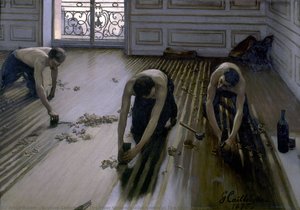 The Floor Scrapers (also known as The Floor Strippers) - Gustave Caillebotte
Imagine the rhythmic, metallic scrape of blades against aged wood echoing through a sun-drenched Parisian hall. In Gustave Caillebotte’s The Floor Scrapers , we are not merely observers of history, but witnesses to the quiet dignity of manual labor. As a standout among the top 25 artworks in Musée d'Orsay, Paris , this 1875 masterpiece masterfully bridges the gap between gritty Realism and the atmospheric light of Impressionism.
The composition is anchored by sharp, diagonal lines that pull the viewer into the very texture of the work—the scattered wood shavings, the warm, earthy tones of the floorboards, and the soft light streaming from an unseen window. Caillebotte captures a profound sense of focus and perseverance through a palette of muted grays and deep browns. This piece possesses a grounded, architectural strength; its presence in a modern home offers a meditative anchor, inviting a sense of stability and a deeper appreciation for the beauty found within the most mundane moments of human existence.
Irises in Monet's Garden - Claude Monet
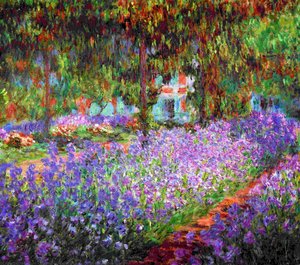 Irises in Monet's Garden - Claude Monet
Long before it was a world-renowned sanctuary, Claude Monet’s garden at Giverny was a site of intense, almost scientific experimentation, where the artist meticulously manipulated water and flora to capture the ephemeral. In Irises in Monet's Garden , painted around 1900, we witness this botanical obsession transformed into pure light. As one of the most captivating pieces among the top 25 artworks in Musée d'Orsay, Paris , the painting utilizes a masterful impasto technique , where thick, rhythmic strokes of violet and azure create a tactile landscape that seems to vibrate with life. The way the sunlight filters through the lush greenery offers a profound sense of tranquility. Bringing this masterpiece into your personal space—perhaps as a centerpiece in a modern home office or study—invites a similar atmosphere of serene focus and sophisticated calm, allowing the rhythmic beauty of Monet’s vision to inspire deep contemplation and productivity during your most demanding hours.
Noon Rest from Work after Millet - vincent willem van gogh
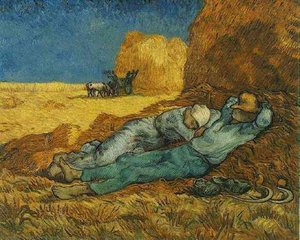 Noon Rest from Work after Millet - vincent willem van gogh
In Noon Rest from Work after Millet , Vincent van Gogh masterfully manipulates the sun-drenched atmosphere of the French countryside, using light not merely to illuminate, but to sculpt emotion. The way the golden ochre of the wheat field catches the diffused midday light creates a radiant, almost tactile warmth that contrasts sharply with the turbulent, deep blues of the sky. This command over luminosity and texture—achieved through his signature thick impasto—is precisely what secures this piece's prestigious position among the top 25 artworks in Musée d'Orsay, Paris .
To possess a hand-painted oil reproduction of this work is to invite that same sensory depth into your own home; the visible brushstrokes and rich tonal range offer a sophisticated, sculptural quality that flat prints simply cannot replicate. Whether placed in a minimalist loft or a classic study, the painting’s interplay of light and shadow adds an unmistakable layer of historical luxury and serene energy to any contemporary wall.
The Harbour at Argenteuil - Claude Monet
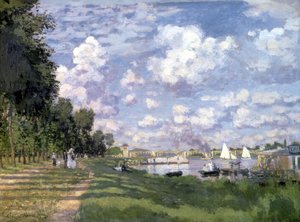 The Harbour at Argenteuil - Claude Monet
In the hallowed halls of the Musée d’Orsay, few works capture the ephemeral magic of a summer afternoon quite like Claude Monet’s 1872 masterpiece, The Harbour at Argenteuil . Here, the artist transcends mere landscape, using loose, rhythmic brushstrokes to dissolve the boundaries between water, sky, and shore. A palette of soft blues, pale yellows, and shimmering whites dances across the canvas, reflecting the light-drenched atmosphere of the Seine. This painting serves as a window into the leisurely spirit of 19th-century France, where boats drift peacefully and the world feels momentarily still.
To encounter this work is to witness the very birth of Impressionism—a revolution of perception. Owning such a piece is more than a decorative choice; it is an inheritance of taste, a way to invite that same serene lineage into your own sanctuary. Through our meticulous hand-painted oil reproductions, the soul of Monet’s light and the tactile depth of his brushwork are preserved, allowing you to bring this legendary riverside escape to your very own walls.
Harvest - Charles-François Daubigny
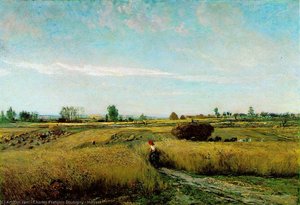 Harvest - Charles-François Daubigny
In Harvest by Charles-François Daubigny, the viewer is transported to the heart of the French countryside, where the golden warmth of sun-drenched wheat meets a soft, atmospheric sky. As one explores the top 25 artworks in Musée d'Orsay, Paris, this 1851 masterpiece stands as a vital bridge between the structured landscapes of the past and the light-drenched revolutions of Impressionism. Daubigny, a pioneer of the Barbizon School, captures more than just agricultural labor; he captures the very soul of nature through visible, rhythmic brushstrokes and an earthy palette of ochre, sienna, and muted blues. The composition’s vast, horizontal expanse creates a sense of enduring stability and peace. For the modern collector, the painting's organic textures and tranquil mood offer a sophisticated way to bring the restorative power of the outdoors into a home. Whether placed in a sunlit study or a minimalist living space, Harvest serves as a window into a world of quiet abundance and timeless grace.
Burial at Ornans - Gustave Courbet
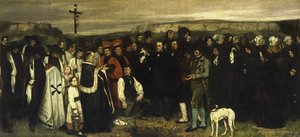 Burial at Ornans - Gustave Courbet
To stand before Gustave Courbet’s A Burial at Ornans is to witness a revolution captured in oil. This monumental work, one of the most essential masterpieces in the Musée d'Orsay collection, shattered the boundaries of 19th-century academic tradition by elevating a common provincial funeral to the scale of an epic legend. There is no divine intervention or idealized grace here; instead, Courbet presents a raw, democratic landscape of grief, where the muted palette of blacks, grays, and earthy browns forces us to confront the unvarnished dignity of ordinary people.
The thick, palpable brushstrokes and the horizontal, stage-like arrangement of mourners create an immersive experience that feels startlingly modern. In an age often lost in digital artifice, Courbet’s commitment to the real —the grit, the texture, and the heavy atmosphere of mortality—resonates deeply with our contemporary search for authenticity. As you explore the top 25 artworks in Musée d'Orsay, Paris , this painting remains a profound testament to the power of seeing the world exactly as it is, without the veil of romanticism.
Hospital Saint-Paul at Saint-Rémy-de-Provence - vincent willem van gogh
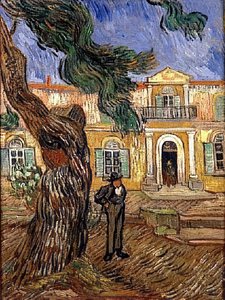 Hospital Saint-Paul at Saint-Rémy-de-Provence - vincent willem van gogh
While many associate Vincent van Gogh with the swirling cosmic energy of his later nights, Hospital Saint-Paul at Saint-Rémy-de-Provence was forged in the heavy, structured silence of confinement. Painted during his transformative stay at the asylum between 1889 and 1890, this work captures a profound psychological duality. Through his signature Post-Impressionist technique, Van Gogh breathes life into the asylum's architecture; the sun-drenched yellow walls and vibrant green shutters serve as a defiant, luminous counterpoint to his internal struggle. The rhythmic, thick brushstrokes do more than depict a building—they document a soul seeking solace in the permanence of structure and nature. As one of the top 25 artworks in Musée d'Orsay, Paris , it stands as a masterclass in emotional resilience. Bringing such a piece into your personal environment can cultivate an atmosphere of deep focus and intellectual vigor, providing a sophisticated anchor for a modern home office or study where creativity and discipline meet.
Portrait of Doctor Gachet - vincent willem van gogh
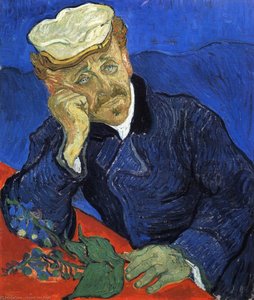 Portrait of Doctor Gachet - vincent willem van gogh
To encounter this work is to feel the heavy, shared pulse of human vulnerability. In the Portrait of Doctor Gachet by Vincent van Gogh , the boundaries between physician and patient blur into a singular expression of melancholy. Created in 1890 during the artist's final, turbulent months in Auvers-sur-Oise, this painting stands as a cornerstone among the top 25 artworks in Musée d'Orsay, Paris .
Van Gogh employs his signature impasto technique , applying layers of paint so thick they create a sculptural, rhythmic texture. The palette—a somber yet vibrant dance of deep greens, blues, and medicinal yellows—mirrors the internal tension of the subject. Dr. Gachet’s weary posture, with his head resting heavily on his hand, captures an unmistakable sense of fatigue and shared despair. This masterpiece does more than document a moment in history; it invites a profound emotional resonance. Bringing such a powerful piece into your home through a hand-painted reproduction allows this timeless legacy of empathy to transform your space into a sanctuary of historical depth and quiet prestige.
Self-Portrait - Paul Cézanne
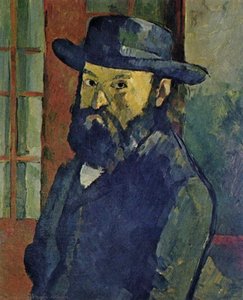 Self-Portrait - Paul Cézanne
In the hallowed halls of the Musée d’Orsay, Paul Cézanne’s 1882 Self-Portrait stands as a profound architectural blueprint for modern art. As the pivotal figure bridging the ephemeral light of Impressionism with the structural rigor of Cubism, Cézanne uses this work to dissect his own presence through a lens of permanence.
Through repetitive, rhythmic brushstrokes and a deliberate flattening of space, he transforms a seated figure into a study of geometric form. One can almost feel the tactile weight of the impasto as he gazes from behind a window, framed by the subtle tension of a red door and the quiet arrangement of chairs. To encounter this painting is to witness the very birth of modern perception.
Owning a meticulous oil reproduction of this masterpiece isn’t merely a purchase; it is an inheritance . It allows you to bring this lineage of taste into your own space, where every glance at the textured canvas serves as a silent, enduring nod to the masters who redefined our visual world.
Conclusion
As the evening light fades over the Seine and the shadows lengthen within the grand, iron-wrought halls of the Musée d'Orsay, we are left with more than just memories of color and form; we carry with us the enduring pulse of a revolution. These twenty-five masterpieces are not merely relics of a bygone era preserved behind glass, but living, breathing presences that continue to shape our perception of light, movement, and the human soul. They are echoes of a time when artists dared to capture the fleeting moment, and that resonance remains as potent today as it was in the nineteenth century, transcending the boundaries of history to touch the modern heart.
At ArtsDot.com , we believe such profound beauty should not be confined to the galleries of Paris, but should instead serve as a cornerstone for the world's most refined interiors. For the discerning professional—the architect designing a boutique hotel, the decorator composing a private villa, or the collector seeking a definitive architectural statement—we act as your dedicated creative partner. Through our museum-quality, hand-painted oil reproductions and bespoke digital mockup services, we bridge the gap between historical reverence and contemporary luxury. We offer the ability to curate custom collections that harmonize with your specific aesthetic, providing the technical expertise to transform these timeless legacies into bespoke elements of your design. We invite you to continue this journey of discovery and bring the spirit of the masters into your own space by exploring our full collection .