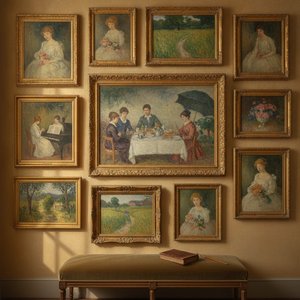





The Soul of the Space: Why Masterpieces Transcend Interior Trends
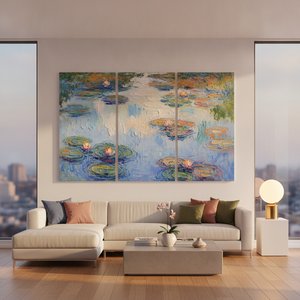 Modern Soul, Timeless Light: Bringing the Magic of Impressionist Masterpieces into Contemporary Interiors
The Architecture of Light: How Impressionist Brushstrokes Transform Modern Moods Painting with Light: How Impressionist Masterpieces Transform Your Home's Mood The Soul of the Canvas: Understanding the Impressionist Obsession with Light Musee Nationa...
In an era defined by the rapid turnover of aesthetic whims, there exists a profound, quiet rebellion in choosing the eternal over the ephemeral. We often find ourselves adrift in a sea of "micro-trends"—the sudden allure of industrial minimalism or the fleeting charm of mid-century revival—only to realize that these styles lack the emotional resonance required to truly anchor a home. A room filled with trendy objects may look curated for a moment, but it rarely feels lived-in or soulful. True interior mastery lies in the ability to bypass the noise of the present and reach for the enduring strength of the past.
When we introduce a masterpiece into our private sanctuaries, we are not merely decorating; we are inviting a dialogue between our personal history and the collective memory of humanity. A hand-painted reproduction of an Impressionist landscape or a Renaissance portrait brings with it a weight of significance that no mass-produced print can replicate. These works possess a tactile depth—the visible, rhythmic dance of brushstrokes on cotton canvas—that commands the eye and settles the spirit. By selecting art that has survived centuries of scrutiny, we create a domestic atmosphere that feels anchored, stable, and deeply personal, far removed from the frantic pace of modern consumerism.
The Architecture of Light: Integrating Impressionist Luminosity into Modern Living
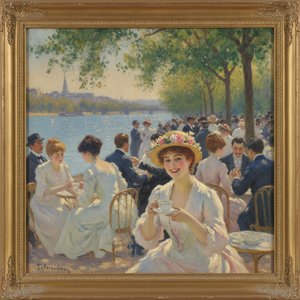 Masterpieces of Light: The Top 25 Pierre-Auguste Renoir Artworks
Introduction To step into a gallery of Pierre-Auguste Renoir’s finest works is to step into a world where the sun never truly sets, but instead lingers in a perpetual, golden afternoon. There is a profound, rhythmic warmth in his canvases—a sensory e...
To step into a room adorned with Impressionist mastery is to abandon the rigid, shadowed certainties of the modern world and embrace a reality that breathes, flickers, and dances. For those of us who have spent decades admiring the soft glow of a Monet or the vibrant warmth of a Renoir, we understand that these artists were far more than mere painters of scenery; they were true architects of light. Their obsession with the fleeting moment—the way sunlight filters through autumn leaves or how a summer afternoon lingers in a garden—offers a unique opportunity to transform the mood of a contemporary interior.
In many modern homes, architecture can feel stark, geometric, and perhaps overly structured. The introduction of an Impressionist piece acts as a profound sensory experience, breaking the stillness with broken brushstrokes and luminous palettes. Consider the works of Camille Pissarro or Pierre-Auguste Renoir; their canvases are invitations to linger in sun-dappled spaces. When these light-drenched textures are placed upon a modern wall, they turn a static surface into a window of pure, radiant energy. By embracing the Impressionist obsession with atmosphere, we can infuse our living spaces with a sense of warmth and vitality that makes even the most minimalist room feel alive with the pulse of nature.
A Legacy of Form: Bringing Renaissance Grandeur and Neoclassical Elegance to the Home
 Elegant Vintage Gold Desk Clock – Italy Glass Accent Table Lamp for Home Decor
A Legacy of Craftsmanship: The Vintage Gold Desk Clock This exquisite desk clock embodies a timeless aesthetic rooted in European neoclassical design principles. Crafted from metal plated copper – a technique perfected over centuries – it showcases r...
While Impressionism offers light, the traditions of the Renaissance and Neoclassicism offer structure, dignity, and a sense of historical continuity. There is an undeniable gravity in the classical aesthetic—a belief in proportion, symmetry, and the beauty of refined craftsmanship. This era of art reminds us of a time when even the most private domestic spheres were treated with reverence. We see this reflected in the meticulous detail of Dutch interior painters like Gerrit de Haerne, whose work celebrated the burgeoning prosperity and refined sensibilities of the home.
Integrating these classical elements requires a delicate touch to avoid overwhelming a space with mere opulence. The secret lies in the subtle interplay of materials. An exquisite vintage gold desk clock, rooted in European neoclassical design, can serve as a brilliant focal point when paired alongside more modern, neutral palettes. Such objects, much like the heavy-gauge metal and glass accents found in fine decorative arts, provide a sense of permanence. When we layer these classical motifs—perhaps through a custom portrait that utilizes the rich, dramatic chiaroscuro of the Old Masters—we create a home that feels less like a temporary residence and more like a curated estate, steeped in a legacy of sophistication.
The Vibrant Pulse: Balancing Pop Art Energy with Timeless Classics
 Elegant Iron Violin Sculpture - Modern Art Deco Decorative Wall Hanging Ornament Gift for Home Interior Decoration
The Sculptural Violin: A Study in Iron Art Deco Elegance This striking sculpture transcends mere decoration; it embodies a profound appreciation for form and texture—a cornerstone of Art Deco design principles. Crafted from high-quality stainless ste...
A truly sophisticated interior is rarely a museum of a single era; rather, it is a vibrant tapestry where different centuries converse. The challenge, and the ultimate joy, of the seasoned collector is finding the equilibrium between the serene weight of the classics and the electric, unapologetic energy of Pop Art. While the Renaissance provides the foundation, Pop Art introduces a playful, contemporary pulse that prevents a room from feeling overly somber or stagnant.
The brilliance of this juxtaposition lies in the contrast of texture and intent. The soft, blended transitions of an Impressionist landscape can find a striking companion in the bold, graphic lines of a modern work. This "remixing" of art history allows for a dynamic visual hierarchy. One might feature a large-scale, multi-panel Impressionist set across a wide wall to establish tranquility, while punctuating the space with more assertive, colorful accents. This balance ensures that the home remains a living, breathing entity—one that respects the profound beauty of tradition while remaining vibrantly engaged with the creative spirit of the present day.
Curating a Personal Gallery: Expert Tips for Layering Textures, Colors, and Eras
 Home Sweet Home Cottage, East Hampton
Frederick Childe Hassam’s ‘Home Sweet Home Cottage, East Hampton’: A Window into American Pastoralism A Timeless Vision of Rural Tranquility: Frederick Childe Hassam's “Home Sweet Home Cottage, East Hampton,” painted in 1916, transcends a simple depi...
Creating a cohesive personal gallery requires more than just an eye for beauty; it requires an understanding of the chemistry of art. To layer effectively, one must consider how different mediums interact. A hand-painted oil reproduction, with its thick impasto and deep tonal range, offers a physical presence that a flat Giclée print simply cannot match. When arranging your collection, think about the movement of the eye. Use larger, more atmospheric works to define the "soul" of a room, and utilize smaller, detailed pieces—perhaps a custom pet portrait or a cherished family heirloom reproduction—to create intimate vignettes.
Color coordination is equally vital. To prevent a clash of eras, look for shared chromatic threads. A painting featuring the lush greens of an American pastoral scene by Frederick Childe Hassam can be harmonized with modern textiles if the palette shares those same verdant undertones. Furthermore, do not be afraid to use "Period Shifts." Our specialized services allow you to transform a modern photograph into a masterpiece in the style of a historical era, effectively bridging the gap between your personal milestones and the timelessness of art history. Through careful selection of frames—ranging from gold leaf to natural wood—and the strategic use of lighting, you can weave disparate elements into a singular, harmonious narrative.
Preserving the Vision: The Art of Caring for Your Hand-Painted Treasures
 Home accessories
Home accessories (also termed home decor) are decorative and functional items placed in living spaces. These items are typically easy to replace, move, and rearrange, allowing for flexibility in interior design. == Types == Home accessories encompass...
The final act of true stewardship is the preservation of the beauty we have worked so hard to curate. A hand-painted oil on canvas is an investment in both emotion and heritage. To ensure that the pigments remain vibrant and the textures intact for generations, one must attend to the environmental conditions of the home. We recommend avoiding direct, harsh sunlight, which can fade even the most stable pigments, and maintaining a consistent temperature to protect the integrity of the canvas and the delicate layers of varnish.
For those who cherish the tactile nature of oil paintings, understanding the materials is key. Our artists utilize flexible gesso to prevent cracking and specific oils, such as safflower, to ensure that whites do not yellow over time. Every piece is finished with a protective coat of Damar varnish, creating a shield against dust and atmospheric pollutants. By treating your collection with the same reverence with which it was created, you ensure that the light of Renoir and the grandeur of the Renaissance continue to illuminate your home, long after the trends of today have faded into memory.
For more inspiration on bringing the masters into your home, explore the curated collections at ArtsDot.com.