
The Soul of the Landscape: Beyond Mere Representation
The Evolution of the Landscape: From Symbolic Backdrops to Subjective Truth Evocations of Open Air: A Comprehensive Exploration of Outdoor Scenes in Art History The Dawn of Landscape: From Ancient Worlds to Renaissance Visions Wikipedia: Landscape pa...
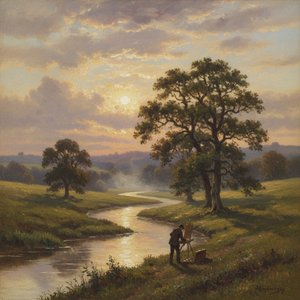
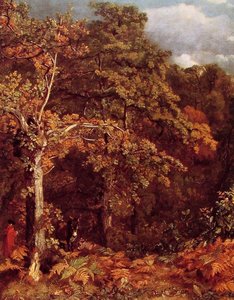
To gaze upon a true landscape is to do much more than observe a geographical location; it is to enter into a silent dialogue with the earth itself. For centuries, the natural world in art served primarily as a stage—a scenic backdrop for grand mythological dramas or religious narratives. However, as we move into the era of Impressionism, the landscape undergoes a profound metamorphosis. It ceases to be a mere setting and emerges as the protagonist, possessing its own voice, its own temperament, and its own deep, emotional truth.
In the British tradition, this shift was particularly poignant. The landscape became a vessel for the national soul, capturing not just the topography of rolling hills or winding streams, but the very essence of a sense of place. When we look at these works, we are not merely seeing trees and sky; we are experiencing a subjective truth. The boundaries between the physical earth and the ethereal sky begin to dissolve into a poetic haze, inviting us to feel the weight of the atmosphere and the stillness of a summer afternoon. It is an invitation to contemplation, where the painting acts as a window into a world that feels less like a literal depiction and and more like a cherished, half-remembered dream.
En Plein Air: The Revolutionary Act of Painting the Open Air
 Capturing Ephemeral Light: Plein Air Painting from Impressionism to Today
The Genesis of 'En Plein Air': From Studio Tradition to Landscape Portraiture Wikipedia: En plein air En plein air (pronounced [ɑ̃ plɛ.n‿ɛʁ]; French for 'outdoors'), or plein-air painting, is the act of painting outdoors. This method contrasts with s...
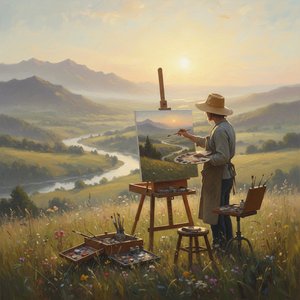
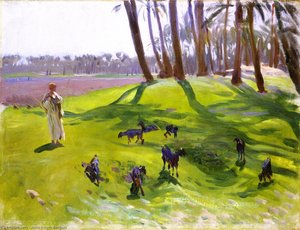
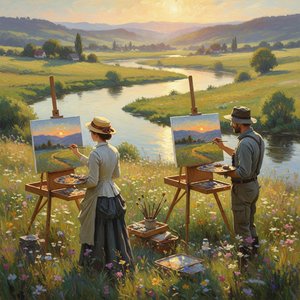
The history of art was once largely confined within the controlled, predictable walls of the studio. There, artists labored over compositions born from sketches and memory, striving for an idealized perfection that often lacked the breath of life. The true revolution arrived with the practice of en plein air—the act of painting outdoors, directly before the subject.
This movement was not merely a change in location; it was a fundamental shift in artistic philosophy. Before the advent of portable paint tubes, capturing the landscape in situ was a monumental logistical challenge, requiring the grinding of pigments and the management of unwieldy materials under the unpredictable elements. Yet, artists were driven by an insatiable desire for authenticity. They sought to capture the ephemeral—the way light dances upon a leaf at midday or how a sudden mist softens the distant horizon. By stepping out of the sanctuary of the studio, these painters embraced the uncertainty of nature, allowing the wind, the changing sun, and the moisture in the air to become active participants in their creative process. This direct engagement with the environment allowed for a more responsive, textured, and honest way of seeing.
Masters of Atmosphere: From Turner’s Sublime to Constable’s Connection
 Yale Center for British Art
A Window into a Nation’s Soul: Exploring the Yale Center for British Art Nestled within the heart of New Haven, Connecticut, the Yale Center for British Art isn't merely a museum; it’s an immersive experience, a pilgrimage through five centuries of B...
Within this British evolution, two titans stand as pillars of the movement, representing the dual nature of our relationship with the natural world. J.M.W. Turner explored the sublime—that breathtaking, almost terrifying power of nature in its most dramatic states. His works often feature turbulent seas, swirling clouds, and a light so intense it threatens to consume form itself. In Turner’s hands, the landscape is an overwhelming force, reminding us of our own smallness within the vastness of the universe.
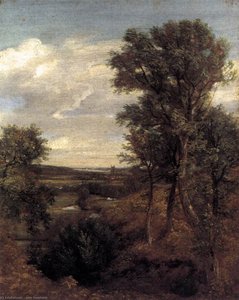
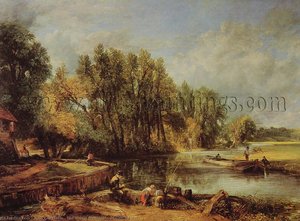
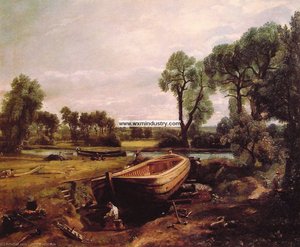
In beautiful contrast stands John Constable, whose work offers a more intimate, grounded connection to the English countryside. While Turner sought the dramatic, Constable sought the enduring. His paintings, such as those depicting the Stour Valley, are imbued with a profound sense of personal connection and local identity. He did not seek to overwhelm the viewer with chaos, but rather to celebrate the quiet rhythms of rural life—the movement of clouds over a meadow or the gentle flow of a stream. Together, these masters provided a complete spectrum of experience, from the awe-inspiring majesty of the elements to the tender, nostalgic beauty of the familiar land.
The Poetic Haze: Capturing Light, Mist, and Ephemeral Moments
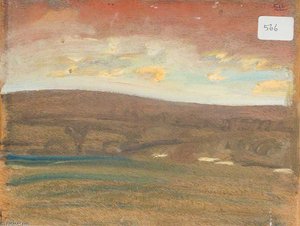 Landscape Study
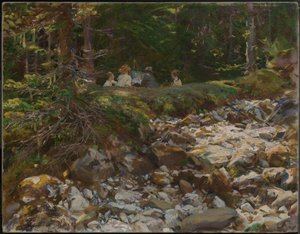
An Impressionistic Whisper of the English Countryside In this evocative Landscape Study , Sir Alfred James Munnings invites the viewer into a world where the boundaries between earth and sky dissolve into a poetic haze. The painting captures a moment...
The true magic of British Impressionism lies in its ability to render the invisible. How does an artist capture the weight of a fog or the translucency of a morning mist? The answer lies in the mastery of light and the use of loose, expressive brushstrokes. Rather than relying on sharp, photographic detail, these artists utilized short, rapid strokes to suggest form and movement.
< Haying the edges of reality, artists like Sir Alfred James Munnings or Edward Arthur Walton utilized a palette that balanced warmth with cool serenity. They understood that light is never static; it is a shimmering, moving entity. Through the layering of colors—deep earth tones contrasted against ethereal whites and soft blues—they created a sense of depth that feels atmospheric rather than topographical. This technique allows the viewer to perceive the temporality of the scene. We are not looking at a frozen moment in time, but at a living, breathing atmosphere where the light is caught in the very act of changing. It is this soft, luminous quality that gives these paintings their timeless, haunting beauty.A Legacy of Serenity: Finding Modern Resonance in British Impressionism
 Impressionistic Landscapes: 10 Masterpieces That Changed Art & Decor
Introduction To gaze upon these ten canvases is to step directly into a world transformed by light, color, and an unprecedented embrace of the fleeting moment. The Impressionistic Landscape movement wasn’t merely a shift in painting technique; it was...
In our fast-paced, modern world, the allure of these Impressionistic landscapes has only grown. There is a profound, restorative power in returning to these canvases. They offer us a sanctuary of stillness, a way to reconnect with a slower, more observant way of living. The themes explored by these artists—the beauty of the fleeting moment, the sanctity of nature, and the importance of subjective experience—remain as relevant today as they were in the nineteenth century.
For the collector and the art lover alike, these works serve as a bridge to the past. They remind us that even amidst the rapid transformations of technology and society, the fundamental beauty of a misty morning or a sun-drenched field remains unchanged. To bring such a piece into one's home is to invite that sense of peace and poetic wonder into our daily lives, ensuring that the luminous legacy of British Impressionism continues to breathe, inspire, and soothe for generations to come.