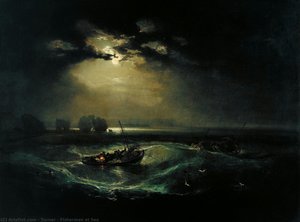

The Rejection of Reason: From Enlightenment Logic to the Dawn of Feeling
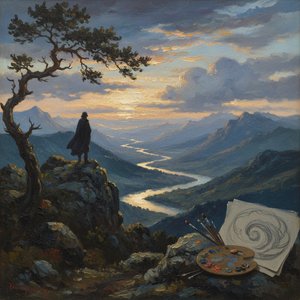 The Evocative Brushstroke: Exploring Emotion, Individuality & the Sublime in Romanticism's Artistic Landscape
The Dawn of Feeling: Romanticism's Rejection of Enlightenment Rationality The late 18th century witnessed a seismic shift in intellectual and artistic currents, a turning away from the cool precision of the Enlightenment towards a fervent embrace of ...
To understand the profound ache found within a Romantic landscape, one must first recall the era it sought to transcend. For decades, the European intellect had been anchored by the cool, unwavering precision of the Enlightenment. It was an age of sunlit clarity, where reason, logic, and scientific inquiry promised to map every corner of the natural world, leaving little room for mystery. Yet, as the eighteenth century drew to a close, a seismic shift began to stir within the human spirit. A quiet rebellion was mounting against the perceived coldness of modernity and the rigid boundaries of empirical truth.
This movement, which we now celebrate as Romanticism, represented far more than a mere change in aesthetic preference; it was a fundamental re-evaluation of what it meant to be human. Influenced by thinkers like Jean-Jacques Rousseau, who championed the sanctity of subjectivity, artists began to turn away from the measurable and toward the felt. They sought to capture the complexities of the inner life—the dreams, the passions, and the profound spiritual yearnings that logic simply could not quantify. In this new era, the brushstroke became an instrument of intuition, prioritizing the individual’s unique perspective over the objective analysis of the physical world.
The Sublime Spectacle: Encountering Nature's Uncontrollable Power
 Sublime (philosophy)
In aesthetics, the sublime (from Latin sublīmis 'uplifted, lofty, exalted, etc.; elevated, raised') is the quality of greatness, whether physical, moral, intellectual, metaphysical, aesthetic, spiritual, or artistic. The term especially refers to a g...
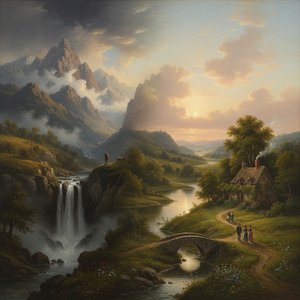
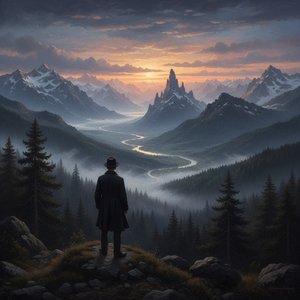
At the very heart of this artistic revolution lies the concept of the Sublime. Unlike the beautiful, which offers comfort and symmetry, the sublime presents us with a greatness that defies calculation. It is an encounter with the vast, the lofty, and the overwhelming. In the hands of Romantic masters, nature was no longer a backdrop for human industry but a living, breathing force of cataclysmic extremes. We see this in the way rugged, jagged mountain peaks pierce through heavy mists, or how dramatic crepuscular rays break through storm clouds to bathe a landscape in a celestial, yet haunting, glow.
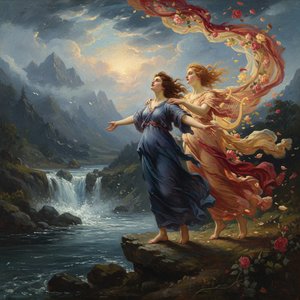
This fascination with nature’s power served as an essential alternative to the ordered world of industrialization. As cities grew crowded and factories rose, the landscape became a sanctuary for the soul. The works of this era often depict the unpredictability of the elements—the terrifying majesty of a shipwreck amidst a violent sea or the silent, intimidating presence of an Alpine glacier. To gaze upon such scenes is to experience a dual sensation: a deep sense of spiritual wonder intertwined with a humbling recognition of our own vulnerability. It is a visual meditation on the infinite, reminding us that there are forces in this universe far greater than human will.
Shadow and Spirit: Exploring the Introspective Depths of Dark Romanticism
 Dark Romanticism
Dark Romanticism is a literary sub-genre of Romanticism, reflecting popular fascination with the irrational, the demonic and the grotesque. Often conflated with Gothic fiction, it has shadowed the euphoric Romantic movement ever since its 18th-centur...
While much of Romanticism celebrates the euphoric and the divine, a shadow has always trailed its light. This is the realm of Dark Romanticism, a sub-genre that finds beauty in the irrational, the grotesque, and the psychological weight of human fallibility. Where other artists sought the light of transcendence, the Dark Romantics explored the depths of guilt, sin, and the haunting effects of the unknown. It is a tradition deeply intertwined with Gothic fiction, echoing the atmospheric dread found in the works of Edgar Allan Poe.
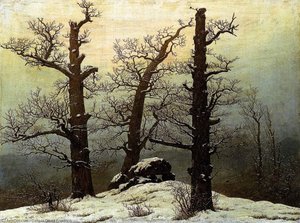
In these paintings, the landscape often becomes a mirror for the fractured psyche. The atmosphere thickens with a sense of melancholia; forests become dense and impenetrable, and twilight brings with it the suggestion of the supernatural. There is an intense fascination with the shadows—not merely as an absence of light, but as a presence in itself that holds the secrets of the human condition. Through this lens, art becomes a way to confront the darker impulses of our nature, finding a strange, somber dignity in the exploration of fear and the ephemeral nature of existence.
Masters of the Atmosphere: The Visionary Landscapes of Friedrich, Turner, and Koch
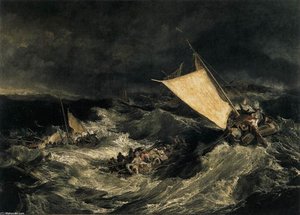 The Shipwreck
The Shipwreck: A Romantic Vision of Nature's Fury William Turner’s "The Shipwreck," created in 1805, stands as a quintessential representation of the Romantic movement in art. This oil on canvas masterpiece, measuring 171 x 240 cm and currently resid...
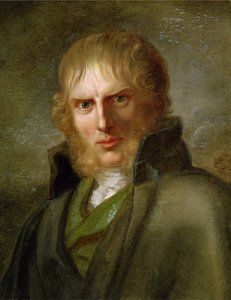
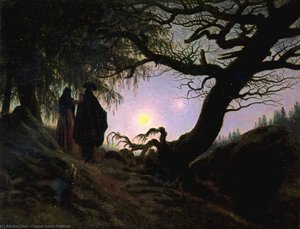
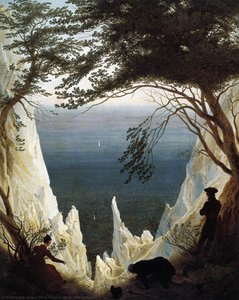
The true architects of this emotional landscape were individuals whose visions were as varied as they were profound. Caspar David Friedrich stands as perhaps the most iconic figure of German Romanticism. His works, such as the hauntingly beautiful Rocky Ravine, serve as invitations to contemplate our place within the vastness of existence. He mastered the art of the contemplative landscape, using stark contrasts and imposing figures to evoke a sense of profound spiritual longing.
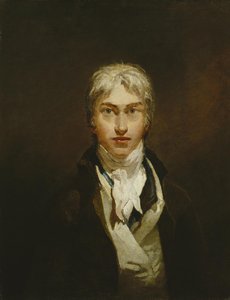
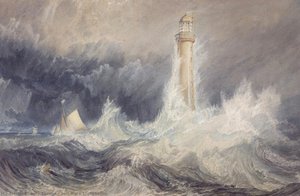
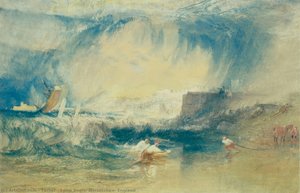
In contrast to Friedrich’s often still and meditative compositions, J.M.W. Turner pushed the boundaries of light and motion toward the very edge of abstraction. His canvases, particularly his depictions of shipwrecks and storms, capture nature in its most furious, elemental state. Turner’s brushwork dissolves solid forms into swirling vortices of color and light, capturing the sheer energy of the atmosphere. Similarly, Joseph Anton Koch acted as a vital bridge between the disciplined traditions of Neoclassicism and the burgeoning fervor of Romanticism. His Alpine vistas, characterized by monumental scale and idealized beauty, brought a heroic grandeur to the genre, proving that the landscape could carry the weight of epic narrative.
A Legacy of Emotion: How Romanticism Reshaped the Human Connection to Art
--- title: Romanticism - The Metropolitan Museum of Art author: Kathryn Calley Galitz url: https://www.metmuseum.org/essays/romanticism hostname: metmuseum.org description: In Romantic art, nature—with its uncontrollable power, unpredictability, and ...
The legacy of the Romantic movement continues to resonate within our modern consciousness. It fundamentally altered the trajectory of art history by establishing that the primary purpose of a masterpiece is not to replicate reality, but to evoke a response. By prioritizing subjectivity and emotion, the Romantics paved the way for the expressive freedom that would later define movements like Impressionism and beyond. They taught us that the landscape is not merely a collection of trees, rocks, and water, but a canvas upon which the human soul can project its deepest truths.
Today, when we stand before a hand-painted reproduction of a Romantic masterwork, we are doing more than admiring technical skill; we are participating in a centuries-old dialogue about feeling. We find ourselves drawn to the texture of the oil, the depth of the shadows, and the luminous quality of the light, seeking that same sense of awe and introspection that moved the artists of the nineteenth century. The Romantic landscape remains an eternal refuge—a place where we can reconnect with the sublime, the mysterious, and the enduring magic of the natural world.