
The Rebellion of 1848: Challenging the Rigid Traditions of the Royal Academy
 The Pre-Raphaelite Brotherhood: Reclaiming Beauty, Nature, and Truth in Victorian Art History
The Rebellion Against the Academy: The Birth of the Pre-Raphaelite Brotherhood The Pre-Raphaelite Brotherhood: Rediscovering Romanticism, Mythological Depth, and Vivid Detail in Victorian Art The Rebellion Against Tradition: The Birth of the Pre-Raph...
In the mid-19th century, the air in London was thick with the scent of revolution. As political fervor swept across the European continent in 1848, a different, more quiet uprising was brewing within the hallowed, stifling corridors of the British art establishment. A small circle of young, fervent visionaries found themselves increasingly suffocated by the rigid dictates of the Royal Academy. To these artists, the prevailing style—often disparagingly labeled as slosh by the rebels—felt hollow and mechanistic. They looked upon the heavy-handed, dark, and overly academic compositions of their predecessors with a profound dissatisfaction, seeing only an artificiality that masked the raw textures of the real world.
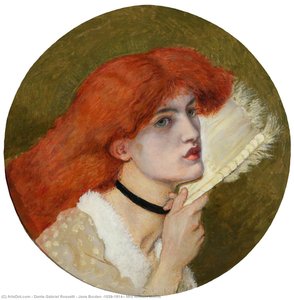
This group, which would come to be known as the Pre-Raphaelite Brotherhood (PRB), was founded by seven members including William Holman Hunt, John Everett Millais, and Dante Gabriel Rossebetti. Their rebellion was not merely an aesthetic whim but a moral imperative. They sought to dismantle the influence of Sir Joshua Reynolds, whom they mockingly called Sir Sloshua, whose emphasis on idealized, formulaic forms they believed had corrupted the integrity of art. By challenging the Academy’s preference for the polished, Mannerist traditions that followed Raphael, these artists aimed to reclaim a sense of truth and sincerity that they felt had been lost to the shadows of academic convention.
A Return to Sincerity: The Medieval Revival and the Quest for Pure Beauty
 Pre-Raphaelite Romanticism: The Revival of Medieval Beauty and Nature in Victorian Art
The Rebellion of 1848: Challenging the Royal Academy's Rigid Traditions The Pre-Raphaelite Brotherhood: Rebellion, Romance & Medieval Revival The Seeds of Discontent: Challenging Academic Art The year is 1848, a period of revolutionary fervor sweepin...
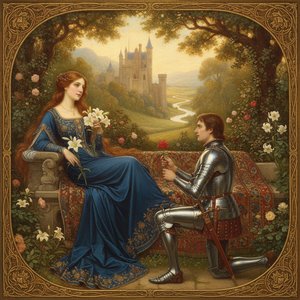
To move forward, the Brotherhood believed they had to look backward. Their gaze was fixed upon the era before Raphael—a period characterized by what they perceived as a raw, unadulterary sincerity and spiritual purity. This fascination with the Quattrocento Italian art allowed them to rediscover an aesthetic of abundant detail and intense, luminous color. They found profound inspiration in the medieval spirit, seeking to revive a time when art was deeply connected to the sanctity of the natural world and the soul.
This reverence for the past manifested in a meticulous observation of nature. Unlike the broad, sweeping strokes of the Academy, the Pre-Raphaelites embraced a commitment to mimesis—the faithful imitation of nature. Every leaf, every fold of fabric, and every glint of light was rendered with an almost unsettling realism. In works such as Edward Coley Burne-Jones’s Cupid’s Hunting Fields, we see this yearning for beauty expressed through a lush, immersive landscape where gods and mortals intertwine amidst an idyllic serenity. It is a world where the textures of skin and foliage are so precisely captured that the canvas seems to breathe with a quiet, eternal intensity.
Poetry in Paint: The Symbiotic Relationship Between Verse and Visual Artistry
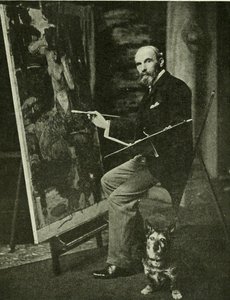
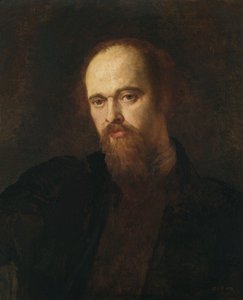
 Dante Gabriel Rossetti
A Life Immersed in Beauty: The World of Dante Gabriel Rossetti Dante Gabriel Rossetti, born May 12, 1828, in London, was a pivotal figure in the Pre-Raphaelite Brotherhood and a poet whose verses were as richly symbolic and evocative as his paintings...
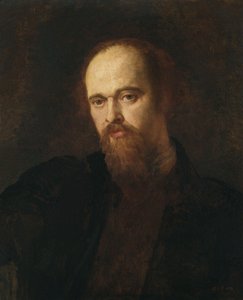
The Pre-Raphaelite movement was never solely a visual phenomenon; it was a deeply literary endeavor, where the boundaries between the painter’s brush and the poet’s pen were perpetually blurred. Many of the Brotherhood's leading figures were polymaths, moving seamlessly between disciplines. Dante Gabriel Rossetti, for instance, was a poet whose verses were as richly symbolic and evocative as his canvases. His very name, derived from the great Italian poet Dante Alighieri, serves as a testament to this profound literary heritage.
This intersection of literature and art created a unique sensory experience for the viewer. To look upon a Pre-Raphaelite painting is to enter a world steeped in longing and mystery, much like reading a Romantic poem. The influence of poets such as Wordsworth and Coleridge provided a spiritual and intellectual framework, fostering a fascination with the sublime grandeur of nature. This synergy allowed the movement to transcend mere depiction; they were not simply painting scenes, but were evoking complex emotional states and exploring the psychological depths of the human condition through a shared language of myth and metaphor.
Enigmatic Muses and Mythological Depth: Exploring Symbolism and Narrative
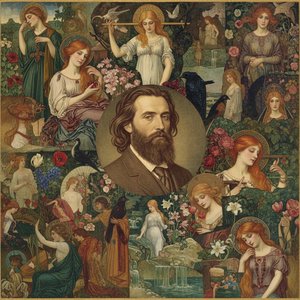 Dante Gabriel Rossetti's 25 Masterpieces: A Journey Through Victorian Art & Symbolism | ArtsDot
Introduction To embark on a journey through the top 25 artworks of Dante Gabriel Rossetti is to enter a world steeped in beauty, longing, and a profound sense of mystery. These paintings are not merely images; they are portals into the soul of a Vict...
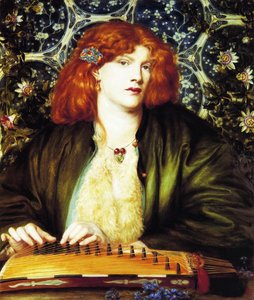
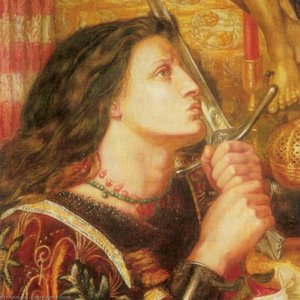
At the heart of this movement lies an enduring fascination with the enigmatic female figure—the muse who embodies both earthly sensuality and ethereal beauty. Rossetti’s works often feature striking women, figures who act as portals into a realm of profound mystery and desire. These are not merely portraits; they are vessels for symbolism, where every object and gesture carries a hidden meaning. Through the use of mythological and historical subjects, the artists explored universal themes of love, loss, and the eternal search for meaning.
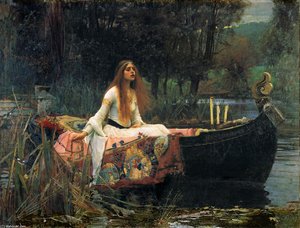
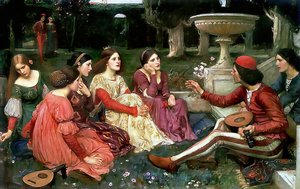
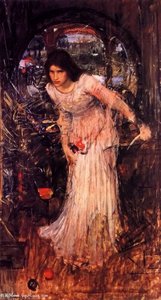
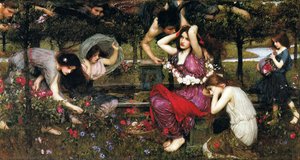
This narrative depth is perhaps most exquisitely captured in the later works of John William Waterhouse. In his painting Diogenes, we see a masterful command of Romanticism, where the philosopher’s pursuit of truth is set against an atmosphere of leisure and classical reflection. Whether it is the delicate, sensitive portraiture of Emma Sandys or the mythological grandeur found in the works of the Brotherhood, the Pre-Raphaelite style relies on a complex web of symbols—bows, arrows, flowers, and ancient artifacts—to invite the viewer into a deeper, more contemplative engagement with the artwork.
The Legacy of Light and Detail: From Pre-Raphaelite Precision to Romantic Emotion
 The Pre-Raphaelite Brotherhood: Rediscovering Romanticism, Mythological Depth, and Vivid Detail in Victorian Art
The Rebellion Against Tradition: The Birth of the Pre-Raphaelite Brotherhood In the mid-19th century, the rigid corridors of the British Royal Academy felt increasingly stifling to a group of young, fervent visionaries. Driven by a profound dissatisf...
The legacy of the Pre-Raphaelites continues to resonate through the ages, leaving an indelible mark on the trajectory of British art. Their commitment to luminous color palettes, precise draughtsmanship, and a preoccupation with the sublime has paved the way for subsequent movements, bridging the gap between the intense observation of Romanticism and the symbolic depth of later aestheticism. They taught us that beauty is not found in the idealized or the easy, but in the meticulous, the truthful, and the deeply felt.
As we reflect on their contributions, we see a movement that successfully reclaimed beauty from the clutches of academic stagnation. From the delicate, light-drenched visions of the early members to the more modern Pre-Raphaelite echoes found in Waterhouse, the movement remains a testament to the power of art to transcend time. It invites us to step into a timeless realm where every brushstroke is a heartbeat, and every canvas is a window into a dream of eternal, ethereal beauty.
If you find yourself captivated by the textures and emotional depth of these historical masterpieces, explore our collection at ArtsDot.com. We specialize in bringing the soul of art to life through exquisite, hand-painted oil reproductions that honor the meticulous craftsmanship of the masters.