
Introduction
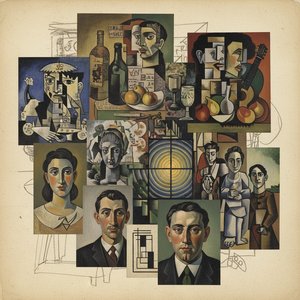
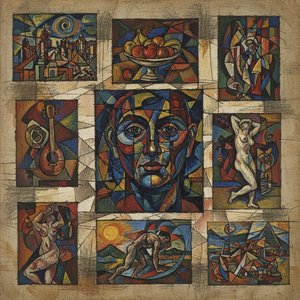
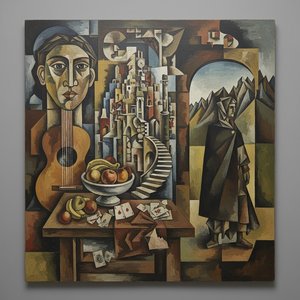
Imagine, if you will, a moment in time when the very fabric of reality seemed to fracture and dance before our eyes. To step into the world of Cubism is to leave behind the soft, sun-drenched landscapes we so dearly love and enter a realm where perspective is no longer a single, tranquil window, but a kaleidoscope of shifting truths. It was an era of profound transformation, emerging at the dawn of the twentieth century as visionaries like Picasso and Braque dared to shatter the long-held illusions of the Renaissance, deconstructing objects into their most essential, geometric souls.
This movement did not merely seek to represent the world; it sought to understand its complexity, capturing the essence of a subject from multiple viewpoints all at once. It was a revolution of the mind and eye, reflecting a world that was becoming increasingly fragmented, fast-paced, and multifaceted. Even now, decades after those first bold brushstrokes, these works resonate with a startling modernity. They remind us that truth is rarely found in a single glance, and that beauty can be discovered even within the broken and the reconstructed.
In the journey ahead, I invite you to walk alongside me through a gallery of fractured planes and reimagined dimensions. We shall explore ten definitive masterpieces—works that challenged the very definition of art and forever altered the way we perceive the rhythm and structure of our existence.
Guernica - Pablo Picasso
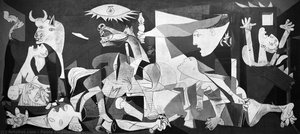 Guernica - Pablo Picasso
Picasso’s Guernica is far more than a painting; it is a visceral, monochromatic cry captured in the jagged, fragmented language of Cubism. In this 1937 masterpiece, the starkness of black, white, and grey strips away all comfort, forcing us to confront the raw reality of human suffering. There is a haunting rhythm in the angular lines—the wounded horse writhing in agony and the silent, devastating grief of a mother cradling her child. It does not merely depict the tragedy of the Spanish Civil War; it breathes its chaos into our very souls. To bring such a monumental piece into your home is not simply an acquisition; it is an inheritance . It is a way to invite a lineage of taste onto your walls, where every glance at these powerful, deconstructed forms becomes a profound nod to the masters and a connection to a legacy that transcends time.
Three Musicians - Pablo Picasso
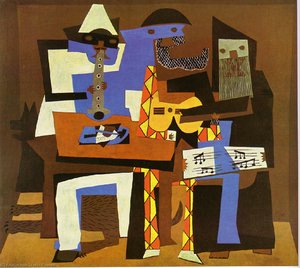 Three Musicians - Pablo Picasso
Imagine a quiet corner of a sun-drenched studio, where the air hums with the faint, rhythmic melody of a distant lute. Before your eyes even settle on the canvas, you feel the pulse of a performance about to begin. In Three Musicians , Picasso moves away from the fractured chaos of his earlier years into the vibrant, structured world of Synthetic Cubism. Here, Harlequin, Pierrot, and a monk emerge from a tapestry of geometric planes and rich, earthy ochres. It is a dance of shapes—a reconstruction of reality that captures the post-war longing for order through the whimsical lens of Commedia dell'arte .
This masterpiece stands as a pillar of the movement because it proves that abstraction can be deeply soulful, blending intellectual complexity with a decorative, almost musical rhythm. Bringing such a dynamic piece into your home does more than decorate a wall; it invites a conversation between history and the present, infusing your space with an enduring, rhythmic energy.
The Young Ladies of Avignon - Pablo Picasso
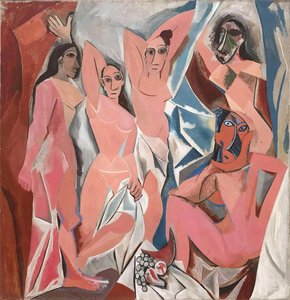 The Young Ladies of Avignon - Pablo Picasso
Imagine stepping into a quiet gallery, only to be met by a sudden, jarring fracture in the air. Before you stands Les Demoiselles d'Avignon , a work that does not merely invite observation but demands an encounter. In 1907, Picasso shattered centuries of artistic tradition, replacing soft, idealized beauty with a landscape of jagged planes and confrontational gazes.
This masterpiece is the very heartbeat of the Cubism movement ; it is the moment where perspective splintered into multiple viewpoints, drawing primal inspiration from the raw power of African masks. It earns its place among the top ten because it represents the sheer courage required to deconstruct reality to find a deeper, more complex truth. To invite such transformative energy into our daily environments is to embrace the idea that even in fragmentation, there is a profound and magnificent grace, allowing our modern spaces to resonate with intellectual depth and enduring strength.
Portrait of Ambroise Vollard - Pablo Picasso
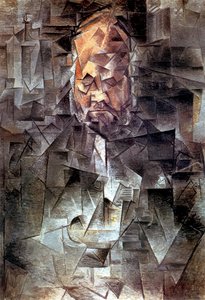 Portrait of Ambroise Vollard - Pablo Picasso
Imagine stepping into a quiet, sun-dappled studio in 1910, where the air is heavy with the scent of linseed oil and the weight of an impending revolution. In Portrait of Ambroise Vollard , Pablo Picasso does not merely capture a face; he deconstructs an era. This masterpiece stands as a cornerstone of Analytical Cubism , where the influential art dealer is transformed into a mesmerizing mosaic of geometric planes.
The palette is a study in soulful restraint, utilizing muted ochres, somber grays, and earthy browns to focus the eye on form rather than mere color. As you gaze upon the fractured surfaces, multiple perspectives emerge simultaneously, challenging your very perception of space and identity. There is a profound, intellectual stillness within these intersecting lines. In a contemporary living space, this painting acts as a sophisticated anchor—a piece that invites deep contemplation and brings a structured, architectural elegance to any wall, turning a room into a sanctuary for the curious mind.
Mandola - Georges Braque
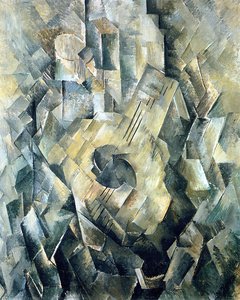 Mandola - Georges Braque
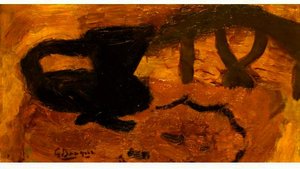
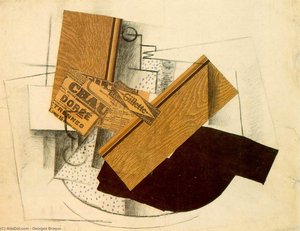
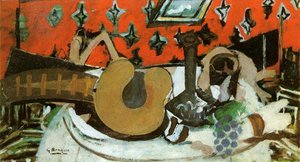
What story does the fractured, rhythmic landscape within Mandola by Georges Braque tell us about the moment the world began to see differently? Emerging from the intense, collaborative spirit of 1910, this masterpiece stands as a cornerstone of Analytical Cubism . Rather than a simple depiction of a lute-like instrument, Braque deconstructs reality into a delicate interplay of muted ochres, grays, and earthy browns. He shattered traditional perspective, replacing it with a complex mosaic of geometric planes that capture the very essence of form and sound.
Integrating such a revolutionary work into your personal sanctuary offers more than mere decoration; it provides a curated escape into art history. The painting’s introspective, fragmented beauty invites a sense of quiet contemplation, allowing you to bring the profound intellectual depth of the Cubist movement into the modern home. It is an invitation to pause, to look closer, and to find rhythm within the fractured light of a bygone era.
I and the Village - Marc Chagall
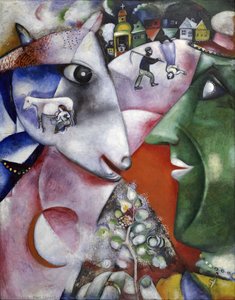 I and the Village - Marc Chagall
Before the geometric rigor of Cubism took hold, Marc Chagall breathed a hauntingly beautiful soul into its structure, weaving in the tender, fragmented memories of his youth in Vitebsk. In I and the Village , we encounter a pivotal conceptual leap: the marriage of Cubist fragmentation with the emotive, non-naturalistic palette of Fauvism. As you gaze upon the interlocking planes of blue-grey and emerald, you see more than just shapes; you see a dreamscape where a horse, a cow, and a village steeple drift through a flattened, multi-dimensional reality. The artist’s mastery lies in this very tension—using heavy, textured brushstrokes to capture the ephemeral nature of memory. This profound ability to find poetic order within a complex composition makes it an extraordinary choice for a sophisticated home office or study. Surrounding yourself with such a layered, symbolic masterpiece invites a sense of deep reflection and boundless creativity into your daily intellectual pursuits.
The Birthday - Marc Chagall
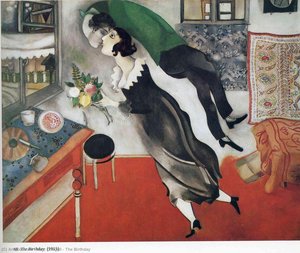 The Birthday - Marc Chagall
Imagine the moment in 1915 when Marc Chagall, amidst the encroaching shadows of war, found himself weightless with love. In The Birthday , he captures the very instant he and his beloved Bella were suspended in a joyful, gravity-defying embrace. This work stands as a vital pillar among the Top 10 Masterpieces That Defined the Cubism Art Movement ; it represents a profound conceptual leap where the fractured geometry of Cubism meets the soul of poetry. While others used the movement to deconstruct reality into rigid, analytical planes, Chagall utilized flattened perspectives and distorted forms to construct a dreamscape of pure emotion. The vibrant, swirling reds and deep, nocturnal blues create a sense of boundless possibility. Integrating such a masterpiece into your modern home office or study invites this same spirit of creative liberation, fostering an atmosphere of profound focus and sophisticated, luminous inspiration.
Man with a Guitar - Georges Braque
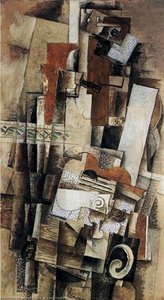 Man with a Guitar - Georges Braque
In Georges Braque’s Man with a Guitar , light does not simply fall upon a subject; it is meticulously composed, acting as a silent, structural language. Within this 1914 masterpiece, Braque does not merely paint a musician; he invents a new way of seeing. Through the lens of Analytical Cubism, the figure and his instrument are fractured into a rhythmic dance of geometric planes, where shadows and highlights are woven from a somber, earthy palette of ochre, umber, and sienna.
As you stand before this work, notice how the light is not reflected but built—layer by layer, through subtle impasto that gives the canvas a tactile, breathing depth. It is an intellectual puzzle that challenges our very perception of reality, offering multiple viewpoints in a single, breathless moment. To bring such a piece into your home is to invite a portal of profound contemplation; it transforms a wall into a window where light and form collide, turning any space into a sanctuary of modern history and artistic revolution.
Cubist Self-portrait - Salvador Dalí
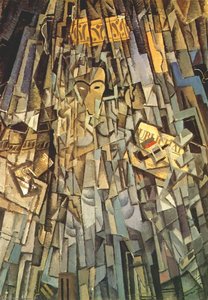 Cubist Self-portrait - Salvador Dalí
In his 1926 Cubist Self-portrait , we encounter a Salvador Dalí before the dreamscapes, caught in the fascinating, fractured lens of the Cubist movement. This masterpiece stands as a vital pillar in our exploration of the era because it captures the precise moment where analytical deconstruction meets an emerging psychological intensity. By dismantling his own likeness into a mosaic of cool blues, muted ochres, and sharp geometric planes, Dalí invites us to look far beyond the surface.
He challenges us to consider how much of our identity is merely a collection of disparate perceptions and light. This work does not just depict a man; it explores the very fragmentation of modern existence. For the discerning collector, such a piece offers more than mere decoration; it provides an intellectual anchor for a contemporary room, sparking a timeless dialogue between historical rigor and modern aesthetic. It remains a profound reminder that beauty often resides in the very pieces we use to reconstruct ourselves.
Two women running on the beach (The race) - Pablo Picasso
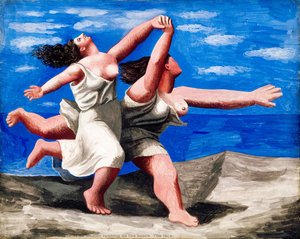 Two women running on the beach (The race) - Pablo Picasso
There is a certain breathless magic in Pablo Picasso’s 1922 masterpiece, Two women running on the beach (The race) . It captures a moment of unbridled joy, where the rhythmic motion of the figures seems to dance against an azure sky. As we explore the defining works of the Cubism movement, this piece stands as a vital bridge; it demonstrates how Picasso transitioned from rigid, geometric fragmentation toward a more fluid, expressive vitality while retaining that revolutionary approach to form.
The painting’s sensory depth—from the thick, gestural brushstrokes to the striking contrast between earthy sands and cool, sun-drenched blues—creates an atmosphere of pure liberation. For the contemporary connoisseur, this artwork offers a profound energy that transcends time. Its dynamic composition is a perfect inspiration for modern interiors, bringing a sense of movement and coastal light to a living space, much like a sudden burst of summer wind through an open window.
Conclusion
As we draw the curtain on this exploration of fractured planes and reimagined perspectives, we find that these Cubist masterpieces are far more than mere relics of a bygone era. They remain living, breathing presences that continue to challenge our perceptions and breathe a modern vitality into the spaces we inhabit. To look upon them is to witness the very moment art learned to capture the world from every angle at once—an enduring legacy that continues to shape the rhythm of contemporary design.
For the discerning professional—the architect of boutique hotels, the designer of serene villas, and the curator of refined private interiors—these works offer a profound opportunity to transform a room into an artistic statement. At ArtsDot.com , we serve as your dedicated creative partner, bridging the gap between historical grandeur and modern luxury. We specialize in crafting bespoke collections and providing professional digital mockups, allowing you to see exactly how these complex compositions will interact with your specific walls and lighting before the painting begins.
Our hand-painted reproductions are created with a reverence for the original's soul, ensuring that every texture and structural nuance is preserved in museum-quality oil on canvas. We invite you to explore our full collection and allow us to help you turn your next design project into a timeless masterpiece of light and form.