

Introduction
Step softly into this quiet corner of the gallery, where the scent of aged linseed oil seems to linger in the air and the light falls with a soft, dappled warmth. We often think of masterpieces as grand, sweeping canvases that command entire cathedral walls, but there is a profound, intimate magic found in a different medium: oil on board . There is something deeply personal about these works—a sense that we are peering directly into the artist's private thoughts, captured on a surface that is more tactile, more immediate, and often more experimental than the traditional stretched canvas.
Historically, the choice of wood or board was never merely a matter of convenience; it was an invitation to texture. For the masters of the Impressionist and Post-Improllisionist eras, these rigid surfaces allowed for a unique interplay of impasto and light. On a board, the paint does not merely sit upon a fabric; it builds a sculptural landscape. We see this in the way a heavy stroke of sun-drenched yellow can catch the light, or how a deep, moody blue can settle into the grain, creating a depth that feels almost alive. These works emerged from a period of immense cultural shifting, where artists moved away from the rigid academic traditions to capture the fleeting, sensory essence of a single moment—the shimmer of water, the movement of wind through a hayfield, or the soft glow of a Parisian afternoon.
Today, these legendary pieces remain deeply meaningful because they bridge the gap between the historical past and our modern emotional landscape. They remind us that beauty is often found in the small, the sturdy, and the concentrated. When we look at a masterpiece on board, we are not just looking at art; we are witnessing the physical struggle and triumph of the brush against a steadfast surface.
In the pages that follow, we shall embark on a curated journey through ten such extraordinary works. We will explore how these specific pieces—each a testament to the artist's devotion—shattered old boundaries and redefined the very language of color and light, forever changing the course of art history.
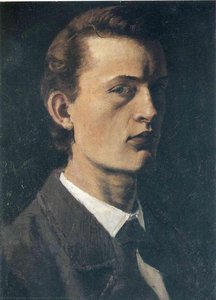
Self-Portrait - Edvard Munch
 Self-Portrait - Edvard Munch
In Edvard Munch’s 1882 Self-Portrait , the oil on board surface becomes a visceral stage for psychological depth. To look closely at this masterpiece is to witness the raw, tactile energy of Munch’s early experimentation; his brushwork moves away from academic smoothness toward a more textured, emotive application that captures the very essence of human vulnerability. The way the pigment clings to the board creates a sense of weight and permanence, mirroring the heavy, melancholic themes of mortality and isolation that would later define his legendary Expressionist style.
This painting does not merely depict a face; it captures a soul in flux through its muted ochres and piercing, direct gaze. At ArtsDot.com, we believe such profound emotional landscapes deserve to be felt, not just seen. Our mission is to preserve this tactile, three-dimensional quality for your own collection. Through our meticulous hand-painted oil reproductions, we recreate the visible brushstrokes and physical depth of these historical treasures, ensuring that the haunting beauty of Munch’s psychological landscape lives on within the intimate sanctuary of your home.
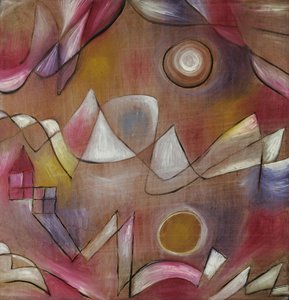
Arctic Dew - Paul Klee
 Arctic Dew - Paul Klee
In the ethereal realm of Paul Klee’s “Arctic Dew,” the boundaries between reality and imagination dissolve into a luminous dance of rhythm and color. Created in 1920, this mesmerizing oil on board masterpiece does not merely depict an arctic vista; it orchestrates a visual sonata where the frozen stillness of the North meets the vibrant energy of the aurora borealis. Klee, a master of the Bauhaus era, did not simply paint light—he composed it.
The brilliance of this work lies in its warmth; Klee eschews traditional icy blues for a palette rich with ochre, sun-drenched yellows, and soft pinks , balanced by whispers of deep purple. Through rhythmic, undulating lines, he creates a mirror-like dialogue between a celestial upper world and a tranquil, reflective expanse below. To gaze upon this piece is to witness the very moment of a cosmic thaw. It is an extraordinary emotional anchor for any collection, inviting a sense of serene wonder that turns a simple wall into a portal of pure, atmospheric inspiration.
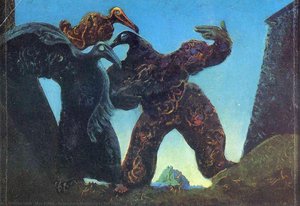
Barbarians Marching to the West - Max Ernst
 Barbarians Marching to the West - Max Ernst
To encounter Barbarians Marching to the West by Max Ernst is to step directly into a fever dream of historical upheaval. Painted in 1937, this work stands as a haunting pillar in our collection of legendary oil on board masterpieces because it redefined the boundaries of emotional expression. Through his revolutionary grattage technique—scraping and layering paint to create a scarred, geological texture—Ernst captured the very tremors of a world on the brink of war. The colossal, predatory birds locked in an unsettling dance serve as visceral symbols of unstoppable forces, leaving the viewer breathless amidst the cosmic dread.
This painting does not merely sit upon a wall; it commands the atmosphere of a room. Its inclusion in this top ten list is a testament to how Surrealism transformed chaos into a profound aesthetic language. At ArtsDot.com, we believe such transformative energy should be part of your personal sanctuary. Imagine this textured, mythic landscape as a centerpiece in your home, turning a quiet corner into a profound statement of intellectual depth and historical reverence. It is more than decor; it is an invitation to contemplate the beautiful, turbulent soul of art history.
Seated woman 11 - Pablo Picasso
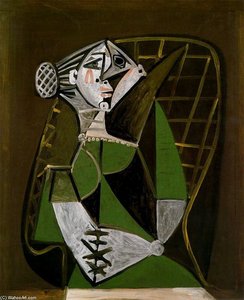 Seated woman 11 - Pablo Picasso
While we often associate the masters with vast canvases, Picasso’s choice of wood for Seated Woman 11 reveals a profound intimacy, as if he were capturing a private thought on a fragment of the earth itself. In 1927, during his transformative Cubist period, Picasso moved away from the fluid light of Impressionism to embrace the structural rigor of geometric planes. This piece is not merely a portrait; it is a rhythmic dance of muted greens and earthy browns, where the woman’s contemplative gaze and her pearl necklace emerge through fractured, intersecting shapes.
The technical genius lies in how he utilizes the rigid surface of the board to anchor the weight of his experimentation, using oil pigments to create a palpable, sculptural depth. The way the chair dissolves into architectural fragments challenges our very perception of reality. To possess such a work—or a masterful reproduction of it—is to invite that same spirit of intellectual discipline and structural beauty into your own space. It serves as a breathtaking focal point for a modern study, inspiring a sanctuary of deep focus and sophisticated, creative thought.
Chrysanthemums in a Chinese Vase - Henri Matisse
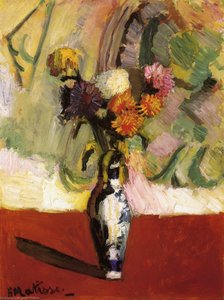 Chrysanthemums in a Chinese Vase - Henri Matisse
What story does the vibrant, sun-drenched atmosphere of Chrysanthemums in a Chinese Vase by Henri Matisse tell us about the dawn of a new era? Painted in 1902, this exquisite oil on board serves as a bridge between the structured legacies of Post-Impressionism and the wild, emotive liberation of Fauvism. As we wander through this masterpiece, we find ourselves captivated not by mere botanical accuracy, but by an explosion of joyous, saturated hues—pinks, yellows, and reds that seem to pulse against the rich, earthy tones of the table.
Matisse uses the intimate setting of a still life to break ground, replacing traditional realism with a rhythmic, expressive brushwork that prioritizes emotional truth. For the modern collector seeking a curated escape, this painting offers more than decor; it provides a window into a world of pure vitality. Bringing such a legendary work into your home allows you to surround yourself with the same light-drenched energy that redefined modern art forever, turning any room into a sanctuary of color and historical depth.
darmstadt madonna (detail - ) - Hans Holbein the Younger
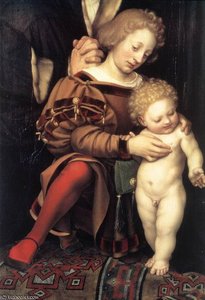 darmstadt madonna (detail - ) - Hans Holbein the Younger
In the Darmstadt Madonna , the lines of Hans Holbein the Younger are not merely painted; they are choreographed . This detail from his 1533 masterpiece reveals a dance frozen in time, where the tender weight of the infant against the Madonna’s chest creates a rhythm of profound serenity. As one of our most legendary oil on board works, it demonstrates how Holbein could transform a rigid surface into a breathing, tactile experience through meticulous Northern Renaissance realism.
The light does not simply hit the canvas; it flows through the delicate folds of drapery and settles into the luminous, soft skin tones with a supernatural grace. There is a quiet, structural harmony here—a pyramidal stability that makes the surrounding historical chaos feel like perfect stillness. To bring this piece into your home is to invite that same balance; it allows your walls to breathe rhythm and hold a moment of eternal peace. It is more than a portrait; it is an invitation to find harmony within the soul.
Woman with Parrot - Paul Cézanne
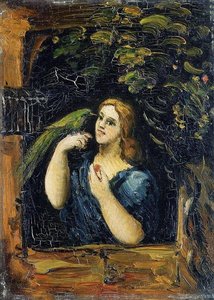 Woman with Parrot - Paul Cézanne
In the quiet intimacy of Woman with Parrot , we encounter a young Paul Cézanne capturing a moment of profound, serene stillness. Painted in 1864, this exquisite oil on board serves as a delicate window into the artist's early explorations of form and nature. The way the woman gazes toward us, accompanied by the vibrant presence of her feathered companion against a soft, verdant backdrop, evokes a sense of peaceful contemplation that transcends time.
As one of our top 10 legendary oil on board masterpieces , this work is essential because it captures the bridge between Romanticism and the structural revolution of Post-Impressionism. Before he dismantled the world into geometric planes, Cézanne mastered this tender, atmospheric light. Today, the painting’s soft palette and organic textures find a beautiful resonance in modern interiors, offering a soulful focal point that brings a sense of historical elegance and natural tranquility to any curated home collection.
Dalí portrait of paul eluard,1929, private - Salvador Dalí
 Dalí portrait of paul eluard,1929, private - Salvador Dalí
There is a haunting, quiet magic held within the layers of Dalí portrait of Paul Éluard, 1929 , as if Salvador Dalí captured not just a man, but the very breath of a dream. This work stands as a pillar among the Top 10 Legendary 'Oil On Board' Masterpieces because it defies the rigid boundaries of reality, offering instead a profound visual dialogue between the conscious and the subconscious. The board serves as a dense, intimate stage where Dalí’s meticulous precision meets the irrational; one can almost feel the tension in the delicate rendering of features juxtaposed against the fluid, destabilizing presence of clocks and soaring birds.
The palette whispers of shadows and light, weaving a labyrinth of symbols—from ghostly boats to drifting cars—that invite endless contemplation. For the discerning collector, bringing such a piece into a modern sanctuary provides more than mere decoration; it introduces an intellectual depth and an avant-garde mystery that transforms a room into a space of profound thought and sophisticated wonder.
Untitled (Purple Petunia) - Georgia O'Keeffe
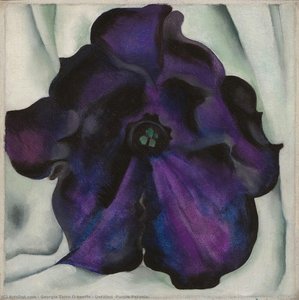 Untitled (Purple Petunia) - Georgia O'Keeffe
To gaze upon Georgia O’Keeffe’s Untitled (Purple Petunia) is to step into a world where the botanical becomes deeply personal. Painted in 1925 on a sturdy board, this work transcends mere floral study; it is an intimate immersion into the very soul of abstraction. O’Keeffe invites us to lose ourselves in the velvety, deep violet petals that unfurl with a palpable, rhythmic energy, capturing a sense of raw vitality that feels both ancient and modern.
As one of our Top 10 Legendary 'Oil On Board' Masterpieces , this piece holds a unique philosophical weight. By magnifying the petunia, O’Keeffe strips away the decorative to reveal a muscular, structural beauty—a meditation on form and the female experience. In today’s curated interiors, where we seek pieces that offer emotional depth and organic connection, her use of bold color and dramatic cropping remains a profound cultural touchstone. The painting does not just sit upon the wall; it breathes, offering a luminous, sensory sanctuary of light and shadow that continues to redefine the boundaries of American modernism.
headiii - Francis Bacon
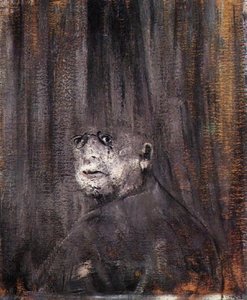 headiii - Francis Bacon
To stand before Francis Bacon’s "Head II" is to encounter a visceral echo of existential dread. In this profound oil on board masterpiece, the light does not merely illuminate; it dissects. Bacon does not paint a face so much as he composes a psychological landscape, where shadows act as a language for the fractured human spirit. The way the dark, dramatic background presses against the distorted visage creates a tension that feels almost sculptural, pulling the viewer into a moment of intense, silent confrontation.
The texture is where the soul of this work resides. Through aggressive impasto strokes and thick, viscous layers, Bacon achieves a nightmarish realism that breathes with life. You can feel the weight of the pigment, mirroring the heavy emotional gravity of post-war anxiety. It is a masterclass in using texture to invent emotion, turning a somber portrait into a portal of raw, human truth. For the discerning collector, bringing such a commanding presence into a home means inviting a profound dialogue between light, shadow, and the enduring mysteries of the psyche.
Conclusion
As the light fades on our journey through these storied boards, we are reminded that these masterpieces are far more than mere relics of a bygone era; they are living, breathing presences. Each stroke of oil captured on wood carries a pulse—a fragment of the artist's soul that continues to stir our emotions and breathe life into the spaces we inhabit. To hold a gaze with a Monet or feel the textured movement of a Van Gogh is to participate in a timeless human conversation, one that transcends the centuries to touch us in the quietest moments of our lives.
At ArtsDot.com , we believe that such profound beauty should not be confined to the silent halls of museums, but should instead become a part of your daily sanctuary. We serve as a dedicated creative partner for those who seek to weave this history into the fabric of modern elegance—whether you are an interior designer composing the atmosphere of a luxury hotel, an architect breathing soul into a private villa, or a collector refining a personal estate. Through our bespoke services, we offer more than just reproductions; we provide the tools to curate an artistic legacy.
From professional digital mockups that allow you to visualize a composition upon your very walls, to custom collections tailored to a specific architectural vision, our mission is to help you transform every project into a profound artistic statement. We invite you to explore the enduring textures and luminous light of our full collection , and let these legendary works become the heartbeat of your most cherished spaces.