




Introduction
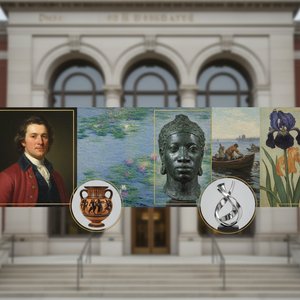
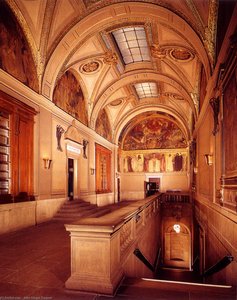
To step into the Museum of Fine Arts, Boston, is to embark on a quiet pilgrimage through the very heart of human creativity. It is not merely a building of stone and glass, but a vast, breathing sanctuary where the echoes of distant eras meet the soft light of the present. As you wander through its grand halls, you are invited to lose yourself in a tapestry of global heritage—a place where the delicate whispers of ancient civilizations converge with the bold, transformative strokes of modern masters.
For generations, this institution has served as a cultural cornerstone, meticulously gathering treasures that span the breadth of human experience. From the profound stillness of antiquity to the vibrant, light-drenched canvases of the Impressionist era, the museum holds a mirror to our collective soul. Its collection is a testament to the enduring power of beauty to transcend borders, languages, and time itself, offering a window into the spiritual, the aesthetic, and the deeply personal stories that define us.
The works we celebrate today remain profoundly meaningful because they do more than decorate a wall; they stir the senses and provoke the heart. Whether it is the way a particular shade of blue evokes the melancholy of a twilight sky, or how a sculpted form captures the fleeting grace of a human gesture, these masterpieces continue to speak to our modern sensibilities. They remind us of our shared capacity for wonder and our eternal search for meaning in an ever-changing world.
In the pages that follow, we shall guide you through a curated selection of twenty-five extraordinary works—each a jewel within the museum's crown. We will journey from the ethereal textures of light and shadow to the intricate details of ancient craftsmanship, preparing your spirit for an intimate encounter with some of the most evocative treasures ever held within these hallowed walls.
The Fog Warning - Winslow Homer
 The Fog Warning - Winslow Homer
In the hallowed halls of the Museum of Fine Arts, Boston, few works command the room with such visceral tension as The Fog Warning by Winslow Homer. This 1885 masterpiece does not merely depict a fisherman; it captures a breathless moment of human vulnerability against the encroaching, silver-grey shroud of the Atlantic. The painting is a profound meditation on resilience, where the weight of a heavy catch meets the looming uncertainty of the mist.
Homer’s mastery of texture is breathtaking—the thick, expressive impasto of the turbulent waves creates a tactile energy that feels almost alive under the gallery lights. His palette of somber blues, ochres, and slate greys offers a quiet prestige, making this piece a cornerstone of the museum's collection of American Realism. For the modern collector, the painting’s dramatic interplay of light and shadow provides a sophisticated anchor for interiors, bringing an atmosphere of timeless strength and maritime soul to any curated space.
Grainstack in the Morning, Snow Effect - Claude Monet
 Grainstack in the Morning, Snow Effect - Claude Monet
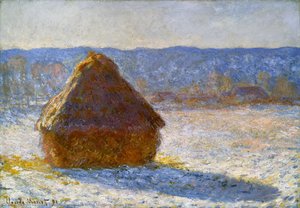
In the quietude of a winter morning, Grainstack in the Morning, Snow Effect by Claude Monet exists as a breath of frozen light, capturing a moment where time seems to pause amidst the frost. As one of the most transcendent works within the top 25 artworks in 'Museum of Fine Arts, Boston', this masterpiece from his celebrated Haystacks series remains immortal due to its profound ability to transform a humble rural scene into a symphony of atmospheric emotion. Monet’s brushwork does not merely depict snow; it breathes life into the cold, using short, broken strokes of violet, cerulean, and soft white to simulate the shimmering texture of a landscape under a winter sun. The warmth of the haystack’s earthy tones provides a soulful contrast to the biting chill of the surrounding fields, creating a visual harmony that is both invigorating and deeply serene. For the modern collector, such a piece brings an unparalleled sense of tranquil sophistication, inviting the soft, luminous spirit of Impressionism to anchor a contemporary space with timeless grace.
Fisherman's Cottage at Varengeville - Claude Monet
 Fisherman's Cottage at Varengeville - Claude Monet
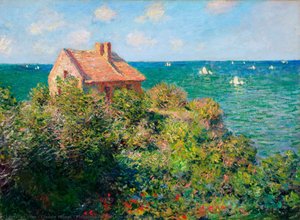
To gaze upon Fisherman's Cottage at Varengeville by Claude Monet is to witness a moment of eternal sunlight caught in the gentle breath of the Normandy coast. As one of the most luminous treasures within the collection of the Museum of Fine Arts, Boston, this masterpiece stands immortalized for its ability to dissolve the boundaries between sea, sky, and earth through pure, emotive color. Monet does not merely paint a cottage; he captures the very vibration of light dancing upon a red-tiled roof and the rhythmic pulse of the blue sea.
The canvas breathes with a sensory richness, where thick, impasto brushstrokes create a tactile landscape of lush greenery and salt-kissed air. The soft blues and vibrant greens whisper of tranquility, offering a profound sense of escape that transcends the decades. For the modern collector, this work brings an unparalleled sophistication to a home, acting as a window into a serene, sun-drenched world. It is a piece that invites stillness, transforming any contemporary interior into a sanctuary of light and coastal grace.
Capri (also known as A Girl of Capri) - John Singer Sargent
 Capri (also known as A Girl of Capri) - John Singer Sargent
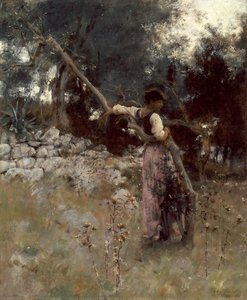
In Capri (also known as A Girl of Capri) by John Singer Sargent, the soft, sun-drenched greens of Mediterranean foliage set a mood of profound serenity and quietude. This masterpiece, a standout among the top 25 artworks in 'Museum of Fine Arts, Boston' , showcases Sargent’s breathtaking ability to manipulate light and atmosphere. His palette—a delicate dance of earthy browns, muted olives, and the sudden, joyful bloom of floral pinks—captures the hazy, dreamlike essence of an Italian afternoon. The way the light filters through the leaves, creating a luminous, almost ethereal glow, is precisely why this work remains a cornerstone of Impressionist excellence.
For the discerning collector or interior designer, integrating this piece into a modern living space offers a way to curate emotional tranquility. The painting’s muted, organic tones can anchor a room with a sense of timelessness, providing a focal point that breathes life and soft, natural light into even the most contemporary settings. It is more than a painting; it is an invitation to pause and find harmony within the beauty of nature.
Madame Monet in Japanese Costume (La Japonaise) - Claude Monet
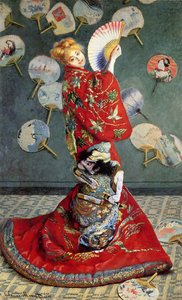 Madame Monet in Japanese Costume (La Japonaise) - Claude Monet
Imagine stepping into a world where the boundaries between East and West dissolve into a vibrant, theatrical dream. In Madame Monet in Japanese Costume (La Japonaise) , Claude Monet invites us to witness a breathtaking moment of cultural fusion. His wife, Camille, emerges from a sea of delicate uchiwa fans, draped in an opulent, crimson uchikake kimono that radiates with the warmth of a setting sun. The painting is a sensory feast; you can almost feel the heavy silk and see the meticulous embroidery of samurai figures dancing across the fabric.
Monet masterfully employs the spirit of Japonisme , using bold, expressive brushstrokes and a rich palette of deep reds, golds, and midnight blues to create a sense of layered mystery. While the blonde wig hints at her European roots, the surrounding atmosphere is one of exotic enchantment. For those seeking to bring a sense of curated drama into a modern home, this masterpiece serves as a profound focal point. Its presence in a room evokes a sophisticated dialogue between history and contemporary elegance, offering an infusion of color and storytelling that inspires deep reflection and creative wonder.
Long Branch, New Jersey - Winslow Homer
 Long Branch, New Jersey - Winslow Homer
In Long Branch, New Jersey , Winslow Homer masterfully captures the luminous, midday sun as it dances across the Atlantic shoreline, bathing the Gilded Age social scene in a brilliant, salt-kissed glow. The light does not merely illuminate; it breathes life into the textures of fine Victorian fabrics and the soft, rhythmic crests of the waves. By utilizing a sophisticated interplay of bright highlights and subtle atmospheric shadows, Homer achieves a sense of plein air vitality that was revolutionary for American Realism, securing this work's prestigious place among the top 25 artworks in the Museum of Fine Arts, Boston .
The painting’s palette—a serene harmony of sun-drenched sands, pale cerulean skies, and muted greens—offers a breathtaking study in light and tranquility. When brought into a modern interior, a faithful oil reproduction of this masterpiece introduces an exquisite layer of depth and historical elegance. The way the light seems to emanate from within the canvas can transform a contemporary wall into a window of timeless summer nostalgia, adding a luxurious, luminous soul to any curated collection.
Harvesters Resting - Jean-François Millet
 Harvesters Resting - Jean-François Millet
To stand before Harvesters Resting by Jean-François Millet is to feel the weight of the sun and the quiet dignity of the earth itself. As one of the most profound treasures within the top 25 artworks in 'Museum of Fine Arts, Boston', this 1853 masterpiece transports us to the heart of the Barbizon School. Millet moves beyond mere landscape, using a palette of deep ochres, muted greens, and earthy browns to celebrate the rhythmic, grueling beauty of peasant life.
The canvas breathes with a tactile realism; you can almost sense the rough texture of the grain bundles and the heavy fatigue in the figures' limbs. Through masterful, fluid brushwork, Millet captures a moment of communal respite where the presence of a mother cradling her child adds a tender, domestic pulse to the industrious scene. The soft, diffused light creates a sanctuary of stillness amidst the labor. This painting remains an essential inclusion for any collection, offering a timeless emotional depth that continues to ground and transform modern living spaces with its soulful, grounded grace.
Dance at Bougival - Pierre-Auguste Renoir
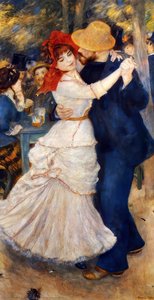 Dance at Bougival - Pierre-Auguste Renoir
To stand before Dance at Bougival by Pierre-Auguste Renoir is to step directly into a sun-drenched afternoon of pure, unadulterated joy. As one wanders through the collection of the Museum of Fine Arts, Boston, this masterpiece emerges as a radiant heartbeat, capturing that fleeting, golden moment when music and movement dissolve the boundaries between strangers. Renoir invites us to a charming French village, where the air feels thick with the warmth of summer and the soft scent of leisure.
The painting is a triumph of Impressionist light; notice how his fluid, broken brushstrokes dance across the canvas, mimicking the very vitality of the figures. A palette of soft pastels and luminous highlights creates a dreamlike atmosphere, while the central couple’s tender embrace provides an emotional anchor amidst the swirling crowd. It remains essential among the top 25 artworks in 'Museum of Fine Arts, Boston' because it transcends mere depiction to offer a sensory experience of human connection. Even today, such a work possesses the power to transform a room, infusing any modern space with a sense of timeless celebration and light-drenched nostalgia.
The Execution of the Emperor Maximilian of Mexico - Édouard Manet
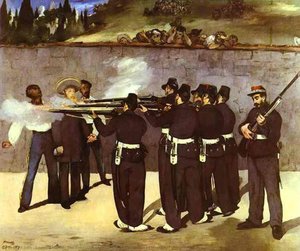 The Execution of the Emperor Maximilian of Mexico - Édouard Manet
To stand before The Execution of the Emperor Maximilian of Mexico by Édouard Manet is to witness a profound, somber stillness that captures the very breath of history held in suspense. As we curate the top 25 artworks in the 'Museum of Fine Arts, Boston', this masterpiece commands its place through its unflinching gaze at the human cost of political upheaval. Manet, the pivotal bridge between Realism and Impressionism, utilizes a muted palette of heavy blues, grays, and earth tones to evoke a sense of inescapable tragedy.
The painting’s inclusion in this prestigious selection is due to its masterful ability to transform a moment of colonial violence into a timeless meditation on power and sacrifice. The stark, geometric precision of the soldiers' uniforms contrasts with the heavy, atmospheric tension of the sky, creating a visual weight that resonates deeply within the soul. This dramatic intensity offers more than historical insight; it provides a profound emotional anchor for the modern collector. By choosing a high-fidelity reproduction, you can bring this transformative presence and its sophisticated, contemplative mood into your own home, office, or personal gallery, allowing Manet’s legacy of truthfulness to inspire your everyday surroundings.
Portrait of Victorine Meurent - Édouard Manet
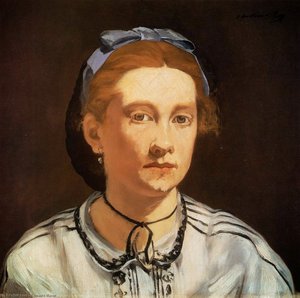 Portrait of Victorine Meurent - Édouard Manet
Before she became the face of modern scandal in Olympia , Victorine Meurent was simply a young woman captured in a moment of quiet, burgeoning identity. In this 1862 masterpiece, Édouard Manet moves away from the rigid, polished finish of academic tradition to embrace something far more visceral. As you stand before this work in the Museum of Fine Arts, Boston , you are not merely looking at a portrait; you are witnessing the birth of a new way of seeing.
Manet utilizes a breathtakingly loose brushwork, where light does not merely rest upon the skin but seems to dance across it through contrasting planes of tone. The warmth of her complexion and the striking, vibrant red of her hair emerge from a moody, dark background, creating an intimacy that feels startlingly contemporary. This technical leap—prioritizing the impression of light over meticulous detail—marks a pivotal moment in the transition from Realism to Impressionism. Such a profound focus on clarity, light, and decisive movement makes this piece a magnificent inspiration for a modern study or home office, inviting an atmosphere of intellectual depth and creative clarity into your personal sanctuary.
Mars and Venus - Nicolas Poussin
 Mars and Venus - Nicolas Poussin
In the quiet presence of Mars and Venus , one is immediately enveloped by a profound sense of stillness, as if the very air of the classical world has slowed to a rhythmic, peaceful breath. Nicolas Poussin captures a moment where the ferocity of war dissolves into the tenderness of affection; the gaze shared between the god of war and the goddess of beauty is not one of conflict, but of a soft, transformative surrender. As Venus gazes into her mirror and Cupid plays amidst the discarded armor, we witness the eternal triumph of love over strife.
This masterpiece, a cornerstone among the top 25 artworks in 'Museum of Fine Arts, Boston' , offers much more than mythological storytelling. Through Poussin’s masterful use of light and balanced composition, the painting serves as a universal mirror for the human soul's longing for harmony. Bringing the luminous, serene atmosphere of this work into your own home can transform a personal sanctuary into a space for deep reflection, inviting a sense of classical order and emotional calm to your daily life.
Houses in Auvers 2 - vincent willem van gogh
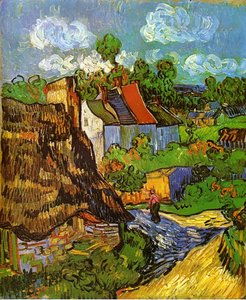 Houses in Auvers 2 - vincent willem van gogh
In the quiet corners of the Museum of Fine Arts, Boston, one finds a profound sense of peace within Vincent van Gogh’s Houses in Auvers 2 . To gaze upon this masterpiece is to feel the gentle rhythm of a world in harmony; there is an unmistakable emotional warmth in the way the vibrant, sun-drenched pigments dance across the canvas. As you trace the expressive, thick impasto brushstrokes, you are not merely looking at a village, but experiencing the artist's deep longing for rural serenity. The sight of a lone horseman moving through the scattered dwellings evokes a universal nostalgia for simplicity and the slow, soulful pace of life.
As one of the top 25 artworks in the Museum of Fine Arts, Boston, this piece serves as a luminous window into the Post-Impressionist spirit. Bringing the emotional resonance of such a work into your own home can transform a personal sanctuary into a space for profound reflection and calm. It is a painting that does not just decorate a wall; it invites a quiet, contemplative light to settle over your entire living space.
Twilight at Leeds, New York - Winslow Homer
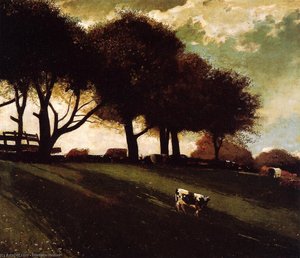 Twilight at Leeds, New York - Winslow Homer
In the quietude of Twilight at Leeds, New York , Winslow Homer captures more than a mere farm scene; he preserves the very heartbeat of 19th-century American pastoral life. As one of the most profound entries among the top 25 artworks in the Museum of Fine Arts, Boston , this masterpiece serves as a bridge between the rugged reality of rural existence and the poetic transcendence of light. Homer’s ability to render the fading sun—casting long, soft shadows across grazing cows and a solitary figure—invites us into a moment of profound stillness that remains deeply resonant in our modern, hurried world.
The painting’s placement in such an esteemed collection is a testament to Homer's mastery of atmospheric perspective and his transition from illustrator to a premier landscape realist. The luminous, dusky palette evokes a sense of peace that can transform any curated space, offering a timeless conversation between historical beauty and contemporary decor. To gaze upon this work is to reflect on the enduring grace found in the simplest rhythms of nature, reminding us that true beauty often resides in the quietest hours of the day.
La Perspective (View through the Trees in the Park of Pierre Crozat) - Jean-Antoine Watteau
 La Perspective (View through the Trees in the Park of Pierre Crozat) - Jean-Antoine Watteau
In La Perspective (View through the Trees in the Park of Pierre Crozat) , Jean-Antoine Watteau captures a breath of golden light frozen in the delicate amber of 1715. This masterpiece stands among the top 25 artworks in the Museum of Fine Arts, Boston, because it does not merely depict a landscape; it invites us into a fête galante —a dreamlike realm where the boundaries between nature and social grace dissolve. The painting breathes with a soft, atmospheric haze, utilizing a masterful sfumato that allows light to filter through the canopy, dappling the figures in warmth.
Every brushstroke whispers of Rococo elegance, from the playful movement of the dogs to the quiet, flirtatious gestures of the aristocrats. The palette, rich with earthy greens and luminous, sun-drenched tones, creates a sense of profound tranquility. For the modern collector, this work offers more than historical prestige; its harmonious composition and ethereal mood provide a window of serenity, bringing a touch of timeless Parisian sophistication and much-needed calm to any contemporary interior space.
A Turn in the Road - Paul Cézanne
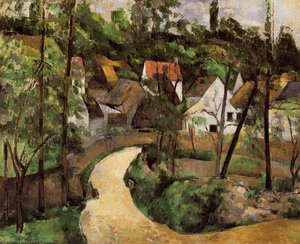 A Turn in the Road - Paul Cézanne
There is a profound, quiet magic in witnessing the way a simple country lane can become an eternal meditation on existence. In A Turn in the Road , Paul Cézanne invites us to pause alongside a winding path, where the gentle slope of the hillside and the soft presence of rustic cottages evoke a sense of timeless rural tranquility. This masterpiece earns its place among the top 25 artworks in the Museum of Fine Arts, Boston because it captures the pivotal moment when Impressionism began to evolve into something more structural and permanent.
Cézanne does not merely paint trees and earth; he builds them through a rhythmic arrangement of color planes and deliberate, textured brushstrokes that suggest the very bones of the landscape. To hold this vision in your own home is to invite that same contemplative depth into your daily life. At ArtsDot.com, our artists meticulously recreate this revolutionary vision on 100% cotton canvas, ensuring that every impasto stroke and earthy hue of Cézanne’s palette remains as tactile and emotionally resonant as the original masterpiece itself.
Postman Joseph Roulin - vincent willem van gogh
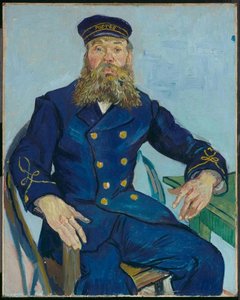 Postman Joseph Roulin - vincent willem van gogh
Imagine standing before a canvas where the very air seems to vibrate with the pulse of human connection. In this profound portrait from the Museum of Fine Arts, Boston , we encounter not just a man, but a soul rendered in rhythmic, swirling energy. Vincent van Gogh’s Postman Joseph Roulin (1888) captures the essence of a friendship that offered the artist a rare sense of stability amidst his inner storms.
Through a masterful use of impasto technique , Van Gogh breathes life into the blue and ochre tones of Roulin’s uniform, using thick, directional brushstrokes that dance across the surface. This work earns its place among the top 25 artworks in the museum because it transcends mere likeness; it is a study of dignity, duty, and the quiet strength found in ordinary lives. To live with such a piece is to invite a sense of soulful resilience into one's own home, reminding us that even in the most textured and turbulent moments, there is a profound, luminous beauty to be found in steadfastness.
La Berceuse (Augustine Roulin) - vincent willem van gogh
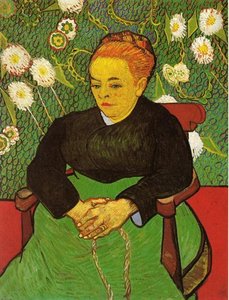 La Berceuse (Augustine Roulin) - vincent willem van gogh
To stand before La Berceuse (Augustine Roulin) is to step into a moment of profound, rhythmic stillness. In this 1889 masterpiece by Vincent van Gogh, the air seems to hum with the gentle cadence of a lullaby. As you gaze upon Augustine, the wife of his dear friend Joseph Roulin, you are enveloped by a palette of soothing greens and sun-drenched yellows that breathe life into the canvas. Van Gogh’s signature impasto technique creates a tactile landscape of swirling floral patterns on the wall, contrasting beautifully with the quiet, centered grace of the sitter.
The composition, rich with symbolic elements like the hanging clock and the soft presence of nature, evokes a sense of timeless maternal care. It is a painting that does more than capture a likeness; it captures a feeling of sanctuary. For those seeking to bring a sense of contemplative peace into a modern home, this work serves as an exquisite anchor—a window into a world where even the most vibrant colors can whisper of rest and eternal serenity. It remains a cornerstone of the top artworks in the Museum of Fine Arts, Boston .
Trout Breaking - Winslow Homer
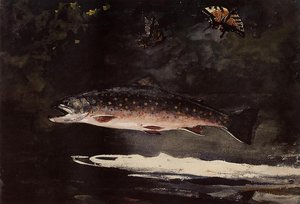 Trout Breaking - Winslow Homer
What if I told you that Trout Breaking by Winslow Homer was born from a moment of pure, unscripted vitality—a stroke of brilliance captured in the fleeting spray of a river?
In this breathtaking watercolor, Homer does not merely paint a fish; he captures the very pulse of nature. As one of the top 25 artworks in the Museum of Fine Arts, Boston, this piece redefines the beauty of American Realism through its incredible transparency and movement. The way the light dances across the water's surface and the sudden, silver energy of the leaping trout create a sensory experience that feels alive even a century later. It is a masterclass in spontaneity, where every delicate wash of color contributes to a sense of profound, rhythmic harmony.
At ArtsDot.com, we believe such moments of natural grace should not be confined to museum walls. Imagine this masterpiece bringing the tranquil, dappled light of a New England stream into your own sanctuary. Whether as a focal point in a quiet study or a breath of fresh air in a modern living space, Trout Breaking serves as a timeless reminder that true art is a living, breathing presence.
Street Corner, Santiago de Cuba - Winslow Homer
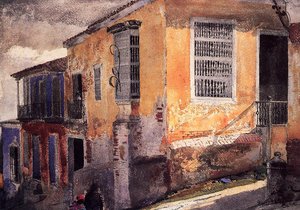 Street Corner, Santiago de Cuba - Winslow Homer
In the quiet corridors of the Museum of Fine Arts, Boston, Winslow Homer’s Street Corner, Santiago de Cuba (1885) acts as a sun-drenched window into a world of rhythmic vitality. While many recognize Homer for his powerful marine subjects, this watercolor reveals a different soul—one captivated by the warmth of human connection and the luminous energy of the Caribbean. The painting is a masterclass in spontaneous storytelling; the bold, buttery yellow of the architecture anchors the composition, providing a radiant stage for the figures that inhabit this bustling corner.
Homer utilizes the fluid, translucent nature of watercolor to capture light that feels almost tactile, mirroring the fleeting, impressionistic beauty of a summer afternoon. In an era where we increasingly crave authentic, unscripted moments of connection, Homer’s ability to freeze a candid slice of life remains profoundly resonant. As one of the top 25 artworks in the Museum of Fine Arts, Boston collection, this piece transcends mere documentation, offering a sensory journey through color and light that continues to enchant the modern eye with its timeless, breathing intimacy.
Fruit and Jug on a Table - Paul Cézanne
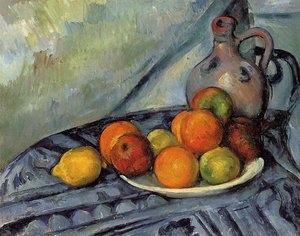 Fruit and Jug on a Table - Paul Cézanne
To encounter Fruit and Jug on a Table by Paul Cézanne is to witness the very moment art began to breathe with a new, structural soul. In this 1894 masterpiece held within the Museum of Fine Arts, Boston , the simple arrangement of oranges, apples, and a wine jug transcends mere domesticity. Cézanne does not merely paint objects; he orchestrates a profound dialogue between color and form, using rhythmic, constructive brushstrokes to build a world that feels both tactile and eternal.
The cool blue of the tablecloth provides a luminous stage for the warm, sun-drenched hues of the fruit, creating a sensory experience that remains deeply resonant today. As we move through modern interiors that prize minimalism and geometric clarity, Cézanne’s ability to find complex architecture within a humble still life feels remarkably contemporary. This work stands as a cornerstone among the top 25 artworks in Museum of Fine Arts, Boston , serving as a bridge from the fleeting light of Impressionism to the structured brilliance of Cubism, inviting us to find the monumental within the everyday.
Meton Seen from Cap Martin - Claude Monet
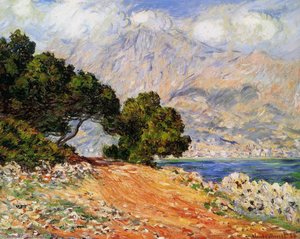 Meton Seen from Cap Martin - Claude Monet
To stand before Menton Seen from Cap Martin is to witness a profound inheritance of light. As one of the most luminous treasures within the Museum of Fine Arts, Boston , this 1884 masterpiece by Claude Monet serves as a breathtaking handshake across centuries, inviting us into the sun-drenched warmth of the French Riviera. Monet does not merely paint a landscape; he captures the very breath of the Mediterranean coast.
The composition unfolds like a sensory memory, where distant mountains are bathed in a hazy, golden glow, while foreground trees offer a textured, rhythmic contrast. Through his signature en plein air technique, Monet utilizes loose, visible brushstrokes to weave a symphony of color—dappled sunlight filters through foliage, dancing against the tranquil expanse of the sea. The subtle presence of two figures adds a tender human connection to the vastness, reminding us of our own place within nature's ephemeral beauty. Owning such a legacy is about more than admiration; it is about bringing a lineage of taste into your own home, where the fleeting impressions of a master become a permanent part of your daily atmosphere.
Ravine - vincent willem van gogh
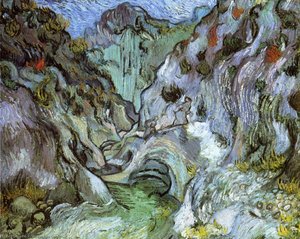 Ravine - vincent willem van gogh
What story does the quiet, verdant earth tell in Vincent van Gogh’s Ravine ? Painted in 1889, this masterpiece from the Museum of Fine Arts, Boston collection captures a moment where the artist's internal turbulence meets the profound stillness of nature. As one of the top 25 artworks in the museum, it stands as a breathtaking example of Post-Impressionist emotion, moving far beyond mere landscape to become a rhythmic dance of color and soul.
The canvas breathes with thick, tactile impasto strokes; deep greens and earthy ochres flow like the river itself, while a solitary bird perched upon a sun-drenched stone offers a delicate pulse of life. For those seeking to curate a sanctuary within their own homes, this painting offers a much-needed escape. Its luminous mountains and textured rocks evoke a sense of timelessness and peace, making it an ideal centerpiece for a space that values the quiet prestige of art history and the restorative power of a light-drenched, natural world.
View of the Sea at Sunset - Claude Monet
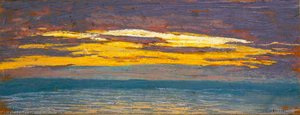 View of the Sea at Sunset - Claude Monet
In View of the Sea at Sunset by Claude Monet, we encounter a breathtaking study of structural harmony that secures its place among the top 25 artworks in the Museum of Fine Arts, Boston. The composition is anchored by a profound geometric balance; the vast, horizontal expanse of the horizon line creates a sense of infinite stability, while the two small, silhouetted boats provide essential focal points that guide the eye across the tranquil surface. This careful arrangement of shapes—the weightless sky meeting the grounded sea—achieves a state of timeless perfection that continues to captivate viewers centuries later.
There is a striking parallel between Monet’s early mastery of balance and the principles of modern minimalist design. The painting’s ability to evoke immense emotion through a clean, uncluttered arrangement of light and form allows it to ground a contemporary aesthetic with ease. As the warm oranges and soft yellows bleed into the cool depths of the water, the work offers more than just a sunset; it provides a serene, atmospheric anchor for any sophisticated interior, embodying the very soul of the Impressionist revolution.
The Cliffs of Les Petites-Dalles - Claude Monet
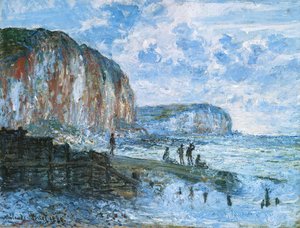 The Cliffs of Les Petites-Dalles - Claude Monet
To possess a study of The Cliffs of Les Petites-Dalles by Claude Monet is to invest in a profound legacy of light and an unparalleled standard of refined taste. As one of the crown jewels within the top 25 artworks in the Museum of Fine Arts, Boston, this 1880 masterpiece stands as a cornerstone of Impressionist history. Its presence in such a prestigious collection confirms its immense cultural value and enduring market significance, marking it as a pinnacle of the movement.
Monet invites us to the Normandy coast, where short, broken brushstrokes dance across the canvas to capture the salt-misted air and the rhythmic pulse of the Atlantic. The palette—a luminous symphony of sea-foam greens, soft pinks, and deep cerulean blues—evokes the fleeting, sensory magic of a summer afternoon. There is a sublime serenity in the way the majestic cliffs tower over the delicate figures scattered along the shore, reminding us of nature's grandeur. For the modern connoisseur, bringing a high-quality oil reproduction of this work into a luxury interior provides an immediate sense of aesthetic authority, infusing contemporary spaces with the timeless, light-drenched elegance that only Monet can bestow.
The Path at La Cavee, Pourville - Claude Monet
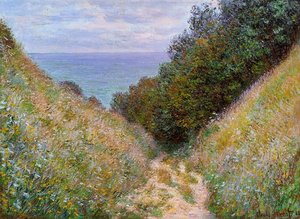 The Path at La Cavee, Pourville - Claude Monet
To stand before The Path at La Cavee, Pourville is to witness a dance frozen in time. Within the prestigious collection of the Museum of Fine Arts, Boston , this 1882 masterpiece by Claude Monet emerges not merely as a landscape, but as a rhythmic choreography of light and atmosphere. The lines of the winding path are not simply drawn; they are choreographed to guide your soul toward the shimmering horizon of the Normandy coast.
Monet captures the very breath of the seaside, where verdant hills and sun-drenched bushes dissolve into a soft, luminous haze. There is no heavy shadow here, only the delicate, flickering interplay of sunlight filtering through foliage—a sensory experience that makes the canvas feel as though it might breathe rhythm . As one of the top 25 artworks in the MFA Boston, this piece invites you to contemplate a world where nature’s movement finds perfect harmony. Imagine if your own sanctuary could hold this same balance; a way for your walls to capture that fleeting, coastal breeze and transform a room into a window of eternal summer.
Conclusion
As we draw the curtain on our journey through the halls of the Museum of Fine Arts, Boston, we are left not merely with a list of names and dates, but with the lingering warmth of a thousand shared human emotions. These masterpieces—from the soft, dappled light of an Impressionist garden to the profound, silent strength of a classical portrait—are far more than relics of a bygone era; they are living presences. They possess a quiet magic that continues to breathe life into our modern world, offering us moments of stillness and wonder amidst the rush of contemporary life. To gaze upon them is to reconnect with the timeless rhythms of beauty, light, and the enduring human spirit.
At ArtsDot.com , we believe that this profound inspiration should not be confined to museum walls, but should flow into the very spaces where we live, breathe, and create. We serve as a dedicated creative partner for interior designers, architects, and connoisseurs of fine living who seek to transform hotels, private villas, and refined residences into immersive artistic statements. Whether you are curating a large-scale multi-panel installation for a grand staircase or seeking a bespoke 'remix' of a classic to match a specific color palette, our artisans bring the soul of these historical treasures into your personal sanctuary through meticulous, hand-painted oil reproductions.
Through our professional digital mockup service, we allow you to envision these masterpieces within your own architectural context before a single brushstroke touches the canvas, ensuring that every piece harmonizes perfectly with your vision. We invite you to explore the full collection and discover how the light of the past can illuminate the interiors of your future, turning every room into a curated gallery of emotion and elegance.