
The Architectural Canvas: Integrating Custom-Scale Art into Grand Interiors
Art and Architecture Integration Policy (French: Politique d'intégration des arts à l'architecture) is a policy of the Quebec Ministry of Culture and Communications of reserving part of the budget for construction or expansion of a government buildin...
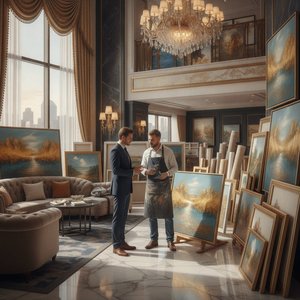
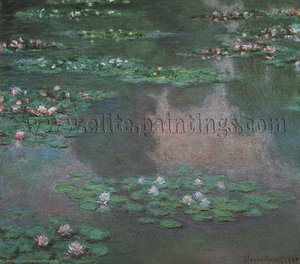
In the realm of high-end hospitality design, a room is never merely a collection of furniture and finishes; it is a curated experience designed to evoke emotion and establish prestige. For the discerning hotel designer, the challenge lies in the orchestration of scale. A grand lobby or a sweeping mezzanine demands more than mere decoration; it requires an architectural intervention that commands the gaze. When we consider the integration of art into these monumental spaces, we must move beyond the concept of the "standard" canvas. True luxury is found in the ability to manipulate proportion, allowing a work of art to breathe within its structural context.
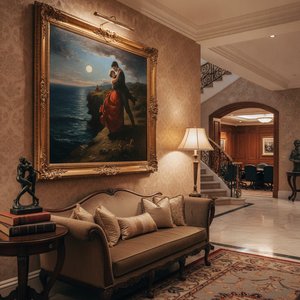
The dialogue between art and architecture is most profound when the artwork respects the volume of the space. A small, unframed print on a vast, marble-clad wall creates a sense of visual isolation, whereas a large-format mural or a custom-scaled oil reproduction can act as a focal point that anchors the entire room. This integration requires a vision that treats the wall not as a flat boundary, and but as a living landscape. Whether it is the creation of expansive ceiling frescoes that transport guests to a Renaissance splendor or massive canvas rolls that mimic the grandeur of historical tapestries, the scale of the art must be an intentional extension of the building's own architectural intent.
The Frame as a Silent Architect: Curating Boundaries with Precision
 The Frame as Argument: An Expert Guide to Selecting the Perfect Frame for Your Art
The Silent Partner: Understanding the Frame's Role in Visual Narrative Beyond the Canvas: Framing as a Catalyst for Value & Aesthetic Impact in Luxury Art Reproduction The Historical Significance of Framing: Beyond Protection For centuries, the frame...
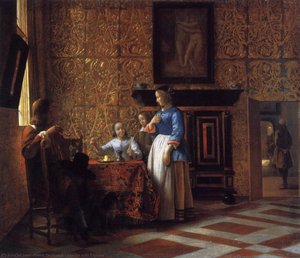
To the untrained eye, a frame is often perceived as a mere functional border, a secondary element designed to separate the canvas from its surroundings. However, for the professional curator and designer, the frame serves as the silent architect of the viewer's gaze. It is the threshold—the curated gateway that prepares the mind for the emotional journey contained within the pigment. Throughout history, masters such as William Charles Lebrocq understood that a frame is an essential component of a work’s narrative. In the era of Beaux Arts architecture, the relationship between the frame and the space was symbiotic; the frame provided the finishing touch that allowed paintings to exist in harmony with grand architectural visions.
In contemporary luxury interiors, selecting the perfect frame involves a sophisticated understanding of materiality and weight. A heavy, gold-leafed frame can lend a sense of historical gravity to an Impressionistic landscape, while a minimalist, dark espresso wood frame might provide a modern, understated elegance for an abstract piece. The choice of framing is an act of curation that defines the boundary between the art and the world. By meticulously selecting solid wood profiles—ranging from natural textures to deep, gilded ornaments—the designer can either emphasize the artwork's presence or allow it to recede into the architectural fabric, ensuring a seamless aesthetic transition.
Textural Depth and Dimensionality: Selecting Impasto for Tactile Luxury
 Top 25 Masterpieces by David Moreau: A Journey Through Texture and Light
Introduction Step into a world where the canvas ceases to be a flat surface and transforms into a living, breathing landscape of shadow and light. To experience the top 25 works of David Moreau is to witness a masterclass in the architecture of textu...
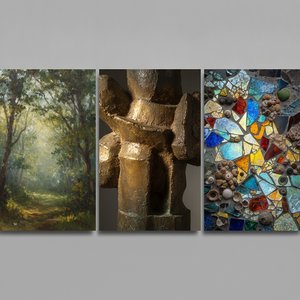
In an age increasingly dominated by the ephemeral and the digital, there is a profound, sensory rebellion found in the tactile. For luxury interiors, where touch and presence are paramount, the introduction of texture provides a grounding, visceral experience. This is most masterfully achieved through the use of impasto—a technique where paint is applied in thick, sculptural layers that create a three-dimensional relief. When one encounters a work by a visionary like David Moreau, the canvas ceases to be a flat surface and transforms into a living landscape of shadow and light. The ridges and valleys of heavy pigment catch the ambient light of a hotel lounge, creating a dynamic interplay that shifts as the guest moves through the space.
This sculptural approach to painting offers a depth that traditional prints simply cannot replicate. The physical soul of an impasto work lies in its ability to hold shadow; the deep, soulful teals or the somber navies of a contemporary abstract piece gain their intensity from the way light is lost within the layers of oil and medium. For the designer, selecting works with significant texture—such as those featuring organic, gravity-fed drips or rhythmic, petal-like strokes—adds a layer of "material architecture" to a room. It invites the guest to look closer, to trace the topography of the canvas, and to engage in a tactile dialogue with the art itself.
Bespoke Engineering: Tailoring Dimensions, Multi-Panel Layouts, and Canvas Wraps
 Fragmented Midnight: A Monumental Study in Impasto Blue and Somber Texture
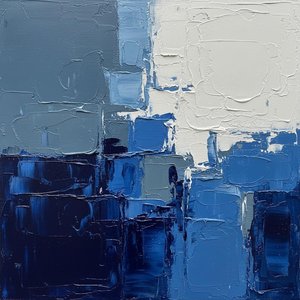
A Vision of Somber Grandeur Fragmented Midnight: A Monumental Study in Impasto Blue and Somber Texture is a profound exploration of depth, weight, and monochromatic tension. This contemporary abstract masterpiece departs from traditional landscapes t...
The true hallmark of bespoke artistry is the ability to engineer art to fit the unique constraints of a project. Luxury design rarely presents "standard" wall dimensions; instead, it offers staircases, wide corridors, and asymmetrical alcoves that require specialized solutions. One of the most effective contemporary trends for large-scale installations is the multi-panel or group set painting. By splitting a single, cohesive image across three, four, or even five panels, a designer can cover vast expansational surfaces with a rhythmic, modern aesthetic that maintains visual flow across every segment.
Beyond multi-panel configurations, the concept of "canvas wrap engineering" allows for a seamless, frameless look that is particularly suited to modern, minimalist aesthetics. Techniques such as MirrorWrap or ExtendedWrap, where the artist continues the painting around the edges of the stretcher bars, eliminate the visual interruption of a frame and allow the artwork to appear as if it is emerging directly from the wall. Furthermore, the ability to customize dimensions ensures that every piece—whether it be a monumental study in blue or an intimate portrait—is perfectly proportioned to its architectural host, preventing the common design error of undersized art in oversized spaces.
Material Longevity and Preservation: Protecting the Investment in High-Traffic Spaces
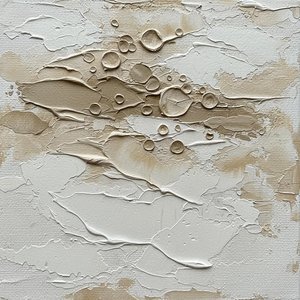 Ethereal Monolith: A Sculptural Study in Ivory Impasto and Organic Textures
A Vision of Sculptural Serenity Ethereal Monolith: A Sculptural Study in Ivory Impasto and Organic Textures is a profound exploration of depth, light, and tactile form. This piece emerges as a fresh, modern vision within our Plaster & Texture Art col...
For hospitality professionals and estate owners, art is a significant capital investment that must withstand the rigors of high-traffic environments. The longevity of an artwork depends heavily on the chemistry of its creation. True museum-quality reproductions utilize flexible gesso to prevent cracking over time and specific oils, such as safflower, for lighter pigments to prevent the dreaded yellowing effect. Each piece is typically finished with a protective coat of Damar varnish, creating a barrier against dust, moisture, and the atmospheric pollutants common in public spaces.
Preservation also extends to the way art is presented and maintained. To protect the vibrancy of pigments for decades, designers should consider the placement of works relative to direct sunlight and utilize acid-free matting to create an essential air gap between prints and glass. This prevents moisture entrapment and ensures that the structural integrity of the canvas remains uncompromised. When sourcing art for hotels or corporate collections, understanding these technical nuances is vital to ensuring that the beauty of the collection remains as striking in twenty years as it was on the day of installation.
The Designer's Toolkit: Professional Mockups and Bespoke Color Matching
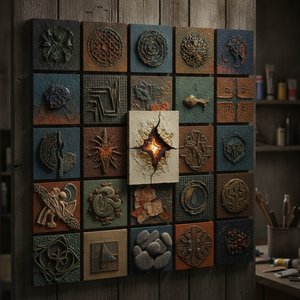 25 Masterpieces by David Moreau: The Ultimate Guide to Textured Art
Introduction Imagine walking into a room where the walls do not merely hold color, but breathe with texture. As you step into the world of David Moreau , you are not just looking at paintings; you are encountering a landscape of ridges, valleys, and ...
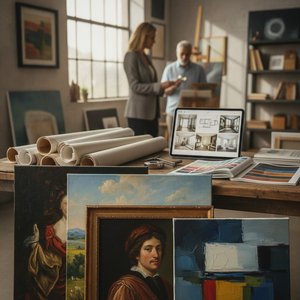
The final stage of successful art integration is the elimination of uncertainty. For a project manager or interior designer, the ability to visualize the end result before a single brushstroke touches the canvas is invaluable. This is achieved through professional digital mockup services, which allow for the "placement" of artwork within a photograph of the actual site. These mockups are not merely for scale; they are essential tools for bespoke color matching. A designer can request that an artist adjust the tonal palette of a reproduction to harmonize perfectly with the existing upholstery, marble, or wall coverings of a specific hotel suite.
This level of customization extends to the very essence of the subject matter. Through advanced services, it is possible to "remix" art history—requesting that a contemporary photograph be reimagined in the light-drenched style of Monet or the heavy, textured impasto of Van Gogh. This bespoke approach ensures that every commission is a singular moment of artistic expression, tailored specifically to the architectural and aesthetic requirements of the space. Through this intersection of traditional craftsmanship and modern digital precision, the designer can move from mere decoration to true, bespoke curation.
At ArtsDot.com, we specialize in bringing these complex visions to life. As a global leader in fine art, we provide B2B services specifically tailored for hotels, restaurants, and interior designers, offering everything from large-scale murals to custom-sized oil reproductions. Our commitment to excellence is backed by a 100% satisfaction guarantee and a legacy of serving prestigious collectors in over 70 countries. Whether you require a multi-panel installation for a grand lobby or a bespoke portrait for a private suite, our master artists and project coordinators are dedicated to ensuring your architectural vision is realized with unparalleled artistry.