

The Ancestry of Identity: From Primal Marks to Renaissance Self-Reflection
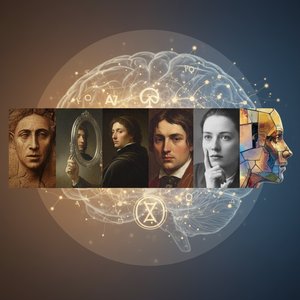 Reflecting the Self: A History of Portraiture & Psychological Insight
The Dawn of Self-Representation: Antiquity & Medieval Beginnings Though often perceived as a hallmark of the Renaissance, the impulse to capture one’s own likeness—to grapple with self-representation—extends far deeper into history than commonly ackn...
The impulse to capture one’s own likeness is a fundamental human endeavor, an elemental assertion of presence that predates the formal boundaries of art history. Long before the refined techniques of the Renaissance emerged, the primal desire to leave a mark upon the world was etched into the very bones of our shared heritage. We see this in the ancient handprints adorning the walls of Lascaux and Altamira—not as attempts at realistic depiction, but as profound declarations of "I was here." These early marks represent the dawn of self-representation, a raw and unadorned struggle to anchor the ephemeral human spirit to the physical world.
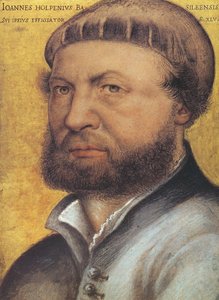
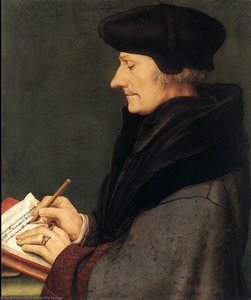
As civilizations evolved, so too did the sophistication of this visual dialogue. In ancient Egypt, while much of the art served to idealize pharaohs and deities, subtle individual features began to emerge in sculpted portraits, hinting at a nascent interest in capturing specific physiognomy. By the time we reach the Roman era, particularly during the Republic, portraiture moved toward a striking realism, focused on commemorating ancestors and civic leaders. This progression from the symbolic to the literal laid the groundwork for the Renaissance, where the artist transitioned from an anonymous craftsman to a celebrated individual with agency. It was in this era that the self-portrait truly blossomed, allowing masters like Jan van Eyck to subtly weave their own presence into the fabric of their masterpieces, forever altering the trajectory of human identity through the lens of art.
The Psychological Canvas: Portraiture as an Exploration of the Inner Soul
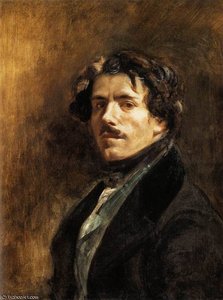 eugene self portrait
A Window into Delacroix’s Soul: An Intimate Self-Portrait This captivating portrait offers a rare glimpse into the mind of Eugène Delacroix, the leading figure of the French Romantic movement. Executed with masterful skill, this self-portrait isn't m...
Beyond the mere recording of physical features, true portraiture has always functioned as a window into the psyche. To gaze upon a masterwork is to engage in a profound act of introspection. The history of the genre is deeply intertwined with the exploration of the inner life, where the canvas becomes a site for psychological inquiry. Consider the works of Frida Kahlo, whose self-portraits are far more than mere likenesses; they are powerful statements of identity, pain, and resilience. Through her use of symbolism—such as the traditional Tehuana clothing that signaled her Mexican heritage—Kahlo utilized the medium to navigate complex themes of cultural displacement and personal suffering.
This psychological depth is equally evident in the works of the Romantic movement. Eugène Delacroix, for instance, used his self-portraits not just to document his appearance, but to offer a rare glimpse into his very soul, utilizing a three-quarter view that invites the viewer into a direct, intimate engagement with his gaze. Even in more contemporary or specialized contexts, such as the works of Colin Self, we see how portraiture can explore the anxieties of an era, using surreal juxtapositions to touch upon themes of fear and technology. Whether through the meticulous realism of the Old Masters or the textured, symbolic layers of modern artists like Tschabalala Self, the portrait remains a vital tool for understanding the complex terrain of human consciousness.
Curating Heritage: Reimagining Historical Aesthetics for Contemporary Interiors
 Reframing the Self: Classic Art Reproductions as Expressions of Modern Identity and Personal Narrative
The Democratization of Portraiture: Owning Your Narrative Through Reproduction PORTRAIT DE L'ARTISTE ( ) For centuries, the portrait was a privilege—a visual declaration of status, wealth, and lineage reserved for the elite. These weren’t simply like...
In the realm of luxury interior design, art serves as the soul of a space, providing a narrative depth that mere decoration cannot achieve. The modern collector often seeks to bridge the gap between the contemporary world and the grandeur of the past, creating environments that feel both timeless and deeply personal. This is achieved through the thoughtful curation of historical aesthetics—bringing the weight of history into a modern architectural context. The presence of a high-quality reproduction of a classical work can transform a minimalist room into a sanctuary of culture and heritage.
The beauty of this approach lies in its ability to evoke the prestige of bygone eras without sacrificing modern elegance. Imagine the impact of a large-format mural or a multi-panel set inspired by the grandeur of Renaissance frescoes, spanning a wide wall or a grand staircase. Such works do not simply occupy space; they define it, providing an anchor for the room's entire aesthetic. By integrating elements of historical portraiture or landscape painting, designers can create a sense of continuity and permanence, ensuring that even the most modern residence feels rooted in a long and illustrious lineage of human achievement.
The Art of the Remix: Transforming Personal Milestones into Period Masterpieces
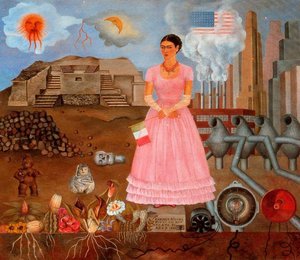 Self-Portrait on the Bordeline Between Mexico and the United States
Self-Portrait on the Borderline Between Mexico and the United States: A Divided Identity Frida Kahlo's Self-Portrait on the Borderline between Mexico and the United States , painted in 1932, is a poignant exploration of identity, cultural displacemen...
One of the most captivating developments in contemporary art appreciation is the ability to "remix" history, allowing individuals to insert their own narratives into the established canon of great masters. This practice transcends simple imitation; it is an act of creative alchemy. We are no longer mere observers of history; we are participants in its ongoing creation. Through advanced techniques, a modern photograph can be reimagined through the lens of the past, transforming a personal milestone—a wedding, a family portrait, or even a cherished pet—into a work that possesses the gravitas of a 17th-century masterpiece.
This "period shift" allows for an extraordinary level of self-expression. One might request a contemporary portrait to be executed in the dramatic, light-drenched style of Monet, or perhaps seek the heavy, emotive impasto of Van Gogh. The possibilities are limited only by imagination. This process of transformation turns personal memories into enduring legacies, creating bespoke treasures that carry the weight of historical prestige while celebrating the unique stories of the present day. It is a way to honor our own histories by dressing them in the timeless language of the masters.
Technique and Texture: The Enduring Allure of Hand-Painted Oil Reproductions
 tschabalala self
The Fabric of Identity: The Visionary World of Tschabalala Self To encounter the work of Tschabalala Self is to enter a vibrant, tactile dialogue between memory, materiality, and the reclamation of the Black female form. Born in New York City in 1990...
In an age dominated by digital perfection and mass production, there remains an irreplaceable allure in the tactile reality of hand-painted oil on canvas. The distinction between a mere print and a true reproduction lies in the "soul" of the work—the visible brushstrokes, the rich tonal range, and the physical depth of the paint itself. A high-quality oil reproduction captures the essence of the original through the meticulous application of pigment, where each layer adds to a sense of dimension and life that no computer-printed image can replicate.
The artistry involved in these reproductions is a testament to academic excellence. Using 100% cotton canvas and professional-grade oils, artists create works characterized by a palpable texture. The use of specific techniques, such as the application of flexible gesso to prevent cracking or the use of safflower oil to ensure the longevity of whites, reflects a commitment to museum-grade standards. Furthermore, the option for an "aged" or craquelure finish allows collectors to achieve that sought-after antique aesthetic, adding a layer of perceived history to the piece. This dedication to craftsmanship ensures that every painting is not just a copy, but a unique work of art that stands as a testament to the artist's pride and skill.
Legacy in Every Brushstroke: The Bespoke Journey of Custom Commissioning
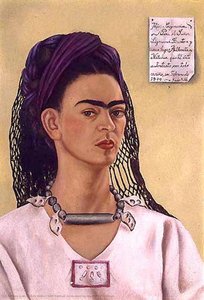 Self Portrait Dedicated to Sigmund Firestone
A Portrait of Resilience: Frida Kahlo’s Dedication to Sigmund Firestone This intimate self-portrait, created in 1940, offers a compelling glimpse into the world of Frida Kahlo , one of Mexico's most celebrated and enduring artists. Measuring 61 x 43 ...
The journey of commissioning a custom artwork is an intimate collaboration between the visionary collector and the skilled master. It begins with a concept—perhaps a desire to merge family members from different photographs into a single, cohesive group portrait, or the wish to see a modern landscape reimagined as a classical oil painting. This process is managed with meticulous care, often involving professional digital mockups that allow the client to approve colors and compositions before a single drop of paint touches the canvas. This ensures that the final result is an exact realization of the patron's intent.
From the initial confirmation to the final delivery via secure global logistics, every step is designed to uphold the highest standards of luxury service. The arrival of such a piece—carefully packaged in reinforced, double-walled boxes and shipped via premium carriers like DHL or FedEx—is an event in itself. As these works are finished with protective damar varnish and housed in custom solid wood frames, they are prepared to endure for generations. Ultimately, a custom commission is more than an acquisition; it is the creation of a legacy, a permanent and beautiful record of identity, much like the very masters who inspired its creation.
At ArtsDot.com, we specialize in this extraordinary intersection of history and personal narrative. As a global flagship for premium art reproductions and custom commissions, we provide a full-service experience for the discerning collector. Whether you are seeking to transform a personal photograph into a Renaissance masterpiece or looking to curate a collection of museum-quality oil paintings for a hospitality project, our dedicated Project Coordinators and master artists are here to guide your vision. Discover the art of bespoke expression at ArtsDot.com.