




The Silent Partner: Understanding the Frame's Role in Visual Narrative
 The Frame as Argument: An Expert Guide to Selecting the Perfect Frame to Elevate Your Art
The Silent Partner: Understanding the Frame's Role in Visual Narrative The Frame as Argument: How the Right Frame Completes or Ruins a Painting The Silent Partner: Defining the Frame's Role in Visual Narrative The Frame as Argument: An Expert Guide t...
To the casual observer, a frame may appear as nothing more than a functional boundary, a wooden perimeter designed to separate the vibrant world of the canvas from the static reality of the wall. Yet, for those who truly inhabit the space of visual culture, we understand that the frame is far more than a mere border; it is a silent partner in the profound dialogue between the artwork and the observer. It acts as a curated gateway, a threshold that prepares the mind for the emotional journey ahead. Throughout history, the frame has functioned as much more than a protective casing; it is an integral component of a work's narrative, providing the necessary punctuation to the artist's visual sentence.
When we contemplate a masterpiece, our perception is immediately shaped by this structural introduction. The frame establishes the initial context, setting the stage upon which the artist’s vision performs. Without it, an image might remain a mere depiction; with it, the work becomes a curated object of contemplation. This relationship is deeply psychological, acting as an act of intentionality that elevates a piece of imagery from a simple arrangement of pigment and oil into a window through which we glimpse another era, another light, and another soul. It defines the limit where the painted world ends and our own reality begins, focusing our attention and directing the gaze inward.
The Psychology of the Border: How Framing Shapes Perception and Focus
 Bstraction with Picture Frame
A Dialogue Between Reality and Illusion: Roy Lichtenstein's "Abstraction with Picture Frame" Roy Lichtenstein’s “Abstraction with Picture Frame,” painted in 1982, is more than just a blue and white canvas; it’s a carefully constructed meditation on t...
The act of framing is, in essence, an act of cognitive structuring. Much like the mental filters we use to organize and interpret the complexities of reality, a physical frame provides a necessary structure for visual information. It creates a tension between the internal world of the image and the external environment of the room. A heavy, gilded border can command a sense of reverence and historical weight, demanding that the viewer pause and acknowledge the gravity of the subject matter. Conversely, a minimalist edge might invite a more contemporary, unmediated connection, allowing the eye to glide across the surface without interruption.
This psychological impact is profound in how it dictates the movement of the eye. By defining a clear perimeter, the frame prevents the gaze from wandering into the periphery of the room, effectively trapping the viewer's attention within the artist's intended composition. We see this tension beautifully explored in works such as Roy Lichtenstein’s “Abstraction with Picture Frame,” where the artist uses the iconic imagery of a frame to meditate on the nature of representation itself. In such instances, the frame becomes a tool for deconstruction, questioning how we perceive truth and illusion through the very boundaries meant to contain them.
A Historical Dialogue: From Renaissance Gilded Splendor to Modern Minimalism
 robert kulicke
Robert Kulicke: The Maestro of Modern Frames and Delicate Still Lifes Robert Moore Kulicke (1924 – December 14, 2007) stands as a singular figure in the history of American art and design—a man whose legacy extends far beyond simply crafting picture ...
The evolution of the frame is a mirror reflecting the shifting values of human civilization. During the Renaissance, frames evolved into elaborate displays of wealth and status. Gilded carvings, often featuring intricate acanthus leaves or egg-and-dart moldings, became symbols of patronage and power, transforming the artwork into a jewel-like object of prestige. These ornate borders were not merely decorative; they were architectural extensions of the grand spaces they inhabited, designed to evoke awe and signify the importance of the subject within.
As art moved through the centuries, so too did the language of the frame. The Symbolist era introduced a more emotive approach, where geometric precision could be used to underscore psychological depth. Consider Johan Victor Aarne’s “Triangle Frame with Grand Duke Alexander Mikhailovich and Grand Imperial Xenia Alexandrovna,” where the unconventional triangular form creates an arresting visual rhythm that draws the eye toward the central portrait of melancholy majesty. This transition from the purely ornamental to the symbolically significant marks a pivotal moment in art history, where the frame began to participate in the emotional landscape of the work.
In the modern and contemporary eras, we have witnessed a radical departure toward minimalism. The influence of masters like Robert Kulicke, who transformed frame-making into an art form in its own right, paved the way for a more understated elegance. Inspired by Abstract Expressionists, this movement embraced clean lines and a reduction of ornament, allowing the raw energy of the canvas to speak without the distraction of heavy gilding. This evolution represents a continuous dialogue between the artist's intent and the craftsman's hand.
Architectural Integration: Selecting Frames for Interior Style and Value
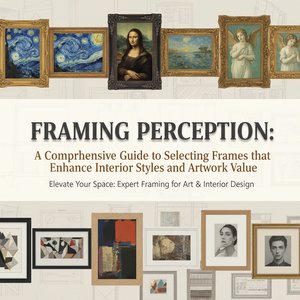 Framing Perception: A Comprehensive Guide to Selecting Frames that Enhance Interior Styles and Artwork Value
The Art of Framing: Beyond Protection – Elevating Interiors & Artwork Value Wikipedia: Interior design Interior design is the art and science of enhancing the interior of a building to achieve a healthier and more aesthetically pleasing environment f...
For the discerning collector or interior designer, selecting a frame is an act of profound aesthetic consideration—a decision that can amplify beauty, safeguard legacy, and fundamentally alter the perceived value of a piece. A thoughtfully chosen frame does not merely hold artwork; it integrates it into the surrounding space, influencing mood, style, and the overall architectural harmony of a room. The frame serves as the bridge between the art and the interior design, ensuring that the masterpiece feels like an organic inhabitant of the home rather than an afterthought.
When designing for luxury spaces, one must consider how the frame interacts with existing textures and light. Traditional frames, crafted from richly stained woods like oak or mahogany, evoke a sense of timeless elegance and are ideal for oil paintings with classical themes or landscapes imbued with romanticism. For more contemporary settings, modern frames prioritize clean lines and understatements, providing a sophisticated edge that complements minimalist or industrial aesthetics. The goal is to achieve a seamless transition where the frame acts as a curated gateway, preparing the mind for the emotional journey contained within the pigment.
The Art of Craftsmanship: Materials, Finishes, and Preservation Techniques
 Enhancing Art with Framing: A Guide to Selection & Aesthetic Integration
Understanding the Role of Framing in Art Presentation For freelance decorators, understanding the power of framing extends far beyond simply enclosing a piece of art. It’s about completing the visual narrative, enhancing its impact, and protecting a ...
True mastery in framing lies in the meticulous attention to detail and the use of superior materials. The longevity of an artwork is inextricably linked to the quality of its enclosure. Professional craftsmanship involves more than just woodworking; it requires an understanding of the chemistry of art. To protect a significant investment, one must utilize acid-free matting to create an essential air gap between the print or canvas and the glass, preventing moisture buildup and ensuring that pigments remain vibrant for generations.
The choice of finish—whether it be the luster of genuine gold leaf, the deep warmth of an espresso stain, or the organic texture of natural wood—can fundamentally change the character of a piece. Furthermore, the structural integrity of the frame is paramount. High-end framing utilizes reinforced stretcher bars to prevent warping over time and employs specialized oils, such as safflower for whites, to prevent the dreaded yellowing of pigments. When we approach framing as an art form, we are not just creating a border; we are engineering a vessel for preservation, ensuring that the artist's vision remains untarnished by the passage of time or environmental pollutants.
The Final Verdict: Curating a Frame that Completes the Artistic Argument
Ultimately, choosing the perfect frame is an exercise in intentionality. It is the final, decisive stroke in the creation of a visual experience. Whether you are commissioning a bespoke oil reproduction or displaying a cherished original, the frame remains the silent architect of your perception. It provides the necessary punctuation to the artist's visual sentence, turning a simple arrangement of color into a curated object of profound contemplation.
As you curate your collection, remember that the frame is not merely an accessory; it is an argument. It argues for the importance of the subject, for the historical context of the era, and for the seamless integration of art into the architecture of your life. By treating the frame with the same reverence as the canvas, you ensure that every masterpiece in your collection is presented with the dignity, beauty, and authority it deserves.
Discover the Art of Perfection at ArtsDot.com
At ArtsDot.com, we specialize in the profound dialogue between art and its presentation. As a global flagship for premium art reproductions and custom commissions, we understand that a masterpiece is only as complete as its presentation. From our meticulously hand-painted oil reproductions on 100% cotton canvas to our professional digital mockup services, we provide an unparalleled experience for the discerning collector. Whether you seek to transform a personal memory into a Renaissance-style portrait or require large-scale architectural murals for a luxury hotel, our academy-trained artists and expert consultants are here to ensure your vision is realized with museum-grade excellence. Explore our vast catalog of historical masterpieces and bespoke services today.