
The Geometry of Emotion: How Lines and Forms Shape Our Subconscious
 Geometric Abstraction's 10 Defining Masterpieces | Art for Your Home - ArtsDot
Introduction Imagine a world stripped bare to its essential forms – lines, colors, and shapes resonating with an almost mathematical purity. This is the realm of Geometric Abstraction, a movement that dared to abandon representational art in favor of...
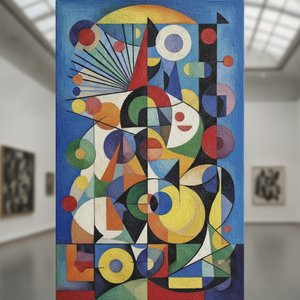
To gaze upon a work of pure abstraction is to engage in a silent dialogue with the deepest recesses of the human psyche. Beyond the recognizable landscapes and portraits that have long defined the canon, there exists a more primal language—one stripped of narrative but overflowing with meaning. This is the realm where lines and forms act as conduits for emotion, bypassing the intellect to strike directly at the subconscious. When we encounter a sharp, decisive stroke or a soft, bleeding edge, our minds do not merely register a visual change; they experience a psychological shift. The history of modernism, from the rigorous structures of De Stijl to the visceral energy of Abstract Expressionism, suggests that these geometric elements are far more than aesthetic choices; they are the fundamental building blocks of feeling.
The power of this visual language lies in its ability to evoke tension, stability, or movement without the need for a single recognizable object. A single vertical line can command authority and aspiration, much like a spire reaching toward the heavens, while horizontal planes offer a sense of rest and groundedness. As we navigate these abstract landscapes, our brains engage in a complex process of pattern recognition, seeking order within what may initially appear as chaos. This interaction is not merely passive; it is an active reconstruction of reality where every angle and weight carries an emotional imprint, inviting the viewer to find their own reflection within the composition.
The Circle and the Square: Finding Stability and Infinite Connection
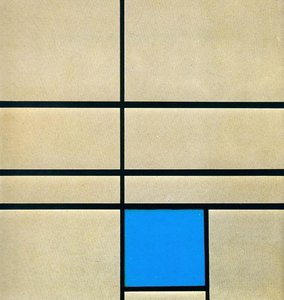 Composition with Blue 1
Exploring the Simplicity of Geometric Harmony This artwork exemplifies the beauty of minimalism through its precise arrangement of geometric forms. Its clean, structured composition invites viewers to appreciate the elegance of basic shapes and the p...
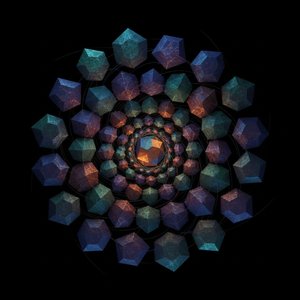
Within the lexicon of geometric abstraction, few symbols possess the archetypal weight of the circle and the square. The circle, with its lack of beginning or end, has long been revered as a symbol of unity, wholeness, and the infinite. In the hands of a master, a circular form can evoke the cyclical nature of life, the celestial orbits of the planets, or the profound sense of containment found in a moment of deep meditation. It is a shape that invites the eye to move in a continuous, rhythmic loop, fostering a sense of spiritual continuity and peace.
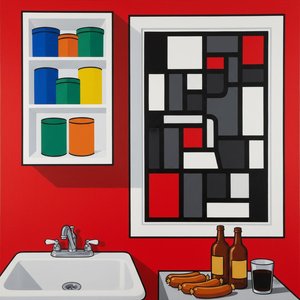
In stark contrast, the square provides the necessary counterpoint of terrestrial stability. It represents the measurable, the structured, and the architectural. When we see the precise, grid-like arrangements found in works such as Piet Mondrian’s Composition with Blue 1, we are witnessing a pursuit of universal order and clarity. The square anchors the composition, providing a foundation upon which more fluid elements can dance. For the collector, the interplay between these two forms offers a profound psychological balance: the circle provides the dream of transcendence, while the square offers the comfort of logic and permanence. Together, they create a visual equilibrium that resonates with our innate desire for both freedom and structure.
Angular Tension vs. Fluid Grace: Reflecting Inner Conflict and Harmony
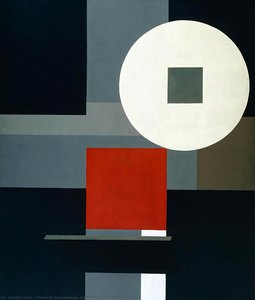 friedrich vordemberge gildewart
Friedrich Vordemberge-Gildewart: Architect of Geometric Abstraction Born in Osnabrück, Germany, in 1899, Friedrich Vordemberge-Gildewart’s artistic journey was a radical departure from traditional representation, charting instead a course toward pure...
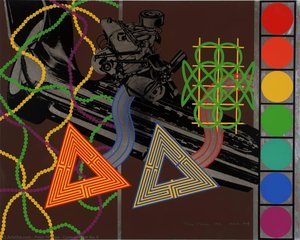
The true drama of abstract art often unfolds in the friction between opposing forces. Consider the tension created by sharp, jagged angles—forms that pierce the visual field and demand immediate attention. These angular elements can evoke feelings of agitation, conflict, or even the fractured reality of a world in upheaval. Artists like Friedrich Vordemberge-Gildewart utilized these geometric disruptions to explore the complexities of modern existence, where the rigid structures of society often clash with individual impulse. Such works serve as mirrors for those moments in our own lives when we feel the pressure of external constraints against our internal drive.
Yet, this tension is frequently tempered by the introduction of fluid grace. When sweeping, organic curves or soft, atmospheric washes of color intersect with sharp geometry, a sense of resolution emerges. This movement toward harmony reflects the human struggle to reconcile our chaotic impulses with our need for order. A composition that balances aggressive, pointed shapes with gentle, undulating lines mimics the very rhythm of breath and heartbeat. For the discerning eye, finding beauty in this tension is an act of recognizing one's own resilience—the ability to find grace amidst the sharp edges of life.
Color and Composition: The Gestalt Theory of Visual Perception
 Gestalt psychology
Gestalt psychology, gestaltism, or configurationism is a school of psychology, and a theory of perception, that emphasizes psychologically processing entire patterns (and "configurations"), not merely individual components of situations or events sep...
To truly understand how abstract art speaks to us, one must look toward Gestalt psychology. This school of thought posits that the human mind does not perceive a painting as a mere collection of disparate parts—a blue square here, a black line there—but rather as a unified whole. We are biologically programmed to seek "configurations," or patterns that create meaning. In abstract composition, this means that the relationship between color and form is paramount. The way a vibrant hue punctuates a neutral field, or how a heavy texture disrupts a smooth surface, dictates the entire psychological atmosphere of the work.
The mastery of an artist like Paolo Cotani lies in his ability to manipulate these perceptual laws. By meticulously crafting geometric compositions, he uses color to generate dynamic visual tension, guiding the viewer's eye through a carefully orchestrated journey of emotion. The "whole" becomes something greater than the sum of its parts; a single well-placed stroke can alter the weight of an entire canvas. For the collector, understanding this principle allows for a deeper appreciation of how a painting occupies a room, not just as an object, but as an atmospheric force that shapes the very air of the space it inhabits.
Curating Your Soul: Selecting Abstract Art that Mirrors Your Identity
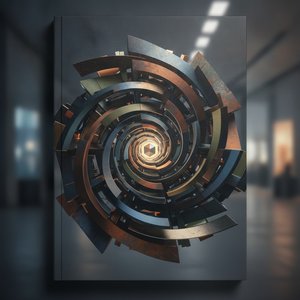 Top 25 Masterpieces by Laurent Fabre: A Journey Through Neo-Abstract Geometry
Introduction To step into the world of Laurent Fabre is to enter a space where the rigid boundaries of geometry dissolve into a luminous dance of color and light. His work does not merely occupy a wall; it commands the atmosphere, inviting the viewer...
Collecting art is, at its core, an act of self-definition. The pieces we choose to surround ourselves with are often silent autobiographies, reflecting our values, our histories, and our aspirations. A collector drawn to the minimalist precision of geometric abstraction may find solace in the pursuit of clarity, intellectual rigor, and the beauty of essential truths. Conversely, one attracted to the "neo-abstract geometry" of artists like Laurent Fabre—where boundaries dissolve into a luminous dance of light—may possess a spirit that thrives on complexity, movement, and the exploration of the ephemeral.
Selecting art requires an honest confrontation with one's own temperament. Do you seek the sanctuary of order, or do you crave the stimulation of disruption? Does your soul resonate with the stillness of a monochromatic study, or the energetic pulse of a multi-colored triptych? By viewing abstract works as psychological mirrors, the act of curation transcends mere decoration. It becomes a sophisticated process of building an environment that reinforces one's true identity, creating a sanctuary where the external world is harmonized with the internal landscape.
The Collector's Eye: Integrating Psychological Depth into Interior Design
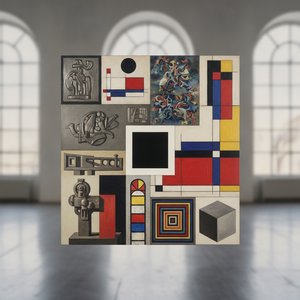 10 Iconic Masterpieces That Defined Geometric Abstraction
Introduction To step into the world of Geometric Abstraction is to leave behind the chaotic noise of the visible world and enter a realm of pure, distilled order. It is an invitation to look past the surface of things—beyond the recognizable faces, l...
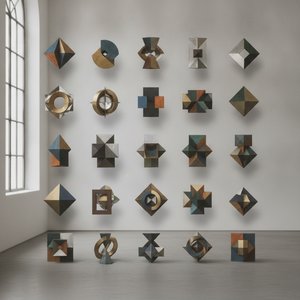
For the professional designer or the sophisticated homeowner, integrating abstract art into an interior requires more than an eye for color matching; it requires an understanding of psychological impact. A large-scale, multi-panel installation can serve as a powerful architectural anchor, providing a sense of grandeur and rhythm to a wide wall or a sweeping staircase. When selecting such pieces, one must consider how the "visual weight" of the shapes will interact with the existing architecture. A room filled with sharp, angular works may feel energetic and stimulating—ideal for a creative studio or a vibrant social space—while softer, circular compositions can transform a bedroom or library into a place of profound introspection.
The ultimate goal is to create a cohesive atmosphere where art and architecture exist in a state of mutual enhancement. Whether through the use of custom-sized murals that recreate historical grandeur or the careful placement of a single, commanding masterpiece, the intention should always be to evoke a specific emotional response. As we curate our spaces, we are not just arranging objects; we are composing an experience. Through the thoughtful application of shape, color, and form, we can transform any environment into a profound reflection of the human spirit, ensuring that every corner of our world resonates with meaning and beauty.
ArtsDot.com is the global destination for those who seek to bring this level of profound meaning into their collections. As a premium marketplace specializing in museum-quality reproductions and bespoke commissions, we bridge the gap between historical mastery and contemporary vision. From hand-painted oil recreations that capture every delicate brushstroke to custom "remixed" portraits that transform personal memories into masterpieces, our service is designed for the discerning collector who values authenticity, craftsmanship, and emotional resonance. Whether you are an interior designer sourcing for a luxury hotel or a private enthusiast seeking a centerpiece for your home, ArtsDot.com provides the expertise and the artistry to turn your vision into a lasting legacy.