
The Alchemy of Light: Understanding Chiaroscuro and Tenebrism
To gaze upon a true masterpiece is to witness a silent struggle between the visible and the unseen. In the annals of art history, few techniques possess the visceral power of chiaroscuro—the delicate, masterful orchestration of light and shadow. This is not merely a technical method of modeling three-dimensional forms; it is an emotional language. When light meets darkness on a canvas, it creates a sense of volume that breathes life into the figures, pulling them from the void and into our very consciousness.
As we delve deeper into the more extreme manifestations of this technique, we encounter tenebrism, where the shadows do not merely define form but dominate the composition. In tenebrist works, the darkness becomes a heavy, palpable presence, an encroaching void from which sudden, piercing highlights emerge like theatrical spotlights. This dramatic contrast serves to heighten the psychological tension of the scene, forcing the viewer’s eye to focus on the most critical elements of the narrative: a weeping eye, a clenched hand, or the glint of a blade. It is through this alchemy of light that artists transform flat surfaces into profound stages for human drama.
Divine Radiance: The Sacred Shadows of Guercino’s Sainte Cecile
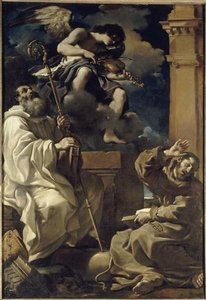
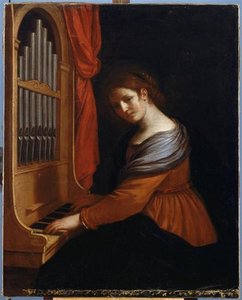
In the hands of the Baroque master Guercino, the interplay of shadow and illumination reaches a state of celestial grace. His work, particularly the breathtaking Sainte Cecile, serves as a testament to how light can be used to bridge the gap between the earthly and the divine. In this masterpiece, we do not see a harsh, jarring contrast, but rather a sophisticated layering of tones that creates a luminous landscape, where soft shadows cradle the saintly figure in an atmosphere of profound sanctity.
Guercino utilizes chiaroscuro to sculpt the form of Saint Cecilia, allowing light to wash over her with a gentle intensity that suggests a spiritual presence. The surrounding environment is not lost to total darkness; instead, it is rendered in deep, atmospheric tones that provide a sense of infinite depth. This technique invites the observer into a meditative state, where the boundaries between the physical world and the spiritual realm begin to blur. The painting becomes more than an image; it becomes an experience of light itself, capturing the very essence of devotion through the subtle modulation of brightness.
The Weight of Fate: Vulnerability and Drama in Luca Giordano’s Prometeo
If Guercino represents the grace of light, Luca Giordano explores its capacity for raw, unbridified drama. In his powerful depiction of Prometeo, the canvas becomes a battlefield of emotion and physical struggle. Here, the use of intense chiaroscuro is used to emphasize the profound vulnerability of the fallen figure. The shadows are not merely background elements; they are heavy, oppressive forces that seem to press down upon the subject, mirroring the weight of his cosmic punishment.
Giordano’s mastery lies in his ability to use sudden bursts of light to highlight the muscular tension and the agonizing expression of the protagonist. The stark contrast between the illuminated flesh and the swallowing darkness creates a cinematic quality that is almost overwhelming. In this work, we see the true power of the Baroque spirit—the ability to use technical brilliance to convey the most extreme human sensations of pain, resilience, and the terrifying majesty of fate. The shadows here act as a metaphor for the unknown, the inescapable, and the tragic.
Decisive Moments: The Cinematic Tension of Baglione’s Judith and Holofernes
The narrative tension within art often finds its peak in moments of irreversible action, and few paintings capture this more effectively than Giovanni Baglione’s Judith and the Head of Holofernes. Executed in 1608, this monumental work is a masterclass in the use of shadow to direct the viewer's gaze toward a moment of profound historical and psychological significance. The composition is anchored by the decisive act of decapitation, a scene rendered with meticulous detail and a startling sense of immediacy.
Baglione employs a signature style characterized by dramatic chiaroscuro that echoes the Venetian influence on Roman art. The light falls sharply upon Judith’s resolute face and the gruesome reality of her task, while the surrounding darkness obscures much of the periphery, focusing all energy onto the central conflict. This selective illumination creates a sense of focused intensity, as if time itself has paused to allow us to witness the gravity of her choice. The shadows do not hide the horror; rather, they frame it, lending a monumental dignity to an act of violent liberation.
Shadow as Narrative: How Darkness Shapes Emotional Depth in Baroque Masterpieces
Beyond the individual brilliance of specific artists, there exists a broader narrative function to darkness within the Baroque era. Shadows serve as the silent narrators of art history, providing the necessary silence between the notes of light that allow the melody of the composition to resonate. Without the depth provided by shadow, the triumphs of light would lack their impact; without the void, the highlights would have no stage upon which to shine.
In these masterpieces, darkness is used to suggest what is hidden, what is lost, and what is yet to be revealed. It creates a sense of mystery and psychological complexity that invites endless interpretation. The shadows allow for the existence of subtext—the unspoken fears, the secret desires, and the looming threats that haunt the edges of the frame. By mastering the art of the unseen, these painters ensured that their works would continue to haunt and inspire viewers centuries after the paint had dried.
Bringing the Shadows Home: Preserving Dramatic Artistry in Modern Interiors
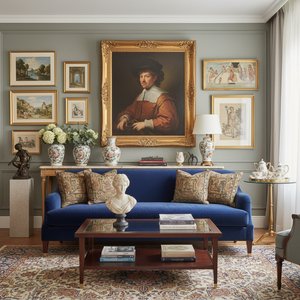
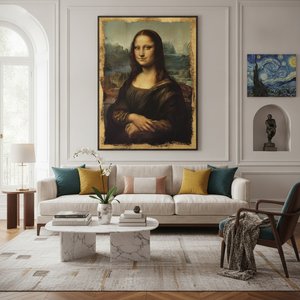
The enduring allure of these dramatic masterpieces lies in their ability to transform any space they inhabit. To bring a work of chiaroscuro into a modern home is to introduce a sense of history, depth, and intellectual rigor. Whether through a large-scale oil reproduction that serves as a focal point in a grand hall or a carefully selected print that adds texture to a quiet study, these works command attention and provoke thought.
As we curate our contemporary environments, the lessons of the Old Masters remain profoundly relevant. The use of high-contrast art can define architectural boundaries, create intimate corners within open plans, and provide a sophisticated counterpoint to minimalist design. By embracing the drama of the past, we allow our living spaces to become galleries of human emotion, where the eternal dance between light and shadow continues to captivate the modern soul.
At ArtsDot.com, we are dedicated to preserving this legacy of human creativity. From meticulously hand-painted oil reproductions that capture every tactile brushstroke to museum-quality Giclée prints, our mission is to make the profound beauty of the Old Masters accessible to collectors worldwide. Whether you seek a custom commission or a breathtaking piece of history, we invite you to explore our collection and bring the transformative power of light and shadow into your own home.