
The Iconography of Power: Symbols of Rank and Regalia in Military Portraiture
To gaze upon a classical military portrait is to enter a silent dialogue with history, where every thread of gold braid and every glint of polished brass speaks of a structured hierarchy. The artist does not merely record a likeness; they curate an identity. In the realm of academic portraiture, authority is articulated through a meticulous language of symbols known as regalia. Consider the profound weight of a uniform, such as that seen in Heinrich von Angeli’s Prince Henry (1858–1896) in Military Uniform. Here, the Victorian military opulence is not merely decorative; it serves as a visual shorthand for legitimacy and dynastic continuity. The heavy embroidery, the precise placement of medals, and the stiff, formal collar all function to elevate the subject above the common fray, anchoring them within a lineage of command.
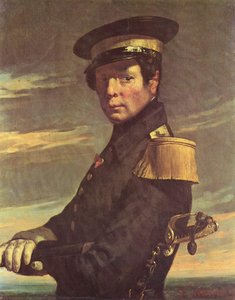
These symbols extend beyond the fabric itself, reaching into the very accessories of office. Epaulettes, swords, and sashes act as anchors for the viewer's eye, directing attention to the shoulders and hands—the physical manifestations of strength and decisive action. When we observe the intricate details of such works, we are witnessing a deliberate construction of prestige. The artist uses the texture of the oil paint to mimic the tactile reality of silk, velvet, and metal, ensuring that the viewer feels the gravity of the subject's station. Through this careful orchestration of material detail, the portrait becomes more than a likeness; it becomes an enduring monument to the concept of sovereignty.
The Weight of Command: Analyzing the Psychological Depth of Officer Portraits
Beyond the outward display of medals and lace lies a more profound, often more unsettling, dimension of military art: the psychological landscape of the commander. A truly masterful portrait captures the duality of leadership—the external stoicism required by duty and the internal burden of responsibility. In works such as Malcolm Stewart’s 1902 interpretation of Lieutenant General Sir John Moore, we see a striking departure from mere documentation toward a deeper realism. The gaze of the officer often carries a heavy, contemplative quality, suggesting a mind preoccupied with the strategic maneuvers and the human cost of conflict. This is where the portrait transcends the physical and enters the realm of the spiritual.
The tension in a sitter's posture—perhaps a slight tilt of the head or a hand resting heavily on a hilt—conveys a sense of vigilance. The artist employs subtle shifts in facial expression to hint at the character beneath the uniform: the iron will, the weary wisdom, or the burgeoning resolve. This psychological depth is what allows these portraits to resonate across centuries; they remind us that behind every historical movement were individuals navigating the immense pressures of command. By capturing this internal struggle, the painter invites the observer to empathize with the solitude of authority, making the historical figure feel intimately present and profoundly human.
From Battlefield to Canvas: The Evolution of Academic Realism in Military Art
The transition of military life from the chaotic theater of war to the controlled environment of the studio marks a significant evolution in art history. While battle paintings focus on the kinetic energy and visceral terror of combat, the officer portrait focuses on the aftermath—the dignified preservation of legacy. This shift necessitated the rise of Academic Realism, a style characterized by rigorous anatomical accuracy and a devotion to classical influences. We see this beautifully realized in George Watson’s 1806 depiction of General John Reid, where the dignity of the figure is supported by a masterful command of form and historical elegance.
As the centuries progressed, the techniques used to depict these figures became increasingly sophisticated. The influence of masters like Thomas Lawrence brought a certain romanticized flair to the genre, blending precise detail with an almost ethereal light. This evolution allowed artists to move away from the stiff, icon-like portraits of earlier eras toward more dynamic compositions that suggested movement and life. The goal remained constant, however: to utilize the highest standards of academic training to create a work that felt both timeless and contemporary, ensuring that the prestige of the subject was immortalized through the most refined technical execution possible.
Light, Shadow, and Sovereignty: Technical Mastery in Depicting Authority
The true alchemy of military portraiture lies in the manipulation of light and shadow, a technique known as chiaroscuro, which serves to sculpt the subject out of the darkness. Light is never used haphazardly; it is a tool of emphasis, used to illuminate the face of the commander or the reflective surface of a ceremonial saber. This dramatic interplay creates a sense of three-dimensionality that gives the figure a commanding presence within the frame. In the hands of a skilled academic painter, light becomes a metaphor for clarity and divine right, casting the officer in a glow that suggests both enlightenment and unshakeable resolve.
Shadow, conversely, provides the necessary depth and mystery. It hides the periphery, focusing the viewer's attention on the essential elements of command while suggesting the unseen complexities of the world the officer inhabits. The use of deep, rich tones—often achieved through meticulous layering of glazes—creates a tonal range that gives the skin a lifelike warmth and the uniforms a heavy, tactile quality. This technical mastery is what separates a mere likeness from a masterpiece; it is the ability to use the very chemistry of oil and pigment to breathe life into cloth and bone, creating an illusion of sovereignty that feels almost tangible to the touch.
Curating Majesty: Integrating Commanding Masterpieces into the Modern Interior
In the contemporary era, the presence of such commanding artworks offers a profound sense of continuity and gravitas to any architectural space. Integrating a large-scale military portrait or a series of historical officer studies into a modern interior requires an eye for balance and an appreciation for historical dialogue. These pieces act as anchors within a room, providing a focal point that commands attention and invites contemplation. Whether placed in a formal study, a grand hallway, or a sophisticated corporate lounge, the presence of such art elevates the atmosphere, imbuing the space with a sense of heritage and intellectual depth.
For the discerning collector, the challenge lies in selecting works that resonate with the existing design palette while maintaining their own distinct historical voice. A multi-panel arrangement or a carefully framed oil reproduction can transform a contemporary wall into a gallery of historical significance. As we look toward the future of art appreciation, the ability to bring these echoes of the past into our modern lives remains one of the most rewarding endeavors for any enthusiast. At ArtsDot.com, we specialize in preserving this legacy, offering exquisite hand-painted reproductions that allow the majesty of the Old Masters to find a permanent and prestigious home in the modern world.