The Art of Deception: An Introduction to Optical Illusions in Fine Art
There exists a profound, almost magical moment in the presence of a true masterpiece when the eyes and the mind engage in a silent, beautiful conflict. This is the essence of optical illusion art—a genre that does not merely seek to depict reality, but to actively challenge our very perception of it. For the true connoisseur, these works offer more than mere visual stimulation; they provide a philosophical inquiry into the reliability of our senses. Throughout history, artists have utilized subtle shifts in light, shadow, and geometry to create windows into worlds that seem to defy the laws of physics. To gaze upon such art is to enter a state of wonder, where the boundary between the canvas and the viewer''s reality begins to dissolve, leaving us questioning what is truly tangible and what is merely a trick of the light.
Trompe l'oeil: When Paint Becomes Reality
Perhaps no technique captures the heart of the classic art enthusiast quite like trompe l'oeil, a French term meaning "deceive the eye." This sophisticated method transcends simple representation, aiming instead for a seamless integration of art and architecture. In its most breathtaking forms, such as the architectural illusions seen in the works of masters like Martin Battersby, the painted surface disappears entirely. One might find themselves reaching out to touch a sculpted molding or a protruding ledge, only to realize they are met with the flat, unyielding texture of oil on canvas. This mastery of detail—the precise rendering of shadows, the delicate play of highlights, and the meticulous attention to depth—creates a sensory experience that is both startling and deeply immersive. It is an art form of extreme discipline, where every brushstroke serves the singular purpose of constructing a convincing, three-dimensional lie.
Geometric Distortions and the Birth of Op Art
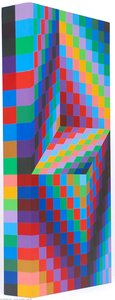
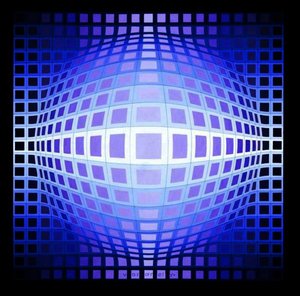
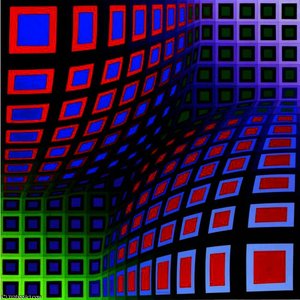
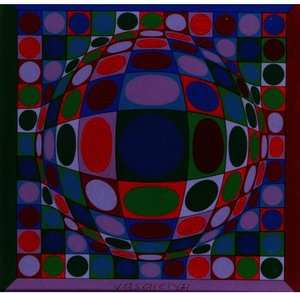
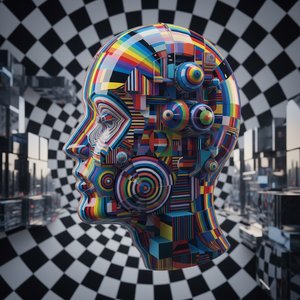
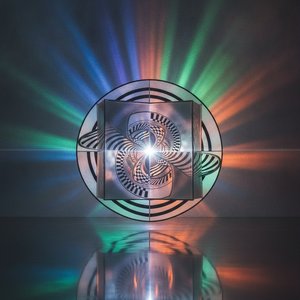
As we move from the representational realism of trompe l'oeil into the more modern era, the nature of illusion shifts from the literal to the abstract. The mid-20th century witnessed the rise of Op Art, a movement that abandoned recognizable objects in favor of pure, rhythmic geometry. Consider the hauntingly beautiful studies by Victor Vasarely; here, the illusion is not found in a painted object, but in the vibration of color and form itself. Through the strategic use of contrasting hues and mathematical precision, these works create an unsettling sense of depth and movement. The canvas appears to pulse, swell, or recede, pulling the viewer into a hypnotic dance of light and shadow. It is a cerebral form of deception, one that relies on the physiological response of the retina to create a kinetic energy that feels as though the painting is breathing right before our eyes.
Pop Art Playfulness: Reimagining Everyday Objects through Illusion
The twentieth century also brought a more whimsical approach to visual trickery, most notably within the Pop Art movement. Artists like Roy Lichtenstein took the sophisticated concepts of illusion and infused them with a vibrant, contemporary energy. In works such as Trompe L'oeil with Leger Head and Paintbrush, the artist plays with the familiar, using bold outlines and Ben-Day dots to mimic the aesthetic of mass media while simultaneously creating layers of depth that trick the eye. This style celebrates the beauty of the mundane, turning everyday objects—a paintbrush, a broom, or a simple paper head—into subjects of profound visual intrigue. It is a playful exploration where the boundaries between high art and popular culture blur, proving that even the most casual observer can be captivated by the clever manipulation of scale and perspective.
The Science of Sight: Why Our Brains Fall for Masterful Deceptions
To understand why these masterpieces hold such power over us, one must look toward the intersection of art and neurology. Our brains are hardwired to seek patterns, to find order in chaos, and to interpret two-dimensional shadows as three-dimensional forms. Optical illusion art exploits these very evolutionary shortcuts. When an artist masterfully manipulates contrast, foreshortening, or color temperature, they are essentially "hacking" our visual cortex. We do not see the painting; we see our brain's attempt to make sense of it. This cognitive tension—the gap between what the eye perceives and what the mind knows to be true—is where the true magic resides. It is this very struggle that keeps us staring, searching for the truth behind the pigment, making these works eternally engaging and intellectually stimulating.
Bringing the Illusion Home: Curating Captivating Art for Modern Spaces
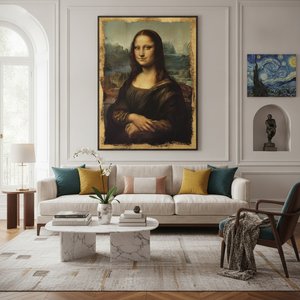
Integrating such provocative works into a personal collection requires a thoughtful approach to curation. An optical illusion piece is rarely just a background element; it is a conversation starter, a focal point that demands attention. For those looking to elevate their interiors, these works can be used to manipulate the perceived dimensions of a room—creating an illusion of greater height through vertical compositions or adding depth to a narrow hallway through architectural trompe l'oeil. Whether you prefer the tactile, textured impasto of a handmade oil reproduction that brings a physical dimension to the trickery, or the crisp, modern lines of a high-quality Giclée print, the goal remains the same: to surround oneself with art that inspires curiosity and invites endless re-examination. By selecting pieces that challenge our perceptions, we transform our living spaces into galleries of thought-provoking wonder.
At ArtsDot.com, we are dedicated to preserving this sense of wonder for collectors worldwide. From meticulously handcrafted oil reproductions that capture every tactile brushstroke to museum-grade prints that bring historical depth to modern homes, our mission is to make the world's most captivating visual journeys accessible to all. Whether you seek a custom commission to reimagine your own memories or an expert consultation to find the perfect centerpiece for your collection, we invite you to explore the infinite possibilities of art that moves the soul and challenges the mind.