

The Foundations of Excellence: Defining Academic Art and the Pursuit of Truth
--- title: Academic art - Wikipedia author: Show Authority Control Databases National Israel Other Internet Encyclopedia url: https://en.wikipedia.org/wiki/Academic_art hostname: wikipedia.org sitename: Wikimedia Foundation, Inc. date: 2003-11-26 ---...
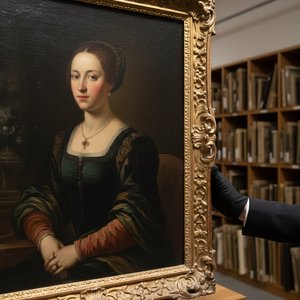
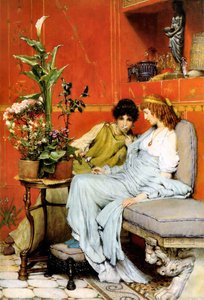
To understand the profound allure of academic painting is to embark upon a journey toward the very essence of perfection. At its core, academic art represents more than a mere stylistic choice; it is a rigorous discipline born from the prestigious European academies that held a near-monopoly on aesthetic taste for centuries. This tradition, reaching its zenith in the 19th century, was anchored by institutions such as the Académie des Beaux-Arts, where the pursuit of beauty was inseparable from the mastery of technical precision. Unlike the fleeting whims of modern trends, academicism sought to establish a universal standard of excellence, blending the structured elegance of Neoclassicism with the emotive depth of Romanticism.
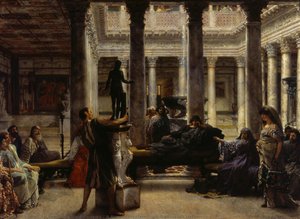
The hallmark of this movement lies in its unwavering commitment to the foundations of excellence. It is an art form that demands a profound understanding of anatomy, perspective, and the subtle interplay of light and shadow. For the discerning collector, an academic piece offers a sense of permanence—a window into a world where every brushstroke serves a higher purpose: the pursuit of an idealized truth. This was not merely about imitation, but about elevating reality through the lens of disciplined skill, ensuring that each composition possessed a monumental quality that transcends the era in which it was conceived.
From Idealism to Observation: The Historical Evolution of Realist Movements
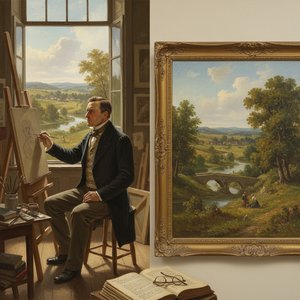 The Poetic Truth of Observation: Exploring 19th-Century Realism in Painting
The Rise of Realism: A Rejection of Idealism Wikipedia: Realism (art movement) Realism was an artistic movement that emerged in France in the 1840s. Realists rejected Romanticism, which had dominated French literature and art since the early 19th cen...
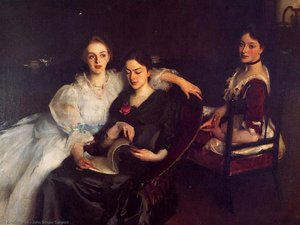
The history of Western art is often viewed as a pendulum swinging between the pursuit of the divine and the confrontation with the tangible. For much of the 18th and early 19th centuries, art served as a gateway to the sublime, transporting viewers to mythological landscapes and heroic battlefields. However, as the mid-19th century dawned, a seismic shift occurred. The emergence of Realism in France, led by provocateurs such as Gustave Courbet, signaled a deliberate turning away from the gilded, often suffocating atmosphere of idealized classicism. This was an act of profound artistic rebellion, a rejection of the theatricality of Romanticism in favor of the unvarnished present.
This evolution introduced a new, more daunting beauty: the poetic truth of observation. Where the Romantics might have depicted a tragic hero lost in a tempest to evoke awe, the Realists turned their gaze toward the weary eyes of a laborer caught in the rain. This movement sought to depict life as it truly was—without the safety net of allegory or myth. Yet, within this shift, we also find the emergence of Romantic Realism, a captivating bridge between worlds. It allowed for the meticulous observation of the external world while acknowledging the internal landscapes of human emotion—the hopes, fears, and quiet moments of grace that define our shared existence. This delicate balance between objective truth and subjective experience remains one of the most enduring legacies in art history.
The Mastery of Technique: Precision, Light, and the Anatomical Imperative
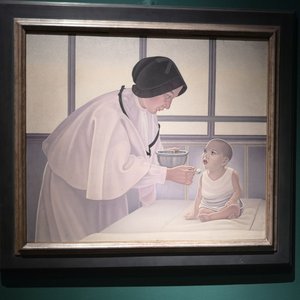 natale bentivoglio scarpa
natale bentivoglio scarpa , also known as cagnaccio di san pietro , was a renowned italian painter born on january 14, 1897, in desenzano del garda. his artistic training began at the academy of fine art in venice, where he studied under ettore tito ...
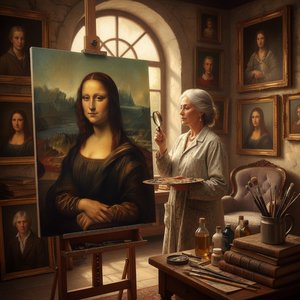
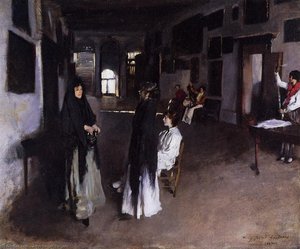
True mastery in the realm of realism is found in the invisible labor of the artist—the meticulous layering of pigments that creates a sense of depth and life. To achieve a truly lifelike masterpiece, an artist must possess an intimate knowledge of the anatomical imperative, understanding how bone and muscle dictate the subtle contours of the human form. This precision is what separates a mere likeness from a soul-stirring portrait. The technique requires a command over chiaroscuro, the dramatic use of light and dark to sculpt figures out of the shadows, and an expert grasp of color theory to render the translucent quality of skin or the heavy texture of velvet.
In the hands of a master, light becomes a character in itself. It does not simply illuminate; it reveals texture, evokes mood, and directs the viewer's eye through the composition. Whether it is the clinical precision found in the works of Cagnaccio di San Pietro or the neoclassical grandeur seen in the contemporary works of Jin Shangyi, the goal remains the same: to use technical virtuosity to capture the essence of the subject. This dedication to traditional techniques—the visible yet controlled brushwork and the careful application of glazes—ensures that the painting possesses a tactile depth that no digital reproduction can ever replicate.
The Collector's Eye: Identifying Authenticity and Technical Virtuosity in Realism
In art, realism is generally the attempt to represent subject-matter truthfully, without artificiality, exaggeration, or speculative or supernatural elements. The term is often used interchangeably with naturalism, although these terms are not necess...
For the elite collector, acquiring art is an exercise in discernment. Identifying true technical virtuosity requires looking beyond the initial subject matter to examine the integrity of the execution. One must observe the way the artist handles transitions between light and shadow, the smoothness of the brushwork, and the richness of the tonal range. In a world saturated with mass-produced imagery, the value of an authentic, hand-painted oil reproduction lies in its materiality—the physical presence of the impasto, the subtle variations in pigment, and the way the light interacts with the surface of the canvas.
Authenticity is also found in the historical resonance of the piece. A collector seeks works that embody a specific era's aesthetic philosophy, whether it be the structured discipline of the Academy or the raw honesty of 19th-century Realism. When evaluating potential acquisitions, one should look for the hallmarks of professional craftsmanship: the use of high-quality materials like 100% cotton canvas and light-fast oils, and the presence of a cohesive compositional logic. True value is found where historical significance meets unparalleled skill, creating an object that is not only a beautiful adornment but a profound cultural artifact.
Curating Grandeur: Integrating Academic Masterpieces into Sophisticated Interiors
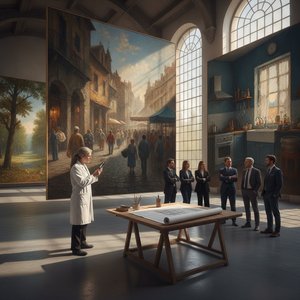 Realism in Art: A Professional Guide to Authentic Detail and Lifelike Masterpieces for Large-Scale Interior Projects
Defining Realism: The Shift from Idealized Classicism to Objective Truth The Poetic Truth of Observation: Exploring 19th-Century Realism in Painting The Rise of Realism: A Rejection of Idealism Wikipedia: Realism (art movement) Realism was an artisti...
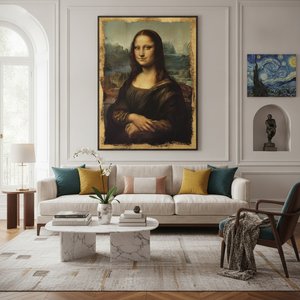
Integrating works of academic realism into a modern architectural space requires a sophisticated approach to curation. These paintings are not mere decorations; they are anchors of character and history. For large-scale interior projects, such as luxury hotels or private estates, the use of monumental canvases can transform a room, providing a focal point that commands attention and evokes a sense of timelessness. The strategic placement of a multi-panel set—splitting a single landscape across three or five panels—can create a contemporary, rhythmic flow that complements modern architectural lines while maintaining classical dignity.
When designing around such significant pieces, consider the interplay of texture and light within your space. An academic masterpiece thrives in environments where it can be properly showcased, perhaps paired with custom framing in gold leaf or deep espresso to enhance its historical weight. For those looking to create a cohesive aesthetic, the ability to remix art history—such as requesting a portrait in the light-drenched style of Monet or a landscape with the dramatic impasto of Van Gogh—allows for a bespoke approach to interior design. Ultimately, the goal is to create a dialogue between the contemporary environment and the enduring elegance of the past, resulting in a space that feels both curated and profoundly lived-in.
At ArtsDot.com, we specialize in preserving this legacy of excellence. As a global leader in fine art reproductions, we bridge the gap between the Old Masters and the modern collector. Our mission is to provide museum-quality, hand-painted oil reproductions that capture the soul and technique of history's greatest artists. From bespoke portrait commissions to large-scale architectural murals, every piece we offer is a testament to unparalleled craftsmanship and a passion for the enduring beauty of realism.