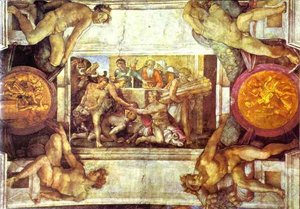


The Dawn of Humanism: Rediscovering Classical Antiquity
The Renaissance (UK: rin-AY-sənss, US: REN-ə-sahnss) was a European period of history and cultural movement taking place at the end of the Late Middle Ages and the beginning of the early modern era. It is variously defined as covering the 15th and 16...
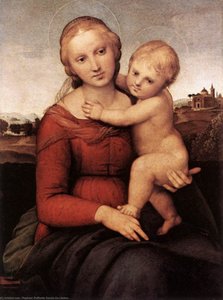
To understand the profound resonance of the Italian Renaissance, one must first look back to the shadows of the Middle Ages, where art served primarily as a vessel for spiritual instruction rather than an exploration of the human condition. The movement that emerged in the 14th century was not merely a stylistic shift but a fundamental rebirth of the soul. This era, fueled by the intellectual currents of Humanism, sought to bridge the gap between the divine and the earthly by reviving the lost wisdom of Classical antiquity. Scholars and artists alike began to look toward the ruins of Rome and the philosophies of Greece, finding in them a celebration of reason, nature, and the individual.
This period was characterized by an increased awareness of the natural world and a newfound reverence for human agency. It was no longer enough to depict the holy as distant, ethereal icons; the masters sought to ground them in reality, imbuing sacred figures with recognizable anatomy and palpable emotion. As the boundaries between science and art blurred, the application of contemporary scientific knowledge—from the study of optics to the precision of geometry—allowed for a more profound connection to the physical world. This intellectual awakening laid the groundwork for an era where beauty was measured by its harmony with the laws of nature and the dignity of man.
The High Renaissance Apotheosis: Mastery of Form and Light
 High Renaissance
In art history, the High Renaissance was a short period of the most exceptional artistic production in the Italian states, particularly Rome, capital of the Papal States, and in Florence, during the Italian Renaissance. Most art historians state that...
As we move into the late 15th and early 16th centuries, we encounter the zenith of this movement: the High Renaissance. This was a brief yet explosive period where the technical foundations laid by earlier masters reached a state of near-perfect equilibrium. In the hands of titans such as Leonardo da Vinci, Michelangelo, and Raphael, art achieved an unprecedented level of clarity, balance, and idealized beauty. The works of this era do not merely represent life; they refine it, presenting a vision of human grandeur that feels both attainable and transcendent.
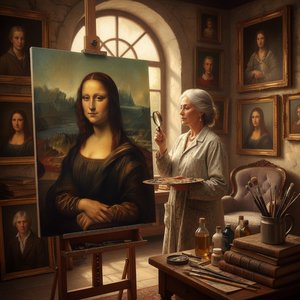
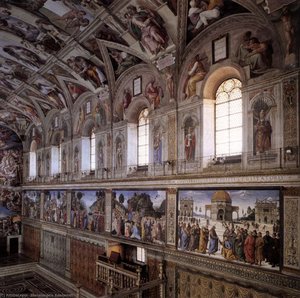
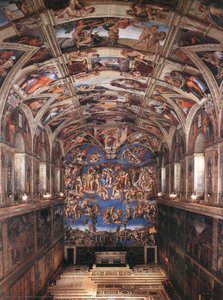
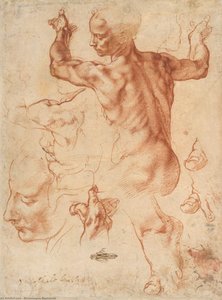
The technical innovations of the High Renaissance masters were nothing short of revolutionary. Consider the mastery of sfumato—the delicate, smoky blending of tones that allows forms to emerge from shadow without harsh outlines—or the use of chiaroscuro to sculpt figures through the dramatic interplay of light and dark. In Raphael’s breathtaking frescoes within the Stanze Vaticane, such as the Stanza di Eliodoro, one observes a seamless integration of composition and anatomy that directs the eye with effortless grace. Similarly, Michelangelo’s work on the Sistine Chapel ceiling, including the powerful depiction of The Prophet Jeremiah, showcases an anatomical accuracy and emotional depth that captures the very essence of spiritual struggle and human resilience.
Architectural Grandeur: The Symbiosis of Fresco and Space
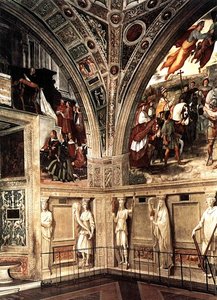 Stanze Vaticane - View of the Stanza di Eliodoro
Introduction The Stanze Vaticane , also known as the Raphael Rooms, are a series of four rooms in the Apostolic Palace in the Vatican that were decorated by the Italian High Renaissance artist Raphael and his workshop. The rooms were originally inten...
The true genius of the Italian Renaissance lies in its ability to transform architecture into a living canvas. For the discerning collector or designer, understanding this relationship is essential to appreciating the era's scale. Art was never intended to exist in isolation; it was designed to inhabit and elevate the spaces it occupied. From the private papal chambers in the Vatican to the sprawling villas of the Italian nobility, the placement of every fresco and sculpture was an act of intentionality, creating a symbiotic relationship between the structure and the narrative within.
This architectural integration allowed for the creation of immersive environments that commanded respect and inspired contemplation. Large-format works, such as ceiling frescoes or expansive wall murals, were used to extend the perceived boundaries of a room, inviting the viewer into mythological or biblical realms. This sense of permanence and historical weight is what makes Renaissance aesthetics so enduringly relevant in modern luxury design. By integrating elements that reflect this fascination with classical proportion and spatial harmony, one can evoke an atmosphere of profound cultural sophistication, turning a mere room into a sanctuary of historical significance.
From Rationality to Drama: The Transition Toward Baroque Intensity
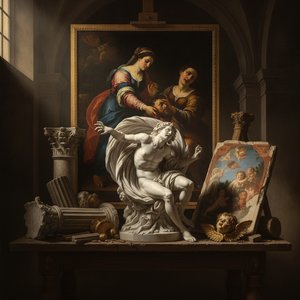 Italian Baroque Unlocked: High-Drama Art That Hits Hard
The Great Reset: Moving from Renaissance Calm to Baroque Chaos The Visceral Stage: Exploring Dramatic Narratives & Emotional Intensity in Baroque Art The Baroque Embrace of Emotion: A Shift from Renaissance Rationality Wikipedia: Baroque painting Bar...
While the Renaissance celebrated the stability of reason and the perfection of symmetry, the subsequent movement, the Baroque, sought to shatter this calm with an earthquake of emotion. This transition represents one of the most dramatic shifts in art history—a move from the intellectual contemplation of a perfectly composed scene to the visceral experience of a cinematic moment. Where the Renaissance offered a sense of eternal stillness, the Baroque introduced movement, tension, and psychological crisis.
The evolution from Renaissance rationality to Baroque chaos was not a rejection of previous principles but an expansion of their emotional range. The strict rules of balance and idealized beauty gave way to tenebrism—an even more extreme form of light-dark contrast that pulls the viewer into the heart of the drama. This era demanded immediate impact, utilizing sweeping diagonals and theatrical lighting to turn the canvas into a stage. For those who appreciate the intellectual clarity of the Renaissance, the Baroque offers a compelling counterpoint of energy and intensity, marking the moment when art ceased to be something merely observed and became something experienced with the entire being.
Curating the Renaissance Aesthetic in Modern Luxury Interiors
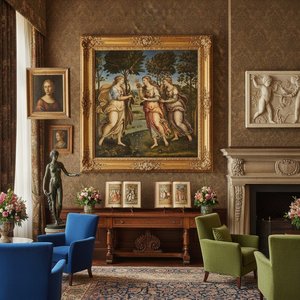 Italian Renaissance Art: A Procurement Guide to Timeless Masterpieces for High-End Hotel Interiors
The Renaissance Aesthetic: Integrating Classical Grandeur into Modern Hospitality Design Renaissance art Renaissance art (1350 – 1620) is the painting, sculpture, and decorative arts of the period of European history known as the Renaissance, which e...
For the modern connoisseur, integrating the Renaissance aesthetic into contemporary spaces is an exercise in establishing a narrative of permanence. In high-end hospitality and private estates, the challenge lies in transcending mere luxury to achieve true timelessness. This is achieved not through the mere hanging of a painting, but through the thoughtful curation of works that evoke classical grandeur. Whether it is a multi-panel arrangement spanning a grand staircase or a bespoke reproduction that mirrors the light-drenched atmosphere of a Venetian palazzo, the goal is to create an environment of established prestige.
Modern collectors can honor this legacy through various sophisticated means. The use of hand-painted oil reproductions allows for the introduction of palpable texture and visible brushstrokes that mass-produced prints simply cannot replicate. Furthermore, the ability to customize these works—perhaps by requesting a period shift or adapting a classical composition to match a specific color palette—allows for a personalized dialogue with history. By selecting pieces that reflect the Renaissance fascination with antiquity and humanistic ideals, one invites a sense of profound cultural depth into the modern home, ensuring that the space remains an ambassador of beauty for generations to come.