
The Architecture of the Unseen: Defining Metaphysical Art
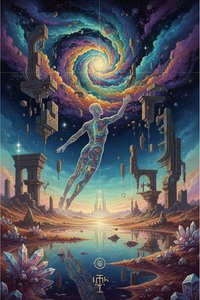 Beyond Reality: Unveiling the Enigmatic Depths of Metaphysical Art and its Philosophical Echoes
The Threshold of Dreams: Defining the Metaphysical Movement To step into a Metaphysical painting is to cross a threshold where the familiar becomes profoundly strange. At the dawn of the 20th century, as the world grappled with the rapid industrializ...
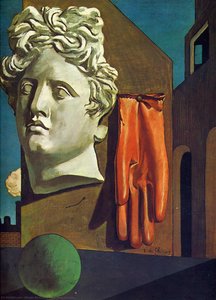
To step into a Metaphysical painting is to cross a threshold where the familiar becomes profoundly strange, leaving the viewer suspended in an ethereal in-between. At the dawn of the twentieth century, as the world grappled with the rapid industrialization of reality, a new movement emerged—not to depict what the eye sees, but what the soul senses beneath the surface of perception. This was Metaphysical Art, a precursor to Surrealism that eschewed the chaotic distortions of Cubism in favor of a haunting, hyper-lucid clarity. It is an art of stillness, capturing those suspended moments where time seems to have ceased its forward march, leaving only the heavy, silent weight of existence.
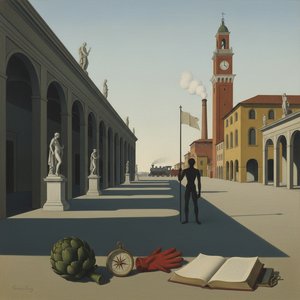
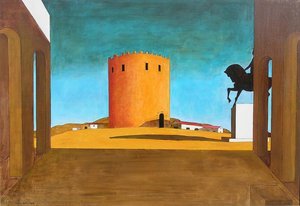
Unlike the dreamscapes of later movements which often relied on melting forms and impossible creatures, Metaphysical Art utilizes recognizable, classical elements—statues, empty piazzas, and long, dramatic shadows—to evoke a sense of profound mystery. The movement operates through a deliberate tension between the concrete and the inconceivable. By presenting objects with an almost clinical precision, the artist forces the viewer to confront the uncanny nature of the mundane. It is a visual language of whispers, where every empty corridor and sun-drenched courtyard serves as a stage for an unseen drama that unfolds just beyond the reach of human understanding.
Existential Echoes: De Chirico and the Weight of Being
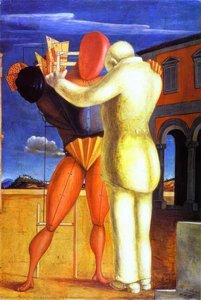
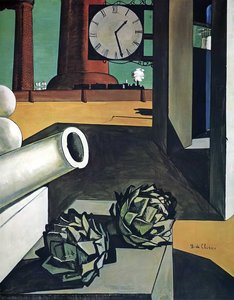 The Conquest of the Philosopher
A Dreamscape of Disquiet: Unveiling Giorgio de Chirico’s ‘The Conquest of the Philosopher’ Giorgio de Chirico's 1914 masterpiece, *The Conquest of the Philosopher*, is a seminal work of the Metaphysical art movement—a style that sought to reveal the ...
The intellectual architecture of this movement is built upon the profound, often unsettling pillars of European philosophy. Giorgio de Chirico, the movement's primary visionary, did not merely paint landscapes; he painted philosophical inquiries. His work was deeply infused with the existential tremors found in the writings of Friedrich Nietzsche, Arthur Schochauer, and Philipp Mainländer—thinkers who explored the concept of the will, the tragedy of existence, and the profound void that lies beneath the veneer of civilization.
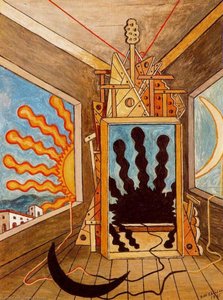
Consider his seminal work, The Conquest of the Philosopher. This 1914 masterpiece invites viewers into a hauntingly familiar yet profoundly unsettling cityscape. It is not merely a depiction of space; it is an exploration of psychological states. Through fragmented architectural scenes and a collision of indoor and outdoor spaces, de Chirico presents ideas of architecture stripped to their essential forms. In works such as Metaphysical Interior with Sun Which Dies, we witness an excavation of the subconscious—a meticulously crafted tableau designed to evoke existential dread. Here, the use of strong, directional light dramatically illuminates certain elements while casting others into deep shadow, intensifying the feeling of mystery and the palpable sense of unease that defines the human condition.
Symbolism and the Subconscious: Beyond the Visible Realm
 Symbolist painting
Symbolist painting was one of the main artistic manifestations of symbolism, a cultural movement that emerged at the end of the 19th century in France and developed in several European countries. The beginning of this current was in poetry, especiall...
While Metaphysical art sought clarity, the Symbolist movement sought the absolute truth through metaphor. Emerging at the end of the nineteenth century, primarily in France, Symbolism was a powerful reaction against the objectivity of Naturalism and Realism. It drew its breath from the evocative poetry of Charles Baudelaire, whose Les Fleurs du Man profoundly influenced a generation of artists. The movement sought to represent absolute truths through language and metaphorical images, emphasizing the world of dreams, mysticism, and the irrational.
In Symbolist painting, color and line were utilized as rhythmic elements to express transcendent meanings. This aesthetic placed a special emphasis on the occult, the erotic, and the macabre—themes that resonated with the fin-de-siècle cultural current of decadence and pessimism. Much like the poetry of Mallarmé or Verlaine, Symbolist art sought to bridge the gap between the physical world and the spiritual realm, using symbols as keys to unlock the deeper, often darker, layers of the human psyche.
The Tension of Stillness: Capturing Philosophical Inquiry through Light and Shadow
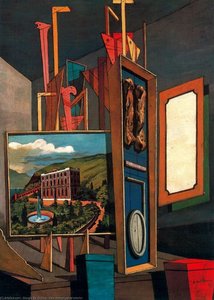 Vast metaphysical interior
A Journey Into the Unconscious: De Chirico’s “Vast Metaphysical Interior” Giorgio de Chirico's "Vast Metaphysical Interior" is not merely a depiction of a room; it’s an immersion into the unsettling realm of the subconscious, a meticulously crafted d...
The true mastery of these philosophical painters lies in their ability to manipulate perception through the interplay of light and shadow. In the Metaphysical tradition, light is not merely a tool for realistic illumination; it is a tool for revealing—and concealing—the underlying mysteries of the scene. The use of stark contrasts creates a dreamlike atmosphere, emphasizing the flatness of certain planes while simultaneously creating deep, enigmatic shadows that stretch and distort perspective.
This calculated discomfort is achieved through precise composition. In de Chirico’s Vast Metaphysical Interior, the meticulous detail with which he renders each object—the worn leather of a chair or the polished surface of a clock—only serves to heighten their strangeness. The light becomes a character in itself, often representing a dying sun or an approaching twilight, reinforcing the painting’s overall sense of unease and the fleeting nature of time. It is within this tension between the brightly lit concrete object and the impenetrable shadow that the philosophical inquiry resides.
From Logic to Lyricism: The Intellectual Lineage of Modern Thought
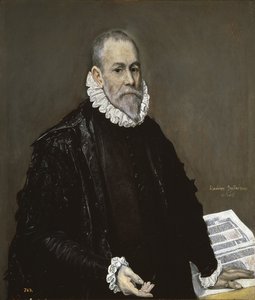 gomez pereira
A Pioneer of Modern Thought: The Life and Legacy of Gómez Pereira The Renaissance, a period synonymous with rebirth and intellectual awakening, produced figures whose contributions often lay dormant for centuries before being fully appreciated. Among...
The evolution of these artistic movements mirrors the evolution of modern thought itself. We see a transition from the rigorous, empirical logic of figures like Gómez Pereira—who used the brush of observation to challenge established dogma—to the more lyrical, subjective explorations of the twentieth century. This lineage connects the Renaissance humanist's pursuit of truth through reason to the modern artist's pursuit of truth through the subconscious.
Even figures like Alberto Savinio, the brother of de Chirico, contributed to this complex tapestry. As a polymathic force, Savinio brought a restless spirit to the Surrealist movement, championing sincerismo—a rejection of superficial imitation in favor of an authentic emotional and intellectual honesty. This continuous pursuit of depth, whether through the scientific spirit of the sixteenth century or the psychological precision of the twentieth, ensures that art remains the ultimate vessel for the exploration of the human intellect.
Curating the Infinite: Integrating Philosophical Masterpieces into the Modern Interior
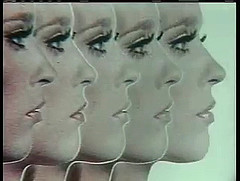 Metaphysical aesthetics
Metaphysical concepts relate to the ideas of transcendent and universal elements that surpass the human interactions. They aim to explore notions that humans have yet to comprehend, or have merely touched on in order to provide an understanding of wh...
For the discerning collector, acquiring a piece of such intellectual weight is an act of curating one's own philosophical landscape. Integrating Metaphysical or Symbolist works into a modern interior requires an appreciation for scale, texture, and the emotional resonance of the subject matter. These are not merely decorations; they are windows into the profound.
When selecting reproductions or original commissions, consider the architectural context of your space. A large-format Metaphysical mural can transform a grand hall into a contemplative sanctuary, while a multi-panel group set can add a modern, rhythmic flow to a wide staircase. At ArtsDot.com, we specialize in bringing these historical depths to life through our museum-grade, hand-painted oil reproductions. Our artists, trained in the finest academic traditions, utilize 100% cotton canvas and meticulous layering techniques to ensure that every brushstroke captures the true essence of the original masterpiece. Whether you seek a bespoke commission that "remixes" history or a meticulously crafted reproduction of a de Chirico classic, our service is dedicated to preserving the soul of art for generations to come.