
Introduction
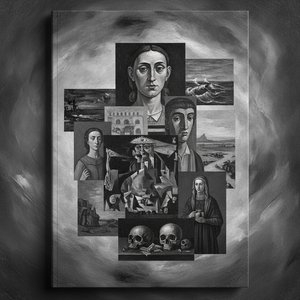
To step into a gallery of shadows is to discover that color is not merely a matter of pigment, but of emotion. While the vibrant reds of a sunset or the deep blues of an ocean command our immediate attention, there exists a profound, quiet power in the spectrum of gray. It is a palette of nuance, a sophisticated language of mist, stone, and moonlight that speaks to the soul when the world falls silent. In these works, gray is never merely the absence of color; it is a deliberate, atmospheric presence that breathes life into the stillness.
Historically, the mastery of grayscale—from the soft sfumato of the Renaissance to the somber, dramatic chiaroscuro of the Baroque era—has allowed masters to explore the very boundaries of light and form. These tones have long been used by artists to evoke the ephemeral: the weight of a storm cloud, the melancholy of a rainy street in Paris, or the dignified gravity of a formal portrait. Culturally, these monochromatic depths reflect our most introspective moments, capturing the transition between clarity and obscurity, joy and mourning.
Today, these masterpieces remain deeply resonant because they mirror the complexity of the human experience. In an era of digital saturation and hyper-vibrant imagery, the subtle gradations of gray offer a sanctuary of restraint and elegance. They remind us that there is immense strength in subtlety and that true depth is often found in the shadows. As we prepare to journey through our curated selection, we invite you to look beyond the surface. We will explore ten iconic works where gray dominates the canvas, each one a testament to the artist's ability to find infinite beauty within the most understated of tones.
Mona Lisa (La Gioconda) - Leonardo da Vinci
 Mona Lisa (La Gioconda) - Leonardo da Vinci
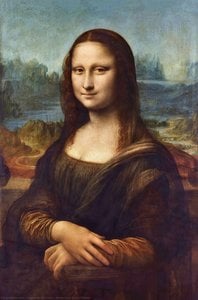
To gaze upon Leonardo da Vinci’s Mona Lisa is to enter a realm where shadow and light perform a silent, eternal dance. While often celebrated for her enigmatic smile, this masterpiece earns its place among the top paintings dominated by gray tones through Da Vinci’s revolutionary sfumato technique. By layering translucent glazes, Leonardo dissolved harsh outlines into a smoky, atmospheric haze, allowing muted grays, soft charcoals, and earthy umbers to sculpt the sitter's features with unparalleled psychological depth.
The landscape behind her dissolves into a silvered, misty distance, where aerial perspective turns mountains into ethereal silhouettes of slate and ash. This mastery of tonal gradation creates a sense of profound mystery and stillness. At ArtsDot, we believe such profound emotional resonance should not be confined to the Louvre. Whether through a hand-painted oil reproduction or a bespoke museum-quality print, bringing this subtle, monochromatic elegance into your home transforms a mere wall into a sanctuary of contemplation—a sophisticated statement of timeless grace.
The Disintegration of Persistence of Memory, 1952-54 - Salvador Dalí
 The Disintegration of Persistence of Memory, 1952-54 - Salvador Dalí
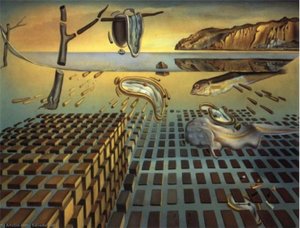
In The Disintegration of the Persistence of Memory , Salvador Dalí masterfully employs a diffused, ethereal light that seems to emanate from within the very fabric of the dreamscape. This soft illumination plays a critical role in defining the painting's desaturated, monochromatic atmosphere, where silvery grays and muted ochres merge into a singular, haunting vision. The subtle interplay of light and shadow—a sophisticated use of chiaroscuro —gives weight to the melting clocks and provides a spectral dimension to the geometric fragments drifting through the void.
This command over light was instrumental in securing Dalí's place among the top 10 famous paintings dominated by gray tones , as it transforms a scene of decay into one of profound, quiet majesty. For the discerning collector, a hand-painted oil reproduction of this masterpiece offers more than mere decoration; the visible brushstrokes and rich textures capture that precise, spectral glow. When placed in a contemporary interior, the painting’s nuanced shadows and somber palette introduce an unparalleled layer of depth and intellectual luxury, turning a simple wall into a window to the subconscious.
A Sunday Afternoon on the Island of La Grande Jatte - Georges Seurat
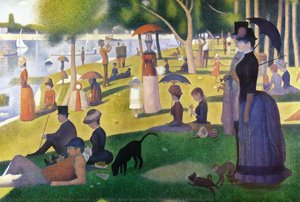 A Sunday Afternoon on the Island of La Grande Jatte - Georges Seurat
To encounter A Sunday Afternoon on the Island of La Grande Jatte is to witness a masterclass in atmospheric restraint. While Seurat’s revolutionary Pointillism is celebrated for its vibrant optical mixing, this monumental work finds its profound soul within a sophisticated spectrum of gray tones and muted neutrals. These subtle, smoky hues serve as the essential foundation, providing a structural stillness that anchors the luminous dots of color.
The painting captures a Parisian afternoon where light feels filtered through a soft, silvery haze, lending the figures a statuesque, almost eternal quality. The interplay of charcoal shadows and pearlescent grays creates a sense of depth and quietude, transforming a simple park scene into a contemplative study of light and shadow. Owning a reproduction of this masterpiece is not merely an acquisition; it is an inheritance of taste. At ArtsDot, we bring this lineage of prestige to your private collection, ensuring that the delicate balance of Seurat’s chromatic precision and his masterful use of neutral tones becomes a permanent, breathing legacy upon your walls.
Adoration of the Trinity (Landauer Altar) - Albrecht Dürer
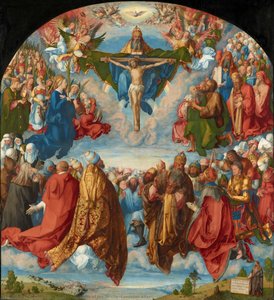 Adoration of the Trinity (Landauer Altar) - Albrecht Dürer
In Albrecht Dürer’s 1511 masterpiece, Adoration of the Trinity (Landauer Altar) , a sophisticated interplay of stone-like grays and muted silvers anchors the monumental composition. While the work is celebrated for its divine figures, it is the masterful use of neutral, desaturated tones within the architectural setting that establishes its profound, contemplative mood. These gray undertones provide a structural gravity, allowing the ethereal light to dance across the surfaces of marble and heavy drapery without overwhelming the viewer.
As one of the top 10 famous paintings dominated by gray tones , this altarpiece demonstrates how a restrained palette can amplify spiritual awe. For the discerning interior designer or collector, integrating such a palette into a modern living space offers unparalleled versatility. The subtle, smoky grays found in Dürer’s work can be used to curate an atmosphere of timeless elegance and calm, serving as a sophisticated foundation for high-end furniture or accentuating the soft, natural lighting of a luxury dining room. It is a masterclass in using neutrality to command presence.
The Young Ladies of Avignon - Pablo Picasso
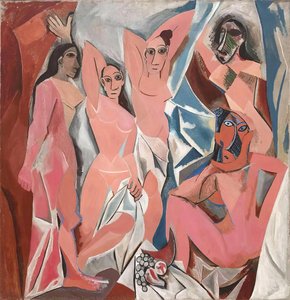 The Young Ladies of Avignon - Pablo Picasso
What story does the fractured, somber atmosphere of The Young Ladies of Avignon by Pablo Picasso tell about the dawn of a new era? Painted in 1907, this monumental work serves as the seismic detonation point for Cubism, shattering centuries of representational tradition. While many associate modernism with vibrant chaos, this masterpiece is anchored by a sophisticated, muted palette where cool gray tones and desaturated pinks create an unsettling, sculptural depth. Picasso deconstructs his subjects into angular planes, utilizing a heavy, almost metallic grayscale to emphasize the jagged, mask-like features influenced by African and Iberian art.
For the discerning collector, integrating such a profound piece into a contemporary interior offers more than mere decoration; it provides a curated escape into the very moment art became modern. The painting’s interplay of shadow and muted light allows it to anchor a room with intellectual gravity, making it a cornerstone for those seeking famous paintings dominated by gray tones to evoke a sense of historical prestige and avant-garde sophistication within a refined home gallery.
Water Lilies (or Nympheas) - Claude Monet
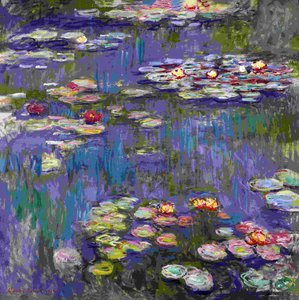 Water Lilies (or Nympheas) - Claude Monet
In Claude Monet’s Water Lilies , the dominance of muted, silvery grays and deep, atmospheric shadows creates a profound sense of twilight stillness. While many associate Impressionism with vibrant brilliance, this particular mastery of gray tones serves to anchor the composition, providing a sophisticated, somber foundation that allows the fleeting reflections of lavender and pale pink to emerge like whispers across the water. This nuanced use of neutral palettes is precisely why it stands among the top 10 famous paintings dominated by gray tones ; Monet uses these desaturated hues not as absences of color, but as vessels for light itself.
For the discerning interior designer or homeowner, integrating a reproduction of this series into a modern living space offers an unparalleled opportunity to curate emotional depth. The interplay of misty grays and soft greens can harmonize with contemporary monochromatic decor, lending a quiet prestige and a meditative, tranquil atmosphere to a dining room or lounge. It transforms a wall into a window of serene contemplation, where the weight of the gray tones provides a grounding, architectural elegance to any luxury interior.
Sleeping Gypsy - henri julien félix rousseau (le douanier)
 Sleeping Gypsy - henri julien félix rousseau (le douanier)
To encounter Sleeping Gypsy by Henri Rousseau is to step directly into a moonlit fever dream, where the boundaries between reality and the subconscious dissolve. As one of our most profound selections in this collection of top 10 famous paintings dominated by gray tones , this masterpiece utilizes a muted, nocturnal palette of charcoal, slate, and silvery ash to evoke a sense of profound stillness. The heavy, desaturated shadows cast by the crescent moon create a monochromatic atmosphere that feels both haunting and serene.
Rousseau’s signature Naïve style strips away academic complexity, leaving us with the raw, emotional weight of a traveler caught in a moment of absolute vulnerability before a majestic lion. For the discerning collector, this work offers more than mere decoration; it provides a sophisticated focal point for modern luxury interiors. Its subtle interplay of light and shadow, rendered in soft grays and deep umbers, brings an unparalleled sense of mystery and intellectual depth to any curated space, embodying a timeless legacy of artistic innovation.
The Fog Warning - Winslow Homer
 The Fog Warning - Winslow Homer
In The Fog Warning by Winslow Homer, the mastery of light is not found in brilliance, but in the haunting, diffused glow that struggles to pierce a heavy, monochromatic shroud. Homer utilizes a sophisticated interplay of shadow and muted illumination to define the encroaching maritime mist, creating a sense of chiaroscuro that feels both claustrophobic and profoundly cinematic. This command over light—where the silver-gray sky bleeds into the turbulent, slate-colored Atlantic—is precisely what secures its place among the most powerful paintings dominated by gray tones.
The artist captures a moment of breathless tension; the light source is obscured, leaving us to feel the weight of the damp air and the cold spray of the waves. For the discerning collector, a hand-painted oil reproduction of this work brings an unparalleled atmospheric depth to a contemporary interior. The visible, textured brushstrokes and the subtle tonal shifts between charcoal and pearl add a layer of historical luxury and emotional gravity, transforming a modern wall into a window onto the raw, enduring spirit of the American sea.
Self Portrait - vincent willem van gogh
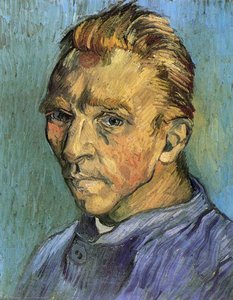 Self Portrait - vincent willem van gogh
To encounter Self Portrait by Vincent van Gogh is to stand before a raw, psychological threshold, an intimate window into the soul of a master. While many associate Van Gogh with sun-drenched yellows, this 1889 masterpiece commands its place among the top 10 famous paintings dominated by gray tones through its profound use of somber, muted palettes and heavy, atmospheric shadows. The artist utilizes a sophisticated interplay of slate grays, deep ochres, and cool, desaturated blues to articulate a period of intense self-examination at Saint-Rémy.
The texture is nothing short of visceral; the thick impasto technique creates a rhythmic, swirling topography that mirrors his internal turbulence. For the discerning collector or interior designer, this work offers more than mere decoration; it provides a focal point of immense emotional intelligence and historical gravity. Its muted, tonal depth integrates seamlessly into refined, modern luxury interiors, where the subtle gray undertones can anchor a sophisticated color palette, bringing a sense of timeless legacy and quiet, brooding elegance to any curated space.
Composition VII - Wassily Wassilyevich Kandinsky
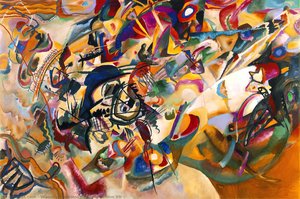 Composition VII - Wassily Wassilyevich Kandinsky
Before the vibrant explosion of color in Composition VII could reach the world, Wassily Kandinsky underwent a period of profound spiritual and creative tension, laboring to translate the invisible rhythms of music into visible form. While this masterpiece is celebrated for its kaleidoscopic energy, it holds a unique place among the top 10 famous paintings dominated by gray tones through its sophisticated use of neutral, atmospheric undertones that anchor its chaotic brilliance. These subtle, smoky grays and muted shadows act as the essential structural scaffolding, preventing the swirling reds and blues from dissolving into pure noise.
Kandinsky’s technical genius lies in this delicate equilibrium; he utilizes a complex layering of oil paint to create a sense of depth where light seems to emerge from a misty, achromatic void. This masterful tension between chaotic movement and grounded, neutral stability offers more than just visual intrigue. For the discerning collector, such a profound balance of energy and restraint provides an inspiring, intellectually stimulating atmosphere, perfect for anchoring a sophisticated modern home office or a private study dedicated to deep focus.
Conclusion
As the light fades and we prepare to depart this quiet gallery of shadows and silver, one realizes that these masterpieces are far more than mere relics of a bygone era. The muted grays, the soft charcoals, and the ethereal silvers we have traversed today are not merely pigments on canvas; they are the breathing pulse of human emotion captured in stillness. They remind us that there is profound strength in subtlety and an infinite depth to be found within the quietest tones. These works do not belong solely to the museums that house them, but to every soul that finds solace in their mist-covered landscapes and every modern interior that seeks a sense of timeless tranquility.
To walk among these paintings is to witness a conversation that has lasted centuries—a dialogue between light and shadow, between memory and presence. Whether it is the melancholic depth of a stormy sky or the dignified grace of a monochromatic portrait, these textures continue to shape our aesthetic sensibilities and inspire the very fabric of contemporary design. They remain living forces, whispering secrets of resilience and beauty into the modern world, inviting us to find elegance in the understated.
As you carry the quiet resonance of these gray-toned wonders with you, we invite you to continue your journey through the annals of art history. Should you wish to bring a piece of this atmospheric serenity into your own sanctuary, we invite you to explore our full collection , where every brushstroke is a tribute to the enduring power of the masters.