
Introduction
To walk through a gallery of architectural art is to witness the dialogue between human ambition and the earth beneath our feet. Buildings are far more than mere arrangements of stone, steel, or timber; they are the silent protagonists of our history, capturing the spirit of an era within their walls and the aspirations of a civilization in their silhouettes. When an artist turns their gaze toward the built environment, they are not merely documenting structures, but are instead exploring themes of permanence, shelter, solitude, and the rhythmic pulse of urban life.
Throughout history, the depiction of architecture has evolved from the reverent, precise renderings of classical monuments to the fractured, emotive perspectives of the modern age. From the sun-drenched facades of Renaissance cathedrals that evoke a sense of divine order, to the brooding, industrial skylines that reflect the complexities of our contemporary existence, these works serve as a visual archive of human progress. They capture how light dances across a limestone cornice or how the shadows of a skyscraper can swallow a street, translating cold masonry into something deeply visceral and emotive.
These masterpieces remain profoundly meaningful today because they mirror our own relationship with the spaces we inhabit. In an age of rapid urban transformation, looking back at these depictions allows us to find stability and connection to the heritage that shaped our cities. They remind us that every window, every arch, and every spire tells a story of the hands that built them and the lives that have unfolded within them.
In the following curation, we invite you to journey through ten extraordinary works that transcend simple documentation. We will explore how different masters have breathed life into stone, inviting you to experience the texture of history, the weight of structure, and the breathtaking beauty of the world we have constructed.
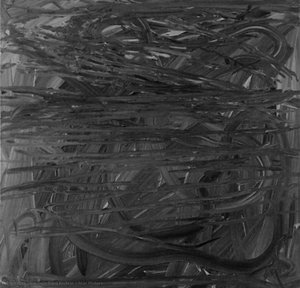
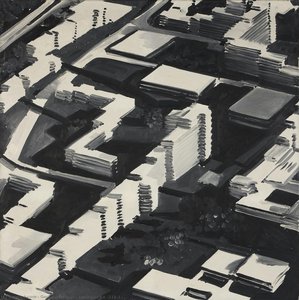
Stadtbild SA (219/1) - Gerhard Richter
 Stadtbild SA (219/1) - Gerhard Richter
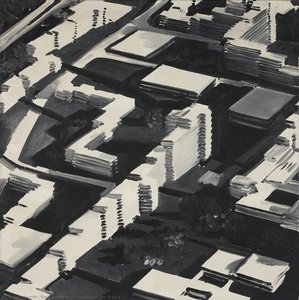
In Gerhard Richter’s Stadtbild SA (219/1) , the cityscape ceases to be mere architecture and becomes a profound meditation on the weight of memory. This monumental black and white canvas presents an intricate sprawl of urban structures, where dense clusters of windows and shadowed facades create a labyrinthine texture. There is a gaze in Stadtbild SA (219/1) by Gerhard Richter that follows you—not with judgment, but with understanding . It does not merely depict buildings; it captures the haunting, fractured reality of post-war landscapes through a lens of quiet melancholy.
The work acts as a mirror to our own perceptions of permanence and decay. As you observe the interplay of grey tones and the strategic, fleeting presence of trees amidst the concrete, you are invited into Richter's complex dialogue between photography and painting. Now, imagine that gaze in your space. Not watching you, but reminding you : you are seen. You are part of the story. This masterpiece stands as a cornerstone in our exploration of architectural art, making the invisible layers of history visible through every deliberate, textured brushstroke.
Landscape - Amedeo Clemente Modigliani
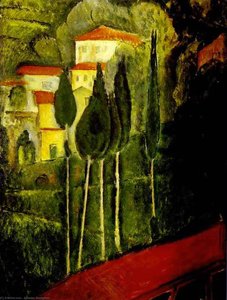 Landscape - Amedeo Clemente Modigliani
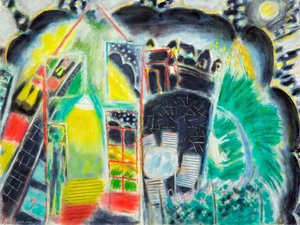
In Landscape by Amedeo Clemente Modigliani, the architectural elements do not merely occupy space; they breathe with a quiet, melancholic rhythm. This work stands as a profound entry in our exploration of buildings in art, where structures are stripped of their cold utility and infused with human emotion. The composition features Mediterranean-style white walls and flat roofs that anchor the middle ground, juxtaposed against a striking, vibrant red element—perhaps a bench or low wall—that pulls the viewer into a moment of deep contemplation.
Modigliani employs an Expressionist mastery, using bold, impasto brushstrokes to create a tactile surface where light and shadow dance across the facades. The slender, towering trees and the soft crescent moon in a clear blue sky evoke a sense of timelessness, turning a simple architectural scene into a meditation on solitude. To possess such a piece is to invite a mirror into your home—not one that reflects your image, but one that reflects your inner stillness, reminding you that even within the rigid lines of man-made structures, there is room for the soul to wander.
Death of the Virgin (detail) - Andrea Mantegna
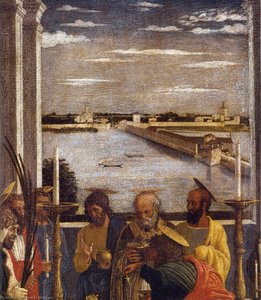 Death of the Virgin (detail) - Andrea Mantegna
In the intricate detail of Andrea Mantegna’s Death of the Virgin , the architectural landscape serves as much more than a backdrop; it is a structural protagonist. The composition is anchored by a profound geometric harmony, where the rigid, classical lines of the distant buildings intersect with the fluid, somber presence of the figures. This calculated use of linear perspective creates a rhythmic balance between the heavy, stone-like permanence of the structures and the ephemeral nature of human life.
As we explore this selection within our Top 10 Artworks That Explore the Theme of 'buildings' , one cannot help but notice how Mantegna’s mastery of spatial depth mirrors the principles of modern minimalist design. The way the distant architecture provides a stable, unyielding frame for the emotional narrative offers a sense of timeless perfection. This structural clarity—stripping away the superfluous to focus on essential forms and light—allows the piece to ground a contemporary aesthetic, making it an enduring inspiration for those who appreciate clean, architectural silhouettes in fine art.
L'Estaque with Red Roofs - Paul Cézanne
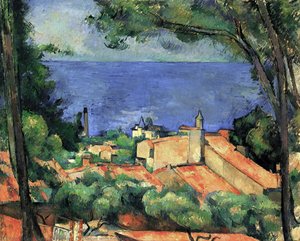 L'Estaque with Red Roofs - Paul Cézanne
In 1885, Paul Cézanne did not merely paint a coastal village; he composed a visual sonata where light acts as the primary instrument. In L'Estaque with Red Roofs , the architecture of the Mediterranean landscape is transformed into a rhythmic exploration of form and color. The terracotta roofs emerge with an earthy, sun-drenched warmth, standing in striking, structural defiance against the deep, tranquil blues of the sea and sky. This is why this work stands as a pillar in our exploration of architectural themes: Cézelle does not just depict buildings; he invents a new way to perceive their very essence.
Through his revolutionary Post-Impressionist technique, the structures are organized into geometric planes that provide a sense of monumental stability. The lush greenery of Aleppo pines frames the scene, grounding the viewer in the fertile reality of southern France. To behold this masterpiece is to witness the birth of modernism, where the interplay of ochre walls and shimmering azure creates a visual harmony that is both intellectually stimulating and deeply soothing. It is a piece that does not just reflect light—it invites it to spill into your space, turning a simple wall into a portal of historical inspiration.
Untitled (D2X2MZ) - Pierre-Auguste Renoir
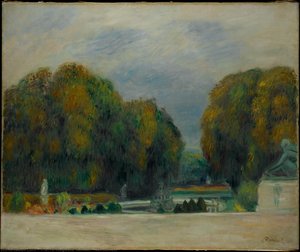 Untitled (D2X2MZ) - Pierre-Auguste Renoir
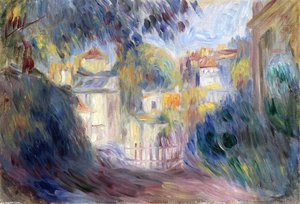
Close your eyes and feel the warmth of Untitled (D2X2MZ) by Pierre-Auguste Renoir. It is not merely illumination; it is a language. In this 1905 masterpiece, Renoir does not simply paint light—he composes it like a musician crafting a delicate sonata. This work earns its place among the top artworks exploring architectural themes because it does not just reflect structures; it invents a luminous atmosphere where man-made buildings and nature exist in perfect, breathing harmony.
As you open your eyes, observe how the subtle residential silhouettes in the background are softened by dappled sunlight filtering through lush, verdant foliage. The architecture here is not a cold subject of stone and mortar, but a tender participant in a serene landscape. Renoir’s masterful, broken brushstrokes capture the fleeting essence of light dancing upon leaves and rooftops alike. This painting is a portal of inspiration, inviting a sense of peace into your space. That soft, Impressionist glow is waiting to spill into your home, turning your walls into windows overlooking a timeless, sun-drenched sanctuary.
View from the Apartment in the Rue Lepic - vincent willem van gogh
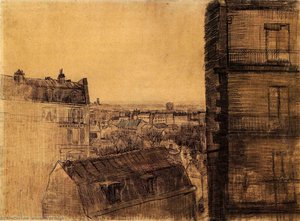 View from the Apartment in the Rue Lepic - vincent willem van gogh
In View from the Apartment in the Rue Lepic , Vincent van Gogh invites us to witness the quiet pulse of Montmartre through a lens of profound intimacy. As part of our exploration of architectural themes, this work stands out not merely for its depiction of urban structures, but for how it breathes life into them. The composition captures a serene cityscape at sunset, where the warmth of the fading light dances across buildings, silhouettes of people, and even a solitary dog, creating a narrative of domestic tranquility amidst the metropolitan sprawl.
What makes this piece essential to our collection of artworks exploring buildings is Van Gogh’s ability to transform a structural landscape into an emotional experience. The presence of a clock on a distant facade and a lone chair in the foreground anchors the architecture within the human timeline, suggesting that buildings are not just stone and mortar, but vessels for memory. For the modern interior designer, this work offers a sophisticated way to introduce Post-Impressionist soul into a space, providing an atmospheric focal point that balances historical grandeur with a timeless, tranquil aesthetic.
Triptych - Pieter Bruegel the Elder
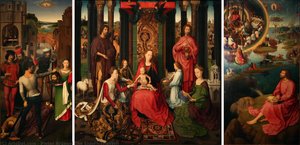 Triptych - Pieter Bruegel the Elder
In Pieter Bruegel the Elder’s Triptych , architecture serves as more than a mere backdrop; it is the very scaffolding of Northern Renaissance life. This masterpiece earns its place among the top artworks exploring buildings by weaving urban structures and rugged landscapes into a profound narrative of human civilization. As your eyes wander from the scholarly figures perched upon rocky outcrops to the bustling, architectural vitality of the right panel, you witness how Bruegel uses townscapes to ground the sacred within the everyday.
The work captures a rhythmic pulse where stone walls and timbered dwellings frame the communal warmth of a feast. Through a palette of earthy ochres and piercing azure, Bruegel invites us to reflect on the permanence of our built environments versus the fleeting nature of human activity. For the sophisticated collector or interior designer, integrating a reproduction of this scale offers a timeless dialogue between historical grandeur and modern space, bringing a sense of structural depth and cultural heritage into any curated collection.
Staircase 19 - Fernand Léger
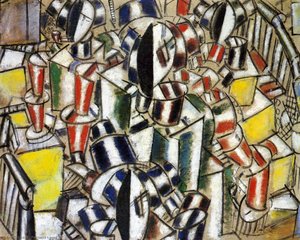 Staircase 19 - Fernand Léger
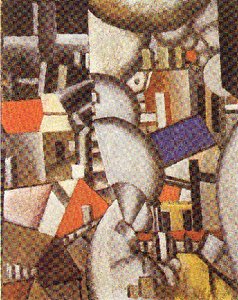
In Staircase 19 , Fernand Léger invites us into a rhythmic, architectural dance where the boundaries between structure and object dissolve. There is a profound, quiet energy in how he deconstructs a simple stairwell, transforming mundane items—a scattered clock, porcelain cups, and glass bottles—into a geometric symphony of modern life. It captures that universal moment of finding order within chaos, a feeling that resonates deeply when we contemplate the very bones of our built environments.
This masterpiece earns its place among the top 10 artworks exploring buildings because it does not merely depict a staircase; it redefines the spatial experience through the lens of Cubism. Léger’s ability to fragment perspective and celebrate the beauty of industrial form serves as a cornerstone for modern architectural aesthetics. At ArtsDot, we honor this legacy by offering exquisite, hand-painted oil reproductions that capture every bold stroke and structural nuance. Our artisans meticulously recreate the tactile depth and fragmented light of Léger’s vision, allowing you to bring this transformative piece of art history into your own curated space.
Yellow City - Egon Schiele
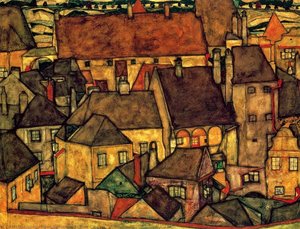 Yellow City - Egon Schiele
Close your eyes. Can you feel the light in Yellow City by Egon Schiele? It is not merely illumination; it is a language . In this 1914 masterpiece, Schiele did not simply paint light—he composed it, like a musician crafting a haunting, dissonant sonata. Through a striking palette of ochre, amber, and deep umber, he transforms an urban landscape into a psychological experience.
This work earns its place among the top artworks exploring architectural themes because it does not just reflect light; it invents it . The buildings are not static structures of stone and mortar, but rhythmic, overlapping forms that pulse with the energy of Expressionism. Schiele uses thick, impasto brushstrokes to give the rooftops a palpable, tactile weight, creating a sense of movement within the dense, geometric mosaic of the city. Now, open your eyes. That vibrant, emotive glow? It is waiting to spill into your home, turning your walls into portals of inspiration and bringing the raw, emotional truth of the early 20th century into your modern space.
On the Outskirts of Paris - vincent willem van gogh
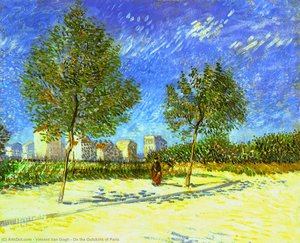 On the Outskirts of Paris - vincent willem van gogh
To stand before a masterpiece is to witness a conversation between light and structure. In On the Outskirts of Paris by Vincent van Gogh, we encounter a profound meditation on the intersection of nature and human habitation. Painted in 1887, during his transformative Parisian period, this work captures the delicate tension of the urban fringe. While the composition is anchored by the organic silhouettes of trees and a solitary figure, it is the distant cluster of buildings that provides the thematic soul of the piece—a quiet, architectural whisper of the expanding metropolis.
Van Gogh employs his burgeoning Post-Impressionist technique here, using short, rhythmic brushstrokes to weave sunlight into the sandy earth. The palette is vibrant yet grounded, capturing the atmospheric haze where the outskirts meet the city's edge. This painting earns its place among the top artworks exploring buildings by demonstrating how architecture does not merely occupy space, but defines our emotional relationship with the horizon. It remains a timeless testament to how even the most modest structures can evoke a sense of longing and permanence within a shifting landscape.
Conclusion
As the light fades on our exploration of these architectural marvels, we are reminded that a building is far more than mere stone, brick, or timber; it is a vessel for human memory and a silent witness to the passage of time. These ten masterpieces do not merely depict structures; they capture the soul of the spaces we inhabit, reflecting our deepest desires for shelter, permanence, and belonging. Through the textured brushstrokes of an Impressionist streetscape or the dramatic shadows of a Gothic cathedral, these artists have invited us to see the familiar through a lens of profound wonder.
Today, these works transcend the museum walls to become living presences in our own lives. They continue to shape the aesthetic rhythm of our homes and the emotional landscapes of our interiors, bridging the gap between historical grandeur and contemporary sanctuary. When we bring such art into our personal spaces, we do not simply hang a decoration; we invite an eternal dialogue between the heritage of the Old Masters and the intimacy of our modern existence. We find that the windows, facades, and skylines of the past continue to offer us new perspectives on the beauty of our own built world.
Whether you are moved by the structural rhythm of a cityscape or the quiet solitude of a cottage, we invite you to continue this journey of discovery within our full collection . Let these timeless visions inspire your next space, turning every room into a gallery of history and every wall into a window toward the infinite.