
Introduction
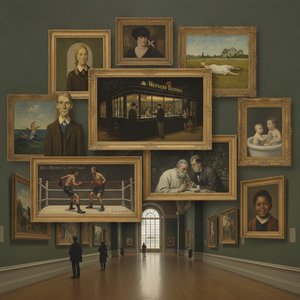
To step into the world of Edward Hopper is to enter a space of profound, resonant stillness. There is a particular kind of magic found in the way he captures the quietude of the American landscape—a cinematic tension that exists in the pause between breaths, in the long shadows cast across a lonely diner floor, and in the voyeuristic glow of a late-night window. As we prepare to journey through his top 25 artworks , we are not merely looking at paintings; we are witnessing a masterclass in the architecture of solitude.
Emerging from the early 20th century, Hopper’s work serves as a poignant chronicle of the American experience. While his contemporaries were often swept up in the frenetic energy of modernism or the fleeting light of Impressionism, Hopper turned his gaze inward and toward the mundane. He found the extraordinary within the ordinary—the stark geometry of a New York street corner, the cinematic isolation of a roadside motel, and the heavy, contemplative silence of an empty office. His era was one of rapid industrialization and urban expansion, yet his canvases remain anchored in a timeless, psychological realism that transcends the decade in which they were painted.
Why does his work continue to haunt and captivate us in our hyper-connected age? Perhaps because, in an era of constant noise, Hopper offers us the beauty of the quiet moment. His ability to use light as an emotional protagonist—transforming a simple beam of sunlight into a vessel for melancholy or hope—speaks to a universal human condition. We see ourselves in his subjects: the solitary figures lost in thought, the strangers sharing a space yet worlds apart, and the evocative emptiness of spaces that feel both intimate and vast.
In the following curation, we invite you to wander through this gallery of shadows and light. From his most iconic, world-renowned masterpieces to the subtle, often overlooked studies of architecture and light, each piece in this list represents a milestone in Hopper's ability to paint the invisible emotions of modern life. Prepare to encounter the profound beauty found in the quietest corners of the soul.
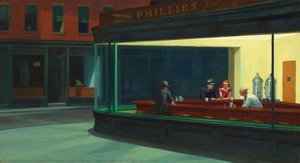
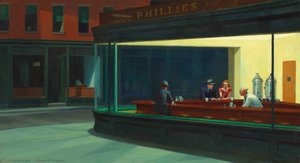
Nighthawks, The Art Institute of Chicago, Chica - Edward Hopper
A single, luminous window cutting through the velvet darkness of an American night—this is the haunting essence of Nighthawks by Edward Hopper. As we curate the most profound moments in art history, this 1942 masterpiece stands as a cornerstone of our collection, not merely for its technical brilliance, but for its unparalleled ability to capture the quiet ache of modern existence. It is an irreplaceable pillar of the top 25 artworks of Edward Hopper because it transcends mere realism; through the stark contrast of warm diner light against the deep, shadowy greens of the street, Hopper creates a psychological landscape of beautiful isolation.
The painting’s influence on visual culture is immeasurable, offering a cinematic tension that continues to inspire contemporary aesthetics. At ArtsDot.com, we believe in democratizing such profound beauty, ensuring that the evocative atmosphere of this urban sanctuary is not confined to the Art Institute of Chicago. Through our meticulous, hand-painted oil reproductions, you can bring this transformative presence into your own home or professional gallery, inviting the timeless, contemplative soul of Hopper’s New York into your personal space.
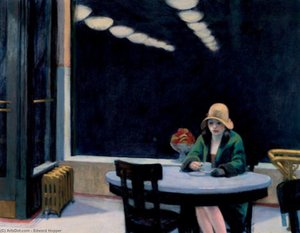
Automat - Edward Hopper
In Automat , Edward Hopper invites us into a profound moment of quietude, where the gaze of a solitary woman becomes a universal mirror for the introspective human experience. As we stand before this 1927 masterpiece, we are drawn into the dimly lit interior of an American diner, bathed in a stark, directional light that carves shapes out of the surrounding shadows. The deep blues and somber tones of the composition evoke a sense of urban alienation, yet there is a haunting beauty in the way the soft glow illuminates her face and the simple bowl of fruit upon the table.
This painting is a cornerstone of the top 25 artworks of Edward Hopper because it captures the psychological depth of modern isolation with unparalleled grace. The geometric rigidity of the window frames contrasts with the woman's contemplative posture, creating a tension between the structured world and the wandering mind. Integrating such a powerful emotional resonance into your home can transform a personal sanctuary into a space for profound reflection, offering a quiet corner of calm amidst the bustle of contemporary life.
Sunday - Edward Hopper
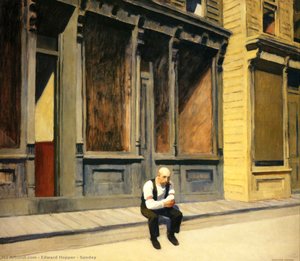 Sunday - Edward Hopper
In the quiet corridors of American realism, Sunday by Edward Hopper stands as a profound meditation on the beauty found within stillness. This 1926 masterpiece does not merely depict an urban scene; it invites you into a moment of deep, introspective solitude. As you gaze upon the solitary figure seated before closed storefronts, you feel the weight of the morning air and the heavy silence of the city streets.
Hopper utilizes a masterful, muted palette of earthy browns, grays, and subtle blues, punctuated by the evocative splash of a red door that draws the eye through the composition. The play of diffused light creates soft shadows, lending a sculptural depth to the architectural lines and emphasizing the man's detachment from the bustling world. To possess a reproduction of Sunday is to bring more than just a painting into your home; it is to curate an atmosphere of contemplation. It transforms a mere wall into a window onto the human condition, capturing that haunting, exquisite tension between urban existence and the individual soul.
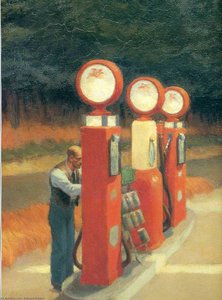
Gas - Edward Hopper
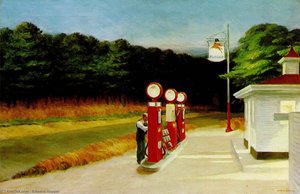 Gas - Edward Hopper
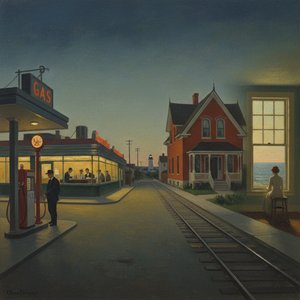
In Gas by Edward Hopper, the mastery of light serves as the silent protagonist, orchestrating a profound sense of American solitude. The painting is defined by a soft, diffused illumination—reminiscent of an overcast afternoon—that washes over the gas pumps and the modest attendant’s booth with a hauntingly calm clarity. This delicate play of light and shadow, or chiaroscuro , does more than merely define form; it breathes life into the stillness, capturing that quintessential Hopperesque tension between presence and absence. It is this precise command of atmosphere that has secured its place among the top 25 artworks of Edward Hopper .
The palette, a sophisticated arrangement of muted earthy greens, deep browns, and a striking splash of red, creates a visual rhythm that guides the eye through the vast, lonely landscape. When rendered as a hand-painted oil reproduction , the texture of the brushstrokes brings an added dimension to this light, allowing the subtle gradients of the sky to shimmer with depth. For the discerning collector or interior designer, integrating such a piece into a contemporary space introduces a layer of cinematic nostalgia and quiet luxury, transforming a modern wall into a window onto a timeless, contemplative era.
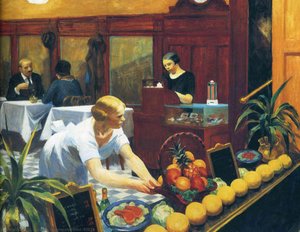
Chop Suey - Edward Hopper
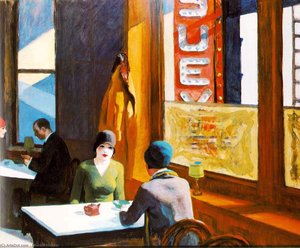 Chop Suey - Edward Hopper
In Chop Suey , Edward Hopper invites us into a vibrant yet hauntingly still corner of the 1920s urban landscape. The painting captures a profound sense of shared solitude; while two women sit engaged in quiet conversation, a lone man lingers in the periphery, embodying the psychological depth that makes this one of the top 25 artworks of Edward Hopper . Through a masterful interplay of light and shadow, Hopper utilizes a rich, saturated palette of warm yellows and deep blues to illuminate a scene that feels both energetic and dreamlike.
The dramatic glow from the neon signage creates an atmosphere of modern alienation wrapped in Art Deco elegance. As you contemplate this piece, notice how the bold outlines and geometric forms evoke the pulse of a bustling café, yet the underlying stillness remains palpable. Integrating such a powerful emotional resonance into your home can transform a personal sanctuary into a space for profound reflection. Whether through a hand-painted oil reproduction or a museum-quality print, Chop Suey serves as a timeless window into the beautiful, quiet complexities of the human experience.
Office at Night - Edward Hopper
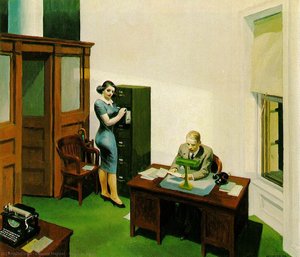 Office at Night - Edward Hopper
In Office at Night , Edward Hopper invites us into a profound meditation on the quietude of modern labor and the psychological weight of routine. As one of the most evocative entries in our collection of the top 25 artworks of Edward Hopper , this 1940 masterpiece transcends a mere depiction of mid-century bureaucracy; it captures the very essence of American solitude. The composition, anchored by a striking woman in a blue dress and a man immersed in paperwork, utilizes a muted palette of greens and browns to evoke a sense of stillness that feels both nostalgic and hauntingly contemporary.
The interplay of artificial light and sharp, geometric shadows creates a cinematic tension, transforming a mundane workspace into a stage for introspection. In today’s hyper-connected world, Hopper’s exploration of isolation within a structured environment resonates deeply with modern aesthetics, making it a poignant talking point for curated, sophisticated interiors. Through his masterful use of light and shadow, Hopper ensures that this scene remains a timeless study of the silent narratives hidden within our everyday lives.
Summertime - Edward Hopper
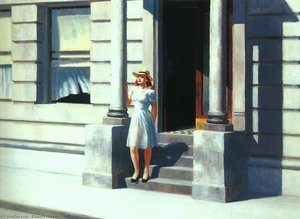 Summertime - Edward Hopper
To possess Summertime by Edward Hopper is not merely to acquire a painting; it is to inherit a profound moment of American stillness. Painted in 1943, amidst the global tremors of World War II, this masterpiece captures a singular, suspended breath of urban life. A young woman, draped in a light blue dress and crowned by a straw hat, sits upon the imposing stone steps of a classical edifice, her presence a delicate counterpoint to the rigid, geometric architecture surrounding her.
Hopper’s mastery of light and shadow transforms a simple architectural study into a psychological landscape. The sun casts sharp, dramatic shadows that define the heavy textures of the stone, yet there is an unmistakable softness in the way the light touches the figure, hinting at a quiet, internal monologue. Through his signature American Realist lens, Hopper explores themes of solitude and anticipation , inviting us to wonder if she waits for a lover or simply observes the passing world. At ArtsDot, we bring this lineage of taste to your private collection, allowing you to experience the evocative, melancholic beauty of Hopper’s most iconic light through our exquisite hand-painted oil reproductions.
Sunlight in a Cafeteria - Edward Hopper
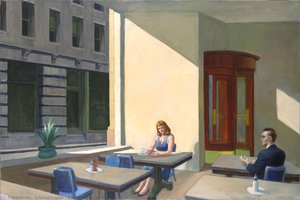 Sunlight in a Cafeteria - Edward Hopper
To encounter Sunlight in a Cafeteria by Edward Hopper is to step into a profound moment of stillness, an unveiling of one of the most evocative masterworks in American Realism. As one of the top 25 artworks of Edward Hopper, this 1958 oil on canvas serves as a poignant meditation on the paradox of urban proximity: being physically close yet emotionally adrift. The composition is anchored by a dramatic, almost architectural use of light; a single, intense beam of sunlight pierces the muted beige and gray palette, casting sharp shadows that divide the space with surgical precision.
Hopper captures two figures lost in private introspection, their silhouettes defined by clean lines and a haunting sense of detachment. For the discerning collector or interior designer, this piece offers more than mere decoration; it brings a sophisticated, contemplative energy to a refined space. Its mastery of chiaroscuro and its ability to transform a mundane cafe setting into a cinematic drama make it a timeless cornerstone for any serious collection of 20th-century American art.
People in the Sun - Edward Hopper
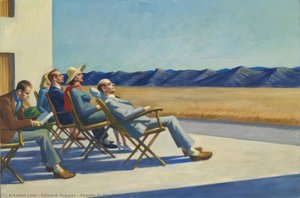 People in the Sun - Edward Hopper
In People in the Sun , Edward Hopper achieves a rare, luminous equilibrium, offering a profound departure from his more shadowed urban narratives. As one of the most evocative entries in our collection of the top 25 artworks of Edward Hopper, this 1960 masterpiece captures a transient moment of collective repose. The composition is anchored by a rhythmic horizontal arrangement of figures, set against an expansive, arid landscape that seems to breathe under a brilliant blue sky. Through his masterful use of directional light and stark shadows, Hopper transforms a simple scene of five individuals into a meditation on the vastness of the American spirit and the quietude of the individual soul.
For the discerning collector or interior designer, this painting serves as a sophisticated focal point. Its palette of earthy tones, soft greens, and sun-drenched blues brings a sense of tranquil permanence to a modern living space or a curated gallery wall. The work resonates with contemporary design sensibilities, where the balance of geometric simplicity and emotional depth creates an atmosphere of refined, contemplative luxury.
Cape Cod Morning - Edward Hopper
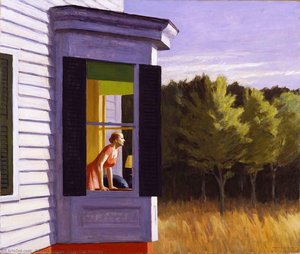 Cape Cod Morning - Edward Hopper
To possess Cape Cod Morning by Edward Hopper is not merely to acquire a painting; it is to inherit a profound moment of American stillness. In this 1950 masterpiece, Hopper invites us into a sanctuary of quietude, where a woman in a striking red dress stands at the threshold of an open window, her gaze lost in the expansive New England landscape. The composition is a masterclass in the tension between the private and the public, utilizing a palette of lush greens, soft purples, and warm sunlight to bridge the interior soul with the external world.
As you observe the interplay of light casting gentle shadows across the white-painted house, you feel the weight of her contemplation. The window serves as a poetic metaphor for vulnerability and longing, a hallmark of Hopper’s ability to find deep emotional resonance in everyday solitude. For the discerning collector or interior designer, this piece offers more than aesthetic beauty; it brings a lineage of taste into your home, transforming a wall into a window through which one can witness the timeless, melancholic beauty of the American scene.
Rooms for Tourists - Edward Hopper
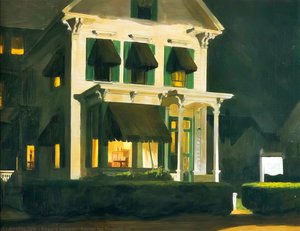 Rooms for Tourists - Edward Hopper
In Rooms for Tourists , Edward Hopper captures a profound stillness, where light does not merely illuminate but breathes life into the encroaching shadows of the American night. This 1945 masterpiece stands as a cornerstone among the top 25 artworks of Edward Hopper because it masterfully orchestrates the tension between warmth and isolation. The composition centers on a Victorian structure, its windows glowing with a soft, amber radiance that pierches through the deep indigo and midnight blues of the surrounding dusk.
The sensory experience is palpable; one can almost feel the cool evening air contrasting with the inviting, golden light spilling from the porch. Through precise architectural lines and a dramatic use of chiaroscuro, Hopper transforms a simple building into a vessel of nostalgia and quiet anticipation. For the discerning collector or interior designer, this piece offers more than mere decoration; it brings a sophisticated, contemplative energy to a modern space, serving as a window into the soulful, silent narratives that define the American experience.
New York Movie - Edward Hopper
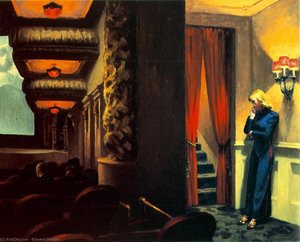 New York Movie - Edward Hopper
In the pantheon of the top 25 artworks of Edward Hopper , New York Movie (1939) stands as a profound masterclass in cinematic tension and psychological depth. This poignant oil on canvas, currently held at the Museum of Modern Art , captures a singular moment of urban introspection. The composition is anchored by the striking contrast between the stark, monochromatic tones of the theater and the sudden, visceral presence of a deep red curtain, a splash of color that breathes life into the surrounding stillness.
As we observe the solitary woman lost in her own world, we encounter the very essence of Hopper’s legacy: the beauty found within isolation. For the discerning collector or interior designer, this piece offers more than mere decoration; it provides a sophisticated atmospheric anchor. Its interplay of light and shadow brings a sense of quiet drama and timeless elegance to modern living spaces, echoing the noir aesthetics that continue to influence contemporary fashion and cinematic design. It is a hauntingly beautiful meditation on the human condition that remains as relevant today as it was in 1939.
Two Comedians - Edward Hopper
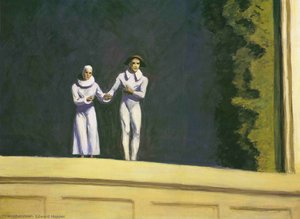 Two Comedians - Edward Hopper
In the twilight of his career, just one year before his passing, Edward Hopper gifted us Two Comedians (1965)—a hauntingly beautiful meditation on the quiet drama that exists behind the curtain of public life. This work earns its place among the top 25 artworks of Edward Hopper by masterfully capturing the profound tension between performance and solitude. Through a muted palette of deep blues, forest greens, and stark whites, Hopper illuminates two figures on a stage, their neutral expressions masking an untold narrative of isolation and introspection.
The painting does not merely depict actors; it serves as a window into the American psyche, reflecting the mid-century themes of alienation and the fleeting nature of existence. At ArtsDot.com, we believe such evocative pieces should transcend museum walls to become the soul of your own environment. Whether rendered as a meticulous hand-painted oil reproduction or a high-fidelity print, bringing this masterpiece into your home or professional space transforms a mere room into a curated sanctuary of thought and elegance. It is an invitation to find beauty in the stillness.
First Row Orchestra - Edward Hopper
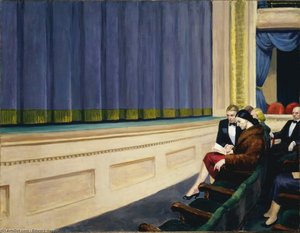 First Row Orchestra - Edward Hopper
Acquiring First Row Orchestra by Edward Hopper is more than a mere purchase; it is an investment in a profound legacy of American modernism and a testament to a collector's discerning taste. As one of the top 25 artworks of Edward Hopper, this 1951 masterpiece holds immense market prestige, captivating connoisseurs with its hauntingly beautiful black-and-white composition. The painting captures a poignant moment of mid-century elegance, where an audience sits in formal attire, yet remains enveloped in a palpable sense of psychological detachment.
Hopper’s mastery of light and shadow creates a dramatic, cinematic atmosphere, turning a simple orchestral setting into a meditation on urban solitude. The meticulous rendering of textures—from the crisp lines of a gentleman's tie to the heavy stillness of the auditorium—demonstrates the technical brilliance that secures his place in art history. For the modern connoisseur, a high-quality oil reproduction of this piece brings an unparalleled aesthetic authority to luxury interiors, offering a sophisticated focal point that commands respect and evokes the timeless, quiet drama of a bygone era.
Blackwell - Edward Hopper
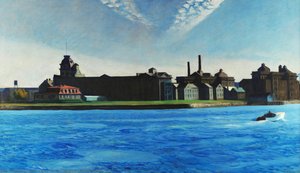 Blackwell - Edward Hopper
In Blackwell , Edward Hopper captures a profound silence, where the heavy atmosphere of a New York evening is suspended in a masterful interplay of light and shadow. As one of the most evocative entries in our collection of the top 25 artworks of Edward Hopper , this 1928 piece transcends simple cityscape painting to become a psychological study of urban existence. The composition breathes with a muted, monochromatic elegance; the subtle gradations of gray and beige sculpt the architectural textures of brick and glass, while the distant clock tower and quiet harbor suggest a world moving rhythmically yet indifferently to the solitary figure within.
The painting’s enduring power lies in its ability to evoke modernist solitude through minimalist precision. For the discerning collector or interior designer, Blackwell offers more than mere decoration; it introduces a sophisticated, contemplative mood into a contemporary space. Its stark realism and tonal depth provide a grounding presence, making it an ideal centerpiece for those seeking to infuse modern interiors with a sense of historical gravity, quiet introspection, and timeless American grace.
untitled (6160) - Edward Hopper
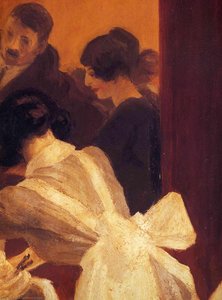 untitled (6160) - Edward Hopper
In untitled (6160) , the mastery of Edward Hopper is felt through the deliberate, heavy application of paint that defines his approach to American Realism. To observe this work is to witness the tension between light and shadow; the muted palette of browns and creams is not merely color, but a textured layer of atmosphere that captures the profound psychological isolation of 1942. The way the light diffuses across the curtained window creates a palpable sense of stillness, where the three figures exist in a state of beautiful, haunting detachment.
The brilliance of this piece lies in its ability to transform a mundane room into a stage for modern anxiety. At ArtsDot.com, we honor this legacy by ensuring our hand-painted oil reproductions preserve the tactile, three-dimensional quality of Hopper’s original brushstrokes. We do not merely replicate an image; we recreate the physical depth and emotional weight of his compositions. For the discerning collector, our museum-grade canvases bring the evocative, light-drenched solitude of these top 25 artworks of Edward Hopper into the private sanctuary of your home, maintaining the soul of the American Scene.
Second Story Sunlight, , Whitney Museum of Ameri - Edward Hopper
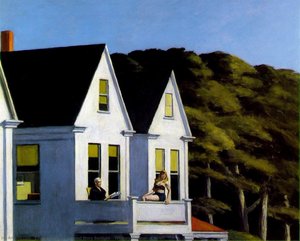 Second Story Sunlight, , Whitney Museum of Ameri - Edward Hopper
In the hushed, monochrome world of Second Story Sunlight , Edward Hopper invites us into a realm where silence carries profound weight. As one of the most evocative entries in our collection of the top 25 artworks of Edward Hopper , this 1960 masterpiece utilizes a stark black-and-white palette to strip away the distractions of color, leaving only the raw geometry of light and shadow. The composition features two figures seated on a porch swing, their backs turned toward one another—a poignant symbol of unspoken longing and the psychological distance that defines the human condition.
Hopper’s technical mastery is evident in the way he manipulates light as a physical presence, creating a rhythmic interplay between sun-drenched walls and impenetrable shadows. For the modern interior designer or collector, this work serves as a sophisticated anchor for minimalist or contemporary spaces. Its themes of solitude and urban alienation remain strikingly relevant today, offering a contemplative depth that transforms any curated room into a sanctuary for reflection and a tribute to the beauty found in stillness.
Summer Evening - Edward Hopper
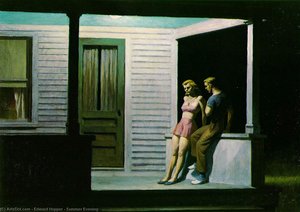 Summer Evening - Edward Hopper
In the pantheon of 20th-century American realism, few works capture the heavy, humid stillness of a fading day quite like Summer Evening (1947). This masterpiece serves as a profound meditation on human connection and the quietude that exists within it. As we explore the top 25 artworks of Edward Hopper, this piece stands out for its masterful use of light to sculpt emotion. The composition centers on a man and a woman standing upon a porch, their proximity suggesting an intimate, unspoken dialogue, yet they remain framed by the encroaching shadows of the urban landscape.
Hopper employs a muted palette of deep blues and earthy tones, utilizing a dramatic interplay of light—a signature chiaroscuro —to illuminate the couple against the vast, darkening world. The porch lamp casts a warm, singular glow that highlights their features while emphasizing the profound isolation of the surrounding night. Owning such a work is not merely an acquisition; it is an inheritance of taste. Through ArtsDot, this lineage of cinematic solitude is brought from the museum to your private collection, allowing you to inhabit the evocative atmosphere of Hopper’s most poignant reflections on modern life.
Lighthouse HIll - Edward Hopper
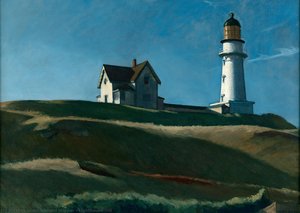 Lighthouse HIll - Edward Hopper
To encounter Lighthouse Hill by Edward Hopper is to step into a moment of profound, suspended animation, a rare jewel within the artist's most significant works. As one of the top 25 artworks of Edward Hopper, this 1927 masterpiece transcends mere coastal scenery; it serves as a masterclass in the architecture of solitude. The painting captures a breathtakingly clear blue sky that feels both infinite and intimately quiet, casting a luminous glow over the rugged hillside.
Hopper’s technical precision is on full display here, using light to sculpt the lighthouse and the modest houses nestled in the landscape. There is a rhythmic tension between the sentinel-like lighthouse and the unassuming homes, creating an atmosphere of serene yet haunting introspection. For the discerning collector or interior designer, this piece offers more than just visual beauty; it brings a sense of timeless prestige and emotional depth to a refined space. Its ability to evoke the quiet dignity of the American landscape makes it an essential cornerstone for any collection celebrating the evocative power of light and shadow.
Hotel room - Edward Hopper
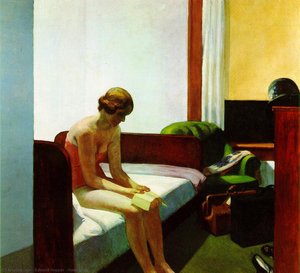 Hotel room - Edward Hopper
In the quietude of 1931, Edward Hopper captured a profound stillness that remains unparalleled in American realism. At ArtsDot.com, our mission is to democratize such beauty, ensuring that the evocative power of masterpieces like Hotel Room is accessible to all. This work earns its place among the top 25 artworks of Edward Hopper not merely for its technical mastery, but for its ability to transform a simple scene of a woman reading into a universal symbol of modern introspection.
The painting is a masterclass in psychological depth; through a restrained palette of warm yellows and earthy browns, Hopper uses light to sculpt an atmosphere of transient solitude. The presence of the solitary suitcase and scattered handbags whispers of lives in motion, yet the heavy, palpable silence anchors the viewer in a moment of pure contemplation. This aesthetic of quiet strength offers a sophisticated focal point for the modern connoisseur, providing a sense of calm and intellectual depth to any curated space. Through our high-fidelity, hand-painted oil reproductions, you can bring this transformative presence and the timeless soul of Hopper’s vision into your own home, office, or private gallery.
night windows - Edward Hopper
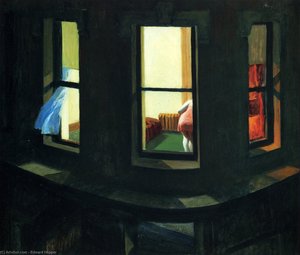 night windows - Edward Hopper
In the quietude of a dimly lit room, where the boundaries between the interior soul and the external world begin to blur, lies the profound essence of Night Windows by Edward Hopper. At ArtsDot.com, our mission has always been to democratize beauty, ensuring that the evocative power of such masterpieces is accessible to every discerning collector. This work earns its place among the top 25 artworks of Edward Hopper through its haunting ability to transform a simple domestic scene into a universal meditation on solitude.
The composition, anchored by two windows acting as frames for an unseen cityscape, utilizes a muted palette and a masterful chiaroscuro effect to heighten atmospheric tension. Created in 1942, the painting captures the heavy, unspoken anxieties of an era, using light and shadow to symbolize both connection and separation. Its stark, contemplative mood offers a timeless aesthetic that resonates deeply within modern, minimalist interiors. By commissioning a high-fidelity, hand-painted oil reproduction, you can bring this transformative presence and Hopper’s legendary sense of stillness into your own home, office, or personal gallery.
Eleven AM - Edward Hopper
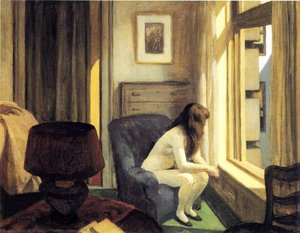 Eleven AM - Edward Hopper
In Eleven AM , Edward Hopper does not merely depict a room; he composes a silent sonata of light and solitude. As you stand before this 1926 masterpiece, you realize the artist didn't just paint illumination—he sculpted it to act as a language of introspection. The way the morning light spills across the seated woman, catching the stillness of her clasped hands, creates a profound tension between the interior sanctuary and the indistinct urban world pressing against the windowpane.
The composition is a masterclass in American realism, where muted yellows and earthy tones breathe life into a scene of quiet contemplation. A bed, a couch, and a solitary vase anchor the space, yet the true subject is the psychological distance symbolized by that glass barrier. This work earns its place among the top 25 artworks of Edward Hopper because it captures the universal ache of modern alienation. It is an invitation to pause, allowing the painting's subdued luminosity to transform your own space into a portal of deep, resonant thought.
Girl at Sewing Machine - Edward Hopper
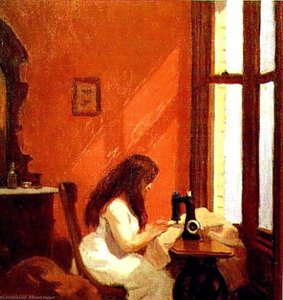 Girl at Sewing Machine - Edward Hopper
In the quiet corners of American modernism, few images resonate with as much profound stillness as Edward Hopper’s "Girl at Sewing Machine." Painted in 1921, this evocative oil on canvas serves as a masterclass in the art of observation, capturing a moment that feels both intensely private and universally relatable. The scene presents a young woman immersed in her craft, seated before a sewing machine that anchors her within an urban domestic interior. As she works, bathed in the soft, directional light filtering through a nearby window, the viewer is invited into a space where time seems to decelerate.
Hopper’s technique demonstrates his burgeoning ability to manipulate light as a physical presence; the sunlight streaming past glimpses of New York brickwork sculpts the very atmosphere of the room. This interplay of light and shadow—a hallmark of the top 25 artworks of Edward Hopper —creates a dramatic tension between sun-drenched surfaces and deep, receding shadows. In today's hyper-connected era, this painting remains a poignant cultural talking point, offering a meditative retreat into a world of focused solitude and the beauty of quiet, industrious dedication.
Self-Portrait - Edward Hopper
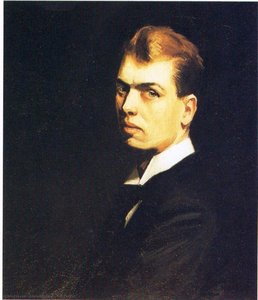 Self-Portrait - Edward Hopper
In the Self-Portrait of 1906, we encounter the genesis of a master. Long before he became the definitive chronicler of urban loneliness, a young Edward Hopper used this early work to explore the profound architecture of the human psyche. This piece is far more than a mere academic exercise from his years under Robert Henri; it is an intimate window into the soul of American Realism.
The painting presents a study in quietude, where a muted palette of somber grays and earthy browns creates an atmosphere of palpable stillness. Hopper’s gaze is direct yet hauntingly distant, capturing a sense of detachment that would later define his most iconic masterpieces. Through precise, disciplined brushwork, he manipulates light and shadow to evoke the subtle anxieties of modernity. To possess such a work is to invite a moment of deep introspection into your collection. It transforms a wall into a sanctuary of contemplation, reminding us that even in our most solitary moments, there is a profound, cinematic beauty to be found.
the el station - Edward Hopper
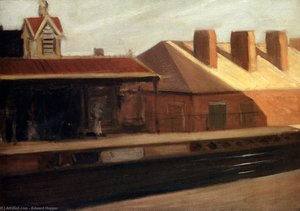 the el station - Edward Hopper
Acquiring a piece such as “The El Station” by Edward Hopper is more than an aesthetic choice; it is a profound investment in the legacy of American Realism and a testament to a collector's refined taste. As one of the most significant works within the top 25 artworks of Edward Hopper, this 1927 masterpiece captures the hauntingly beautiful tension of urban solitude. The composition draws the eye through a landscape of weathered red brick and the muted, amber glow of late afternoon light, where figures inhabit the platform yet remain emotionally adrift in their own private worlds.
Hopper’s mastery of luminosity and structural clarity provides a psychological depth that has solidified his market value and historical influence for decades. The painting serves as a poignant meditation on the anonymity of the modern era, making it an essential cornerstone for any serious collection. For the contemporary connoisseur, a high-quality, hand-painted oil reproduction of this work brings an unmatched aesthetic authority to modern luxury interiors, offering the same atmospheric gravity and sophisticated status as the original masterpiece.
Conclusion
To wander through the visual world of Edward Hopper is to participate in a profound, silent dialogue that transcends the boundaries of time and geography. His canvases do more than merely depict the American landscape; they capture the very texture of the human soul—the quiet moments of introspection, the heavy stillness of a late afternoon, and the evocative tension found in the interplay of light and shadow. These twenty-five masterpieces are not merely relics of a bygone era or static treasures held within museum walls; they are living presences that continue to breathe life into our modern spaces, offering a sense of contemplative depth to any interior they inhabit.
Every brushstroke Hopper laid upon the canvas carries with it a timeless conversation, an invitation for us to find beauty in solitude and meaning in the mundane. As we close this gallery of his most significant works, we are reminded that great art serves as a bridge between centuries and souls, connecting our contemporary experience to the universal truths of isolation, longing, and quiet resilience. Whether through the stark geometry of a city street or the soft glow of a diner window, Hopper’s legacy remains an enduring source of inspiration for collectors and dreamers alike.
We invite you to continue this journey of discovery and bring these evocative atmospheres into your own home by exploring our full collection . Let the mastery of his light and the depth of his shadows transform your surroundings, turning a mere room into a sanctuary of reflection and timeless elegance.