Меню

Анхель Мария Кортеллини Санчес

1820 - 1876

Краткая справка

  • Lifespan: 56 years
  • Art period: — XIX век
  • Works on APS: 2
  • Died: 1876
  • Top 3 works:
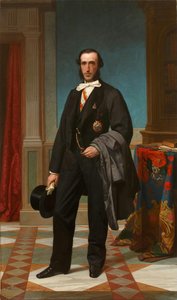
    • Basilio de Chávarri
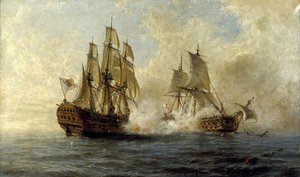
    • Combat of the Glorioso against HMS Dartmouth
  • Развернуть подробности
  • Top-ranked work: Basilio de Chávarri
  • Nationality: Испания
  • Museums on APS:
    • Национальный музей романтизма
    • Морской музей
  • Copyright status: Public domain
  • Born: 1820, Севилья, Испания

Ángel María Cortellini Sánchez: A Pioneer of Spanish Historical Painting

Ángel María Cortellini Sánchez (1820 – 1876) stands as a cornerstone of Spanish Romanticism, revered for his dramatic portrayals of historical confrontations and military triumphs. Born in Sanlucar de Barrameda, Seville, he embarked on an artistic journey fueled by rigorous academic training at the Royal Academy of Fine Arts of San Fernando and enriched by immersion in the intellectual fervor of Rome – formative experiences that indelibly shaped his distinctive style and unwavering vision.

Early Life and Artistic Formation

Cortellini’s upbringing instilled within him a profound appreciation for meticulous observation and scholarly precision, mirroring the prevailing artistic sensibilities of his era. His studies at San Fernando honed his technical prowess while exposing him to the stylistic innovations championed by luminaries such as Francisco Goya and Diego Velázquez – artists whose legacy served as an undeniable catalyst for inspiration. This exposure fostered a harmonious blend of realism and expressive dynamism—a hallmark that would permeate his oeuvre throughout his illustrious career. He began his artistic education at a young age, mastering drawing techniques under the tutelage of Joaquín Domínguez Bécquer, absorbing the stylistic nuances of masters who had paved the way for Romantic art.

A Career Dedicated to Capturing History’s Grand Narratives

Cortellini’s artistic trajectory resolutely focused on immortalizing pivotal moments in Spanish history—specifically, the turbulent epochs of the Spanish-Moroccan War (1860–1862) and the Third Carlist War (1872–1876). These conflicts ignited his imagination and propelled him to produce monumental canvases brimming with painstaking detail and pulsating with palpable emotion. His magnum opus, “The Battle of Wad-Ras,” commemorates Spain’s decisive naval victory against Morocco—a testament to his mastery of composition and masterful orchestration of color—while “The Battle of Alcólea” portrays the decisive clash between Spanish royalists and Carlist rebels—paintings that exemplify his unparalleled ability to convey the visceral drama of warfare.

Technique and Artistic Style: The Influence of Caravaggio

Cortellini’s artistic technique was rooted in a meticulous dedication to observation coupled with an instinctive grasp of chiaroscuro – the dramatic interplay of light and darkness – techniques directly inherited from Michelangelo Merisi da Caravaggio, arguably the most influential painter of his time. He meticulously dissected the visual elements of his subjects—ships, soldiers, landscapes—employing a palette dominated by earthy hues accented by vibrant splashes of crimson and gold to heighten emotional impact and imbue his canvases with an aura of grandeur. Like Caravaggio, Cortellini utilized tenebrism – extreme contrasts between light and shadow – to sculpt form and create a sense of theatrical depth, mirroring the Baroque tradition’s emphasis on dramatic expression.

Museum Collections and Enduring Legacy

Cortellini’s artistic achievements are proudly displayed in prominent museums throughout Spain—most notably the Museo Real Academia de Bellas Artes de San Fernando in Madrid, where “Combat of the Glorioso against HMS Dartmouth” stands as an enduring symbol of his artistic brilliance. His canvases continue to captivate scholars and art aficionados alike, recognized for their unwavering commitment to historical accuracy and their seminal contribution to the evolution of Spanish Romantic painting. Ángel María Cortellini Sánchez’s legacy transcends mere artistic output; he embodies the Romantic ethos—a fervent devotion to portraying grand narratives with unflinching realism and profound emotional resonance—solidifying his position as a pivotal figure in Spanish art history.

Тест по искусству

В каждом вопросе только один правильный ответ.

Вопрос 1:
Q1
Вопрос 2:
Q2
Вопрос 3:
Q3
Вопрос 4:
Q4
Вопрос 5:
Q5