The Luminous Soul of Naples: The Life and Art of Edoardo Dalbono
To wander through the canvases of Edoardo Dalbono is to embark on a sensory journey through the heart of nineteenth-century Italy. Born in Naples on December 10, 1841, Dalbono was a child of a city defined by its dramatic contrasts—the serene azure of the Mediterranean meeting the volatile, smoky breath of Mount Vesuvius. Raised in an environment rich with intellectual and poetic depth, his upbringing was far from ordinary; his father, Carlo Tito Dalbonost, was a noted writer and art critic, while his mother, Virginia Carelli, was a poet. This early immersion in literature, music, and Neapolitan folklore provided the fertile soil from which his artistic imagination would grow, allowing him to weave mythic undertones into even his most realistic landscapes.
Dalbono’s formal education began at the Royal Institute of Fine Arts in Naples, yet his true artistic awakening occurred far from the rigid confines of academic tradition. Seeking a more visceral connection to the natural world, he sought the mentorship of Nicola Palizzi, a pivotal figure who introduced him to the revolutionary Scuola di Resina. This movement championed the use of macchie—deliberate patches of color and light—to capture the fleeting essence of atmosphere and emotion. Through this lens, Dalbono learned to reject stagnant academic conventions in favor of a direct, almost breathless observation of nature, a technique that would become the hallmark of his celebrated style.
A Mastery of Light and Volcanic Majesty
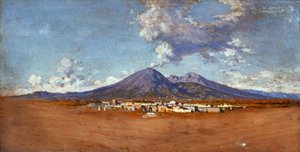
The works of Dalbono are perhaps most profoundly defined by his fascination with the elemental forces of his homeland. He possessed an uncanny ability to translate the shifting light of the Bay of Naples onto canvas, creating scenes that seem to breathe with the warmth of the Italian sun. His landscapes are rarely mere topographical records; instead, they are emotive explorations of space and light. This is most strikingly evident in his studies of Vesuvius. Whether depicting the mountain in a state of quiet repose or capturing the terrifying, smoke-choked grandeur of an eruption—such as the documented event of April 1872—Dalbono utilized rapid, precise brushstrokes to convey the raw energy of the earth.
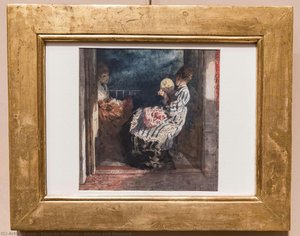
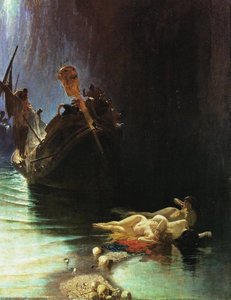
His technical evolution was deeply intertwined with the artistic currents of his time. Influenced by the Verismo movement and the traditions of the School of Posillipo, Dalbono’s work often bridged the gap between romanticized myth and gritty realism. He found inspiration in the legends of Sirens and Parthenope, yet he grounded these fantastic subjects in a tangible reality through his mastery of color. His ability to manipulate light allowed him to create works that felt both timeless and immediate, capturing the social fabric of Neapolitan life—from intimate genre scenes of families on terraces to the sweeping, salt-sprayed vistas of the Mediterranean coast.
Legacy and Artistic Triumph
The significance of Edoardo Dalbono extends beyond his technical prowess; he was a vital link in the chain of Italian landscape painting. His career was marked by prestigious accolades that solidified his standing within the European art scene, including:
- The Silver Medal at the 1859 Mostra di Belle Arti in Naples, awarded for his early, composed landscapes.
- The Bronze Medal at the 1873 Vienna International Exhibition, which signaled his growing influence beyond Italian borders.
- A Respected Pedagogical Legacy as a teacher at the Naples Academy, where he helped shape the next generation of Neapolitan artists, including Carlo Brancacci.
As a painter who moved seamlessly between the intimate and the epic, Dalbono left behind a body of work that serves as a luminous window into a vanished era. His paintings do more than depict scenery; they preserve the very atmosphere of a Naples caught between the classical myth of its past and the burgeoning realism of its modern future. Today, his ability to evoke profound emotional responses through the delicate interplay of light and shadow ensures his enduring place in the pantheon of great Italian masters.