Меню

Краткая справка

  • Top-ranked work: Almonacid de Zorita
  • Copyright status: Under copyright
  • Museums on APS: Diputacion Provincial de Guadalajara
  • Works on APS: 1
  • Art period: Contemporary
  • Развернуть подробности
  • Top 3 works: Almonacid de Zorita
  • Also known as: javier bravo
  • Nationality: Mexico
  • Born: 1967, Mexico

A Life Dedicated to Jalisco: The Political Art of Francisco Javier Bravo Carbajal

Francisco Javier Bravo Carbajal, born in Mexico in 1967, is a figure whose life has been inextricably linked to the political and social fabric of his native Jalisco. While perhaps not widely known internationally as a painter in the traditional sense, Bravo Carbajal’s work—primarily through photography and documentation—serves as a powerful visual chronicle of contemporary Mexican history, particularly within the context of his home state. His career is unique; it isn't one solely dedicated to aesthetic pursuit but rather a committed engagement with the realities of governance, representation, and the lives of those governed. He stands as a testament to how art can be intrinsically woven into the practice of politics itself.

From Congress to Canvas: A Dual Path

Bravo Carbajal’s trajectory is marked by a fascinating duality. He isn't simply an artist *depicting* political life; he has actively *lived* it. Serving as Deputy of the LIX Legislature of the Mexican Congress, representing Jalisco, and previously in the LV Legislature of the same body, Bravo Carbajal brought a firsthand understanding of legislative processes, regional concerns, and the complexities of public service to his artistic endeavors. This experience profoundly shapes his work, imbuing it with an authenticity often absent from more detached observations. His photographs aren’t merely images; they are records informed by intimate knowledge, offering nuanced perspectives on the challenges and triumphs of Jalisco's communities. He is affiliated with the Institutional Revolutionary Party (PRI), a historically dominant force in Mexican politics, which further contextualizes his position as an observer and participant within the nation’s power structures.

Themes of Identity and Representation

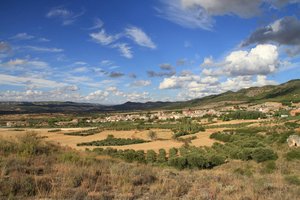
The core of Bravo Carbajal’s artistic vision lies in exploring themes of identity, representation, and the often-fraught relationship between government and its citizens. His work frequently focuses on the everyday lives of people within Jalisco—farmers, artisans, laborers—elevating their stories and struggles to a level of visibility that might otherwise be overlooked. He captures moments of resilience, community spirit, and quiet dignity, offering a counter-narrative to potentially sensationalized or stereotypical portrayals of Mexican life. Almonacid de Zorita, one of his notable artworks, hints at a deeper engagement with historical memory and the enduring legacies of conflict within Mexico’s past. While details about specific artistic techniques are less readily available, it is clear that Bravo Carbajal prioritizes documentary realism—a style intended to convey truthfulness and immediacy.

Influences and Artistic Lineage

Pinpointing direct artistic influences on Bravo Carbajal proves challenging given the unique nature of his career path. However, one can draw parallels to the tradition of social realist photography, particularly that which emerged in Mexico during the 20th century. Artists like Tina Modotti and Manuel Álvarez Bravo (no relation) championed the use of photography as a tool for social commentary and political activism. The influence of figures like Victoriano Huerta, though perhaps indirect, suggests an interest in exploring pivotal moments in Mexican history and their lasting impact on contemporary society. His affiliation with the PRI also places him within a lineage of artists who have engaged with nationalist themes and the project of nation-building—a complex and often contested endeavor.

Historical Significance and Legacy

Francisco Javier Bravo Carbajal’s significance lies not in revolutionizing artistic form but in demonstrating how art can be an integral component of political life. His work provides a valuable visual record of contemporary Jalisco, offering insights into the region's social dynamics, economic challenges, and cultural richness. He is a vital voice in modern Mexico, documenting the present while simultaneously engaging with the nation’s complex past. While his paintings may not hang in major international museums, his photographs serve as powerful testaments to the lives of ordinary people—a legacy that extends beyond the confines of the art world and into the realm of social and political consciousness. His work reminds us that art is not always about beauty or abstraction; it can be a potent force for truth, representation, and ultimately, change.

Тест по искусству

В каждом вопросе только один правильный ответ.

Вопрос 1:
What is Francisco Javier Bravo Carbajal known for?
Вопрос 2:
In which Mexican legislature did Bravo serve as a deputy?
Вопрос 3:
What political party is Bravo affiliated with?
Вопрос 4:
What type of art does Bravo primarily focus on?
Вопрос 5:
Where was Bravo born?