A Delicate Flourish: The World of Giacomo Cavenezia
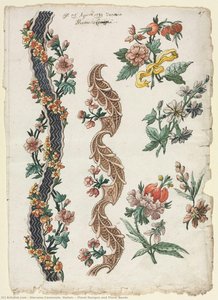
Giacomo Cavenezia, an Italian artist whose name whispers through the annals of decorative art, remains a figure shrouded in mystery. While concrete biographical details are scarce, his surviving work – notably the exquisite ‘Floral Designs and Floral Bands’ created in 1784 – offers a compelling glimpse into the aesthetic sensibilities of late 18th-century Italy. He wasn't a painter of grand historical narratives or portraits of nobility; instead, Cavenezia dedicated himself to the subtle beauty of botanical representation, crafting compositions that speak volumes about the era’s burgeoning interest in naturalism and refined ornamentation. His art isn’t about bold statements but rather an intimate dialogue with the delicate forms of flowers, a testament to his skill and artistic vision.
The Language of Flowers: Style and Technique
Cavenezia's work is characterized by its meticulous detail and harmonious color palettes. ‘Floral Designs and Floral Bands’ exemplifies this perfectly; it isn’t merely a depiction of blossoms but an arrangement imbued with grace and balance. The artist demonstrates a keen understanding of floral anatomy, rendering each petal, leaf, and stem with remarkable accuracy. However, his approach wasn't simply one of scientific observation. He elevated the subject matter through careful composition and a sophisticated use of light and shadow, creating a sense of depth and realism that draws the viewer in. The bands themselves suggest a decorative purpose – perhaps intended for wall hangings, furniture embellishments, or even textile designs.
The influence of Rococo aesthetics is palpable, with its emphasis on asymmetry, delicate curves, and pastel hues, yet Cavenezia’s work possesses a unique clarity that sets it apart. He wasn't simply copying existing styles but refining them, imbuing them with his own artistic sensibility.
Context and Influences: Italy in the Late 18th Century
To understand Cavenezia’s art, one must consider the cultural landscape of late 18th-century Italy. This was a period of transition, bridging the Baroque and Neoclassical eras. While grand historical themes still held sway in some artistic circles, there was a growing appreciation for more intimate subjects – landscapes, still lifes, and decorative arts.
The rediscovery of Pompeii and Herculaneum fueled a fascination with classical motifs, which often found their way into contemporary designs. Furthermore, the rise of wealthy merchant classes created a demand for luxurious furnishings and ornamentation, providing opportunities for artists like Cavenezia to flourish. It’s likely he drew inspiration from botanical illustrations of the time, as well as the decorative arts traditions prevalent in cities like Venice and Florence.
A Lasting Legacy: Decorative Arts and Floral Motifs
Although Giacomo Cavenezia's life remains largely undocumented, his contribution to the world of decorative arts is undeniable. ‘Floral Designs and Floral Bands’ serves as a beautiful example of Italian artistry during a pivotal period. His work embodies the era’s fascination with naturalism, refined ornamentation, and delicate beauty. While he may not be a household name like some of his contemporaries, Cavenezia's art continues to inspire those who appreciate the subtle elegance of floral motifs and the enduring power of artistic skill.
- His work provides valuable insight into 18th-century Italian decorative trends.
- The meticulous detail in his compositions showcases a mastery of botanical representation.
- ‘Floral Designs and Floral Bands’ remains a testament to the artist's unique aesthetic sensibility.
Exploring Further: Cavenezia within the Broader Artistic Landscape
While researching Giacomo Cavenezia, it is interesting to note the parallel artistic developments occurring in other parts of Italy during this time. Artists like Giacomo Manzu, known for his striking bronze sculptures, demonstrate a different facet of Italian artistry – one focused on realistic form and monumental scale. Similarly, exploring the architectural wonders of San Giacomo Maggiore Basilica in Bologna or Palazzo Cattaneo-Adorno in Genoa reveals the broader cultural context within which Cavenezia operated. These sites showcase the era’s emphasis on artistic dedication and the integration of art into everyday life.
Ultimately, understanding Cavenezia requires placing him within this larger tapestry of Italian creativity, recognizing his unique contribution to a vibrant and dynamic artistic landscape.