A Life Blossoming in Bamboo: The Story of Guan Zhongji
The Yuan Dynasty, a period of dynamic cultural exchange and artistic innovation, witnessed the emergence of many remarkable talents. Among them shone Guan Zhongji (管道昇), also known as Lady Zhongji – a name that resonates through Chinese art history as a beacon of female accomplishment. Born in Zhuzhou, China, in 1262, Guan was not merely an artist; she was a poet, calligrapher, and most notably, a master of bamboo painting whose work captured the spirit of her time and continues to inspire awe today. Her life unfolded during a period of transition, following the Song Dynasty’s fall and under Mongol rule, a context that subtly informed her artistic choices and perhaps fueled her dedication to expressing inner resilience through nature. While biographical details remain somewhat scarce, what *is* known paints a picture of a woman deeply immersed in scholarly pursuits and possessing an exceptional gift for visual expression. She was the daughter of Guan Hanqing, a celebrated playwright of the Yuan Dynasty, which undoubtedly exposed her to a world rich with storytelling and artistic sensibility from a young age.
The Art of Bamboo: A Reflection of Inner Strength
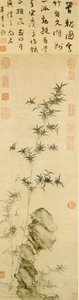
Guan Zhongji’s legacy rests primarily on her exquisite bamboo paintings. In Chinese art, bamboo holds profound symbolic weight – representing integrity, resilience, modesty, and perseverance. It bends with the wind but does not break, embodying the Confucian virtues prized by scholars and officials. Guan didn't simply depict bamboo; she infused it with a sense of life, movement, and emotional depth that set her apart. Her brushwork is characterized by its delicate precision, capturing the subtle nuances of each stalk, leaf, and branch. Unlike many earlier bamboo painters who focused on grand compositions, Guan often favored intimate studies, focusing on individual plants or small groupings. This focus allowed her to explore the inherent beauty of the plant itself and convey a sense of quiet contemplation. Her paintings weren’t about showcasing technical skill alone; they were vehicles for expressing her inner world – a testament to her character and philosophical outlook. The simplicity of her compositions often belies a profound understanding of ink wash techniques, utilizing varying shades and textures to create depth and atmosphere.
Poetry and Calligraphy: A Harmonious Triad
Guan Zhongji’s artistic talents extended beyond painting. She was also a respected poet, composing verses that often complemented her artwork. Her poems frequently reflect themes of nature, solitude, and the search for spiritual enlightenment – mirroring the sentiments expressed in her bamboo paintings. The integration of poetry and painting was a common practice among scholar-artists in China, but Guan elevated this tradition to new heights. She understood that words and images could work together to create a more complete and evocative artistic experience. Furthermore, she excelled in calligraphy, mastering various scripts with grace and precision. Her calligraphic style is known for its elegance and fluidity, perfectly complementing the delicate brushwork of her paintings.
The harmonious interplay between painting, poetry, and calligraphy defines Guan’s unique artistic voice and demonstrates her comprehensive understanding of Chinese aesthetics.
Historical Significance: A Pioneering Woman in Art
Guan Zhongji occupies a unique position in the history of Chinese art as arguably ‘the most famous female painter and calligrapher’. In a society where opportunities for women were often limited, she achieved remarkable recognition during her lifetime. Her work was admired by scholars, officials, and fellow artists alike, and she became a role model for aspiring female painters. While many talented women artists existed throughout Chinese history, Guan’s prominence is exceptional – she wasn't simply tolerated as an anomaly; she was celebrated for her artistic merit.
Her success challenged conventional gender roles and paved the way for future generations of female artists to pursue their passions. Today, her paintings are highly prized by museums and collectors around the world, serving as a testament to her enduring legacy. She is remembered not only as a talented woman but also as a prominent figure in the history of bamboo painting, leaving an indelible mark on Chinese art and culture.
Legacy and Influence
Although few works are definitively attributed solely to Guan Zhongji due to historical challenges in authentication – a common issue with artists from this period – her influence is undeniable. Her style inspired countless subsequent painters, particularly those interested in bamboo painting. She demonstrated the power of simplicity, emphasizing the importance of capturing the essence of nature rather than merely replicating its appearance.
- Her focus on intimate studies and emotional expression resonated with artists seeking to convey personal feelings through their work.
- The integration of poetry and calligraphy into her paintings became a hallmark of scholar-artist tradition.
- Most importantly, she proved that women could achieve artistic excellence
Guan Zhongji’s story continues to inspire. She represents the triumph of talent over adversity, the power of art to express inner strength, and the enduring beauty of nature. Her bamboo paintings remain a timeless reminder of her exceptional skill and profound artistic vision – a blossoming legacy that continues to flourish centuries later.