A Lens Upon the Human Condition: The Legacy of Herbert Jacob Seligmann
In the grand tapestry of twentieth-century American history, few figures captured the shifting shadows of social upheaval and political transformation with as much profound empathy as Herbert Jacob Seligmann. A man whose life was defined by the intersection of art and activism, Seligmann did not merely observe the world; he bore witness to it. Born in the United States in 1891 into a prominent Jewish family, his early years were steeped in an intellectual curiosity that would later manifest as a relentless pursuit of truth through both the written word and the camera lens. His education at Harvard University provided the scholarly foundation for a career that would traverse the most turbulent landscapes of his era, from the burgeoning racial tensions of the American South to the encroaching darkness of Nazi aggression in Europe.
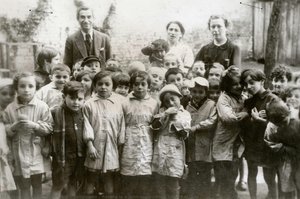
Seligmann’s photographic practice was far more than a technical exercise in capturing light; it was an extension of his journalistic soul. He possessed a rare ability to find the monumental within the mundane, imbuing his subjects with a palpable sense of immediacy and emotional resonance. Whether he was documenting the intimate daily rhythms of life in Haiti during the U.S. occupation or capturing the nostalgic, crowded energy of a school recess, his work functioned as a vital historical record. His lens sought to illuminate the complexities of human existence, often focusing on those marginalized by the prevailing winds of prejudice and power. Through his camera, the struggles for civil rights and the quiet dignity of individuals facing systemic adversity were rendered with an unflinching, yet deeply humanist, clarity.
The Intersection of Journalism and Social Advocacy
Beyond the silver gelatin prints, Seligmann was a formidable voice in American journalism, utilizing his platform to confront the uncomfortable realities of his time. His literary contributions were as impactful as his visual ones, characterized by an unwavering commitment to social justice. As the first publicity director for the NAACP between 1919 and 1932, he played a pivotal role in shaping the narrative of the early civil rights movement. His seminal 1920 work, The Negro Faces America, stands as a landmark piece of sociological observation, dissecting the profound psychological and economic impacts of racial prejudice on the American landscape. This period of his life was marked by a courageous confrontation with bigotry, as he traveled through the Southern United States to document the lived experiences of African Americans, often at great personal and professional risk.
His journalistic reach extended into the realms of high culture and international politics, where he acted as a bridge between disparate worlds. Seligmann was a close associate of the legendary photographer Alfred Stieglitz, a connection that placed him at the heart of the American avant-garde. His writings often explored the lives and works of iconic figures such as Georgia O'Keeffe, John Marin, and the writer D.H. Lawrence, demonstrating his ability to navigate both the gritty realities of social struggle and the ethereal heights of modern art. This duality—the ability to document the horrors of war and the nuances of aesthetic innovation—is what defines his unique historical significance.
A Witness to a Century in Flux
The later decades of Seligmann’s life were spent reflecting on a century that had seen unprecedented change, yet his commitment to documentation never wavered. His archives, now preserved as a vital resource for historians, contain a wealth of correspondence, travel diaries, and photographs that trace the trajectory of global conflict and social evolution. From his observations of Jewish life in post-WWI Europe to his coverage of the rise of Nazism, Seligmann’s work serves as a haunting reminder of the fragility of peace and the enduring necessity of truth-telling.
Ultimately, the significance of Herbert Jacob Seligmann lies in his refusal to remain a detached observer. He understood that the camera and the pen were tools of profound responsibility. His life's work remains an essential testament to the power of art to serve as a conscience for society, reminding us that to truly see the world is to acknowledge the shared humanity within every frame and every sentence.