The Refined Legacy of Hugh Bridport
In the golden age of Victorian portraiture, few artists captured the quiet dignity and aristocratic grace of the era as delicately as Hugh Bridport. Born in 1794 in the picturesque landscapes of Dorset, England, Bridport’s early life was steeped in an appreciation for the fine details of the natural world. His formal education at Sherborne School provided more than just academic rigor; it instilled in him a lifelong devotion to precision and an eye for the subtle nuances that define human character. This foundational period was essential in shaping a painter who would eventually become one of Britain's most respected miniature painters, known for translating the complex emotions of his subjects into small, luminous masterpieces.
Bridport’s professional ascent was marked by a unique blend of academic discipline and intellectual curiosity. In 1823, he accepted a professorship at Lincoln’s Inn, a role that allowed him to refine his technical mastery while engaging with the intellectual elite of his time. This period of teaching profoundly influenced his artistic eye, transforming him into an astute observer of human psychology. He did not merely paint faces; he sought to capture the very essence of the soul behind the gaze. His ability to weave scientific observation with artistic flair was perhaps most famously demonstrated through his close collaboration with Joel Roberts Poinsett, the renowned botanist. This partnership, bridging the worlds of art and science, serves as a testament to Bridpost's multifaceted intellect and his commitment to documenting the beauty of both humanity and nature.
Mastery of Technique and Aesthetic Elegance
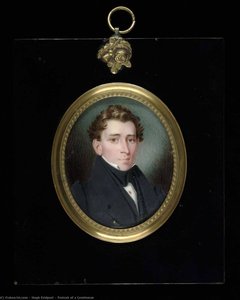
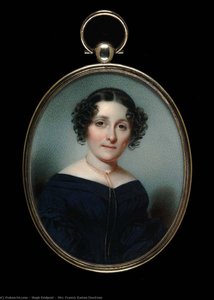
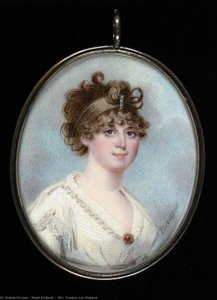
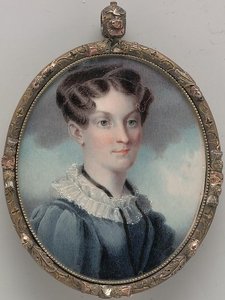
The true magic of Bridport’s work lies in his masterful command of watercolor. Eschewing heavy, opaque layers, he favored delicate washes and subtle gradations of tone, creating a sense of light that seems to emanate from within the paper itself. His technique was deeply rooted in the academic traditions of his era; he frequently utilized meticulous anatomical sketches as the structural foundation for his portraits, ensuring that every feature possessed a lifelike accuracy. This rigorous preparation allowed him to achieve an atmosphere of understated grandeur, where even the smallest detail—the lace of a collar or the soft contour of a cheek—was rendered with breathtaking clarity.
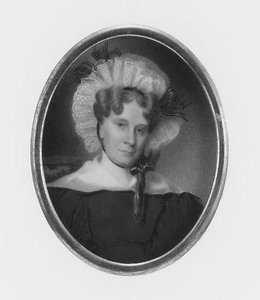
Beyond the brushwork, Bridport’s compositions were often characterized by a sense of formal sophistication. He frequently presented his portraits within ornate borders, a choice that elevated the artwork from a mere likeness to a precious object of art. This stylistic decision reinforced the status of his subjects as emblems of refinement and social standing. His work often featured:
- Luminous Watercolor Washes: Creating a soft, ethereal glow that defines the Victorian miniature style.
- Anatomical Precision: A dedication to realistic proportions derived from his deep study of human structure.
- Psychological Depth: An ability to convey subtle emotions, ranging from quiet melancholy to poised confidence.
- Ornate Presentation: The use of decorative framing to enhance the aristocratic aesthetic of his subjects.
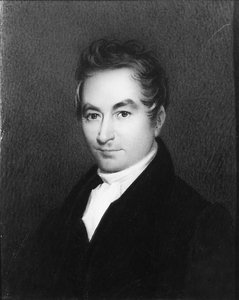
As we look back upon the career of Hugh Bridport, we see more than just a portraitist; we see a chronicler of an era. His works, such as the exquisite Portrait of a Lady, remain enduring symbols of 19th-century elegance. Through his meticulous dedication to his craft, Bridport ensured that the fleeting expressions and the dignified presence of his subjects would be preserved for eternity, leaving an indelible mark on the history of British fine art.