Museums on APS: Biennale Internazionale dell'Antiquariato di Firenze
Karl Wilhelm Diefenbach: Life and Legacy
Early Life and Education
Born on February 21, 1851, in Hadamar, Germany (though often cited as Bad Homburg).
Early artistic promise led him to study at the Munich Academy of Fine Arts.
He was deeply impressed by the works of Arnold Böcklin and Franz von Stuck, whose symbolic styles would later influence his own.
A pivotal moment in his life occurred when he contracted severe typhoid fever, followed by a botched operation that crippled his right arm.
Forced to adapt, Diefenbach learned to paint and write with his left hand – an experience that profoundly shaped his worldview.
Artistic Development and Style
The physical hardship he endured led him to explore naturopathic methods and embrace a “natural way of life,” becoming a fervent advocate for health reform.
His artistic style is characterized by Symbolism, with a focus on capturing mood, atmosphere, and the spiritual connection between humanity and nature.
Diefenbach’s paintings often feature dramatic landscapes and figures that embody his philosophical beliefs.
He demonstrated mastery of light and color, creating evocative scenes that resonate with emotional depth.
The Lebensreform Movement & Social Reform
Diefenbach became a key pioneer of the Lebensreform (life-reform) movement, which critiqued industrialization, materialism, and urbanization.
He championed a return to nature, advocating for simple living, vegetarianism (veganism), naturism (Freikörperkultur), and spiritual renewal.
His ideas were deeply influential in shaping the German youth movement and groups like the Wandervogel.
Major Works & Artistic Achievements
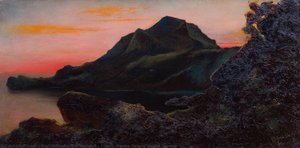
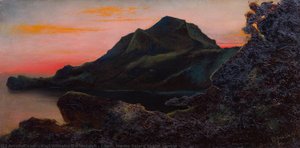
“Capri, Monte Solaro at the Sunset” is one of his most celebrated paintings, showcasing his ability to capture a dramatic landscape and evoke a sense of tranquility.
His work explored themes of universal animation and evolution theory, reflecting the intellectual currents of his time.
Diefenbach’s art served as a visual expression of his social and philosophical ideals.
Legacy & Historical Significance
The Himmelhof commune, founded by Diefenbach in Ober Sankt Veit near Vienna, became a model for alternative communities seeking to live in harmony with nature.
It directly inspired the establishment of Monte Verità near Ascona, Switzerland, founded by his student Gustav Gräser.
Diefenbach’s influence extended beyond art and social reform; he was also a proponent of the peace movement.
His life and work continue to inspire those seeking alternative ways of living and challenging conventional societal norms. He is considered a forefather of many modern alternative movements.
Diefenbach died in 1913, leaving behind a legacy that continues to resonate with artists, thinkers, and activists today.
Редакцией ArtsDot.com
Тест по искусству
В каждом вопросе только один правильный ответ.
Вопрос 1:
Karl Wilhelm Diefenbach is most closely associated with which philosophical and artistic movement?
Вопрос 2:
Diefenbach's artistic style is primarily characterized by:
Вопрос 3:
A significant life event that impacted Diefenbach's art and philosophy was:
Вопрос 4:
Diefenbach's commune, Himmelhof, served as a model for which later settlement?
Вопрос 5:
Which of the following themes was *not* central to Diefenbach's work and beliefs?
Explore the artistic innovation of the German Renaissance! Discover Dürer, the Danube School & Reformation art. Learn about techniques, materials & lasting influence. Find museum-quality reproductions at ArtsDot.
Explore the life & work of Anton von Werner, Imperial Germany's leading painter. Discover his dramatic depictions of war, unification, and court life – a fascinating insight into 19th-century German history & art.
Погрузитесь в мир немецкого экспрессионизма! Узнайте истории создания шедевров Мунка, Кирхнера, Кандинского и других великих художников. Репродукции картин высокого качества для вашего интерьера на ArtsDot.com. Откройте всю коллекцию онлайн!