The Serene Elegance of Lancelot-Théodore Turpin de Crissé
Lancelot-Théodore Turpin de Crissé stands as a singular figure in the tapestry of French Romantic landscape painting, a master whose brush captured the quiet majesty of a bygone era. Born on July 9, 1782, into an aristocratic lineage marked by the turbulent shadows of the French Revolution, his early life was defined by both prestige and profound upheaval. The financial ruin brought about by the Revolution forced his family to flee Paris, casting him into an exile that would ultimately become the crucible of his artistic soul. It was through the generous patronage of Marie-Gabriel-Florent-Auguste de Choiseul-Gouffier that Crissé was able to pursue rigorous academic training across Switzerland and Italy, a journey that transformed a displaced nobleman into a sophisticated chronicler of classical beauty.
His artistic development was deeply intertwined with the shifting political landscapes of 19th-century France. Upon his return to Paris in 1809, Crissé began exhibiting at the prestigious Salon, quickly establishing himself within the upper echelons of society. His life was a remarkable blend of administrative duty and creative devotion; he served as Chamberlain to the former Empress Josephine following her divorce and later became a member of the Académie des Beaux-Arts. This unique position allowed him to navigate the corridors of power while maintaining an unwavering commitment to the classical ideals that defined his work, resisting the more turbulent and overtly expressive tendencies of the burgeoning Romantic movement in favor of a more restrained, harmonious aesthetic.
A Vision of Italian Splendor and Classical Harmony
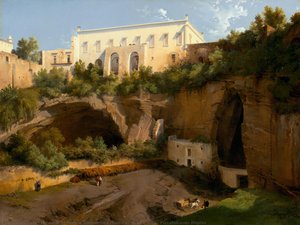
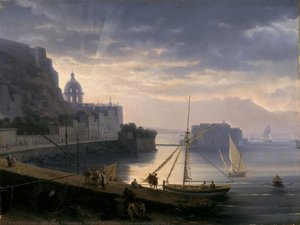
The essence of Crissé’s oeuvre lies in his ability to evoke the timelessness of the Mediterranean landscape. His canvases are most celebrated for their serene depictions of Italian villas and ancient structures, often bathed in a soft, golden light that suggests the eternal afternoon of antiquity. Unlike many of his contemporaries who sought to capture the dramatic or the terrifying aspects of the sublime, Crissé focused on compositional harmony and tonal subtlety. He looked backward to the masters of the classical tradition, drawing profound inspiration from the works of Claude Lorrain and Nicolas Poussin. From them, he inherited a technique characterized by:
- The use of muted, sophisticated color palettes that lend an air of dignity to every scene.
- A masterful command of atmospheric perspective, creating a sense of infinite depth within his vistas.
- Precise and delicate brushwork that renders the textures of stone ruins and lush foliage with exquisite clarity.
- A deliberate focus on light as a structural element, using it to guide the viewer's eye through idealized landscapes.
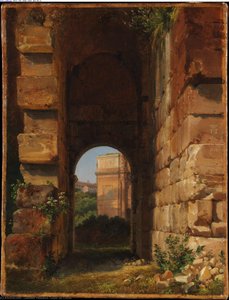
His most familiar works often feature architectural landmarks set against sweeping natural backdrops, such as his evocative rendering of The Arch of Constantine Seen from the Colosseum. These paintings do not merely document a location; they interpret it through a lens of nostalgic reverence, capturing the idealized beauty of classical ruins and the quiet grandeur of the Italian countryside. Through his meticulous observation of nature, Crissé achieved an impression of timeless elegance that resonated deeply with the aristocratic tastes of his era.
Legacy and Historical Significance
The historical significance of Lancelot-Théodore Turpin de Crissé extends beyond the mere aesthetic value of his landscapes. He represented a bridge between the rigid traditions of French art history and the emotive possibilities of the Romantic age. By championing a conservative, classical aesthetic during a period of intense social and artistic transition, he provided a sense of continuity and stability. His life, marked by the resilience required to overcome familial ruin and the grace to thrive under various political regimes—from the Bourbon monarchy to the Imperial era—mirrors the very endurance of the classical subjects he so lovingly painted.
Today, his works remain cherished treasures in some of the world's most esteemed institutions, including the National Gallery of Art and the British Museum. His ability to capture the "Italian Idols" through a lens of peace and structural perfection ensures that his legacy continues to inspire those drawn to the quiet, enduring beauty of the classical world. He remains a testament to the power of artistic devotion to transcend the chaos of history, leaving behind a visual record of a landscape that feels, even centuries later, eternally serene.