The Master of Light and Shadow: The Life of Ludolph Büsinck
In the vibrant, shifting artistic landscape of the seventeenth century, few names evoke the dramatic interplay of light and darkness as poignantly as Ludolph Büsinck. Born in the German town of Hann. Münden during the final decade of the sixteenth century, Büsinck emerged as a transformative figure whose reach extended far beyond his Germanic roots. While his early years were likely shaped by the rigorous traditions of the German Renaissance and perhaps even the burgeoning artistic schools of the Netherlands, it was his migration to Paris that would forever alter the course of printmaking history. Between 1623 and 1630, Büsinck breathed new life into the French art scene, introducing a level of tonal complexity that had previously been unseen in the medium of wood engraving.
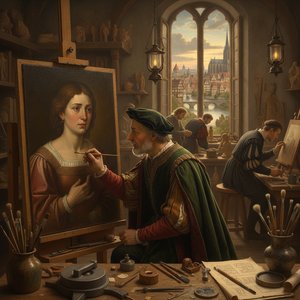
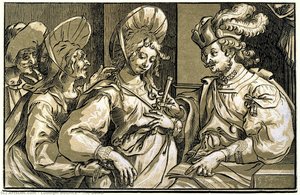
Büsinck’s arrival in Paris marked the beginning of a revolutionary era for the chiaroscuro woodcut. Before his influence took hold, much of the period's printmaking relied heavily on line and contour; however, Büsinck sought to replicate the profound luminosity and sculptural depth found in oil painting. By layering different tones through meticulous cutting techniques, he achieved a sense of volume and atmosphere that allowed figures to emerge from the shadows with a palpable, breathing presence. This innovation was not merely a technical feat but a stylistic revolution, as he successfully translated the dramatic tenebrism of masters like Caravaggio into the much more accessible and reproducible medium of the woodcut.
A Legacy of Innovation and Collaboration
The brilliance of Büsinck’s work was often amplified by his ability to collaborate with the finest creative minds of his era. His Parisian tenure was characterized by a profound spirit of artistic exchange, most notably through his relationship with the painter Georges Lallemand. Many of Büsinsck's most celebrated woodcuts were based on Lallemand’s drawings, creating a seamless marriage between fluid draftsmanship and bold, tonal engraving. This synergy allowed for a narrative depth that captured both the elegance of high society and the gritty, visceral reality of street life. Whether depicting religious devotion or the bustling social undercurrents of a tavern, Büsinck’s prints possessed a theatricality that drew the viewer into a world of whispered secrets and sudden revelations.
Beyond his technical mastery, the subject matter of his oeuvre reflects the complex social tapestry of the seventeenth century. His works often explored a wide spectrum of human experience, including:
- Religious Iconography: Devotional scenes that utilized stark contrasts to evoke spiritual awe and contemplation.
- Social Narratives: Evocative depictions of peasants, musicians, and beggars, capturing the raw textures of everyday life.
- Genre Scenes: Intricate compositions such as The Bawd, which offer a window into the clandestine encounters and social complexities of the age.
- Portraiture and Character Studies: Images of cavaliers and figures in ornate, heavy garments that showcase his ability to render texture and light.
Historical Significance and Enduring Influence
Though Büsinck eventually returned to Hann. Münden—where he transitioned from the life of an artist to that of a respected merchant and customs official—his impact on the trajectory of European printmaking remained indelible. He is historically recognized as the pioneer who brought the chiaroscuro technique to France, setting a precedent for future generations of engravers to pursue tonal depth over mere line. His ability to bridge the gap between the Dutch tradition of Hendrick Goltzius and the French aesthetic sensibility helped create a new visual language for the Baroque period.
Today, the legacy of Ludolph Büsinck is preserved in the hallowed halls of the world's most prestigious institutions. From the British Museum and the Ashmolean Museum to the Cleveland Museum of Art and the Louvre, his prints continue to captivate scholars and art lovers alike. His work remains a testament to the power of innovation—a reminder of a time when a single artist, armed with a knife and a block of wood, could redefine how the world perceives light, shadow, and the human condition.