Mevlana Ali Çelebi B. İvaz: The Silent Hand of the Ottoman Endowment
Mevlana Ali Çelebi B. İvaz stands as a quietly significant figure in 16th-century Ottoman art and administration – a master scribe whose legacy resides primarily within the intricate details of a monumental architectural commission. While biographical information about him remains scarce, his contribution to the Mihrimah Sultan endowment deed is undeniably crucial, offering a rare glimpse into the meticulous processes of imperial patronage and the artistry of Islamic calligraphy during the reign of Sultan Süleyman the Magnificent. His work isn’t celebrated with grand portraits or elaborate biographies; instead, it lives on in the elegant strokes of his *thuluth* script adorning one of the most important documents of the era – a testament to the power of words and their role in shaping civic identity and religious devotion.
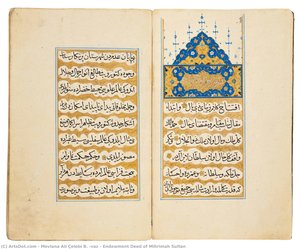
Born sometime around 1510-1511 (the exact date remains uncertain), Ali Çelebi’s life unfolded largely within the administrative heart of the Ottoman Empire. He rose to prominence through his skill as a scribe, specifically mastering the art of *divan* writing – the formal script used for official documents and legal instruments. His most celebrated work is undoubtedly the preface text accompanying the endowment deed for the mosque complex commissioned by Mihrimah Sultan, the beloved daughter of Sultan Süleyman and Hürrem Sultan (Roxelana). This document wasn’t merely a record of property allocation; it was a carefully crafted statement of intent, imbued with religious significance and reflecting the grandeur of the Ottoman court. The deed itself details the endowment of substantial lands and revenues in Anatolia and Rumelia – regions vital to the empire's economic stability – all dedicated to supporting the upkeep and operation of the newly constructed mosque complex in Üsküdar, a district of Istanbul.
The significance of Ali Çelebi’s contribution lies not just in his technical proficiency but also in the artistic elements he incorporated into the document. The preface is framed by a richly illuminated *unvan* panel – a decorative title page – featuring a central cartouche containing the *besmele*, an invocation of God's name, rendered in exquisite gold *thuluth* script. This meticulous execution demonstrates Ali Çelebi’s mastery of calligraphy and his understanding of its symbolic power within Islamic art. The choice of *thuluth*, a bold and elegant serif typeface, speaks to the importance of the document itself and the reverence with which it was intended to be treated. The gold leaf used – a hallmark of Ottoman imperial commissions – further elevates the piece, signifying wealth, status, and divine favor.
The Context: Mihrimah Sultan and Sinan the Architect
To fully appreciate Ali Çelebi’s role, it's essential to understand the context surrounding the endowment deed. Mihrimah Sultan was a figure of considerable influence within the Ottoman court, known for her patronage of the arts and architecture. She commissioned numerous projects, including the magnificent mosque complex in Üsküdar, designed by the legendary architect Mimar Sinan. This complex wasn’t simply a place of worship; it represented a powerful statement of imperial authority and religious devotion. The endowment deed ensured its long-term sustainability, guaranteeing that the mosque would remain a vital center of Islamic life for generations to come. Ali Çelebi's work was therefore inextricably linked to this ambitious architectural undertaking – he provided the written foundation upon which the physical edifice stood.
Ali Çelebi’s Legacy: A Master of His Craft
Despite the relative obscurity surrounding his personal life, Ali Çelebi B. İvaz's contribution to Ottoman art and administration is undeniable. He represents a vital link in the chain of skilled artisans and scribes who served the imperial court. His work on the Mihrimah Sultan endowment deed stands as a remarkable example of 16th-century Ottoman calligraphy, showcasing both technical skill and artistic sensitivity. While he may not be widely recognized by name, his legacy is preserved within the elegant lines of his *thuluth* script – a silent testament to his dedication and craftsmanship.
Connections and Further Research
Further research into Ali Çelebi B. İvaz reveals connections to other prominent figures in Ottoman society. He is linked to Ali Çelebi (Kınalızade Ali), a renowned jurist, poet, and scholar who lived during the same period. While distinct individuals, their shared surname suggests a familial connection or perhaps professional collaboration within the broader Ottoman intellectual landscape. Exploring the work of Kınalızade Ali provides valuable context for understanding the artistic and scholarly traditions that shaped Ali Çelebi’s career. The Wikipedia article on Ali Çelebi offers additional insights into his life and contributions, while ArtsDot.com's dedicated page showcases a reproduction of the endowment deed itself, allowing viewers to appreciate the beauty and complexity of Ali Çelebi’s calligraphy firsthand. The ongoing preservation and study of Ottoman manuscripts like this one ensure that the voices – and hands – of artists like Mevlana Ali Çelebi B. İvaz continue to resonate through the centuries.