The Legacy of the Micali Painter: A Master of Etruscan Narrative
In the twilight of the 6th century B.C., as the vibrant currents of Greek culture flowed into the heart of Italy, a distinct and masterful voice emerged from the workshops of Vulci. Known to history as the Micali Painter, this enigmatic artist stood as the most distinguished Etruscan pupil of the Greek black-figure tradition. While his roots were firmly planted in the soil of Etruria, his artistic soul breathed the sophisticated air of Attic innovation. He did not merely imitate the masters of Athens; rather, he orchestrated a unique synthesis of styles, leading a prolific workshop that would define the aesthetic landscape of the late Archaic period.
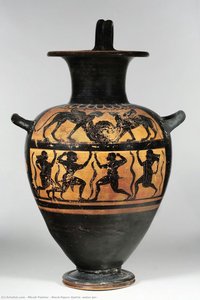
The work of the Micali Painter is characterized by a profound command over the black-figure technique, a method where silhouetted figures are meticulously rendered against the warm, terracotta glow of the clay. His compositions often dance with a rhythmic vitality, capturing the tension of mythological drama and the grace of animalistic movement. Through his brush, the hydria and other ceremonial vessels became stages for epic storytelling. One can almost feel the pulse of ancient life in his depictions of Gorgons and legendary beasts, where every incised line serves to heighten the sense of motion and mythic weight.
A Workshop of Innovation and Influence
Beyond the singular hand of the master, the Micali Painter’s true historical significance lies in his role as a conductor of artistic evolution. Operating out of Vulci, he presided over a large-scale workshop that acted as a crucible for Etruscan ceramic excellence. This was an era of intense cultural exchange, where the influx of Greek pottery spurred local artisans to reach new heights of technical sophistication. The Micali Painter took the complex iconography of the Greek world and adapted it to the tastes and spiritual sensibilities of the Etruscan elite.
His influence can be traced through several key artistic developments:
- The Integration of Attic Style: He successfully translated the intricate details of Athenian black-figure painting into a local vernacular that resonated with Etruscan funerary and domestic customs.
- Narrative Complexity: His ability to organize multiple figures within a single frieze allowed for more complex mythological sequences, moving beyond simple ornamentation toward true narrative art.
- Technical Mastery of Incision: The precision with which he used sharp tools to define musculature and drapery set a benchmark for his pupils, ensuring the longevity of the black-figure tradition in Italy.
To study the Micali Painter is to witness a pivotal moment in Mediterranean antiquity—a time when the boundaries between Greek influence and Etruscan identity were beautifully blurred. His legacy remains etched in the clay of the masterpieces held in museums today, serving as a silent yet powerful testament to the enduring power of artistic dialogue across ancient borders.