Oderisius of Benevento: Sculptor of Faith and Patron of Divine Glory
In the shadowed, incense-filled corridors of High Medieval Italy, few names resonate with the enduring weight of bronze and devotion quite like Oderisius of Benevento. An artist whose very existence is etched into the monumental portals of Southern Italy, Oderisius stands as a singular figure in the artistic landscape of the twelfth century. While the precise details of his birth and early years remain shrouded in the mists of time—a common fate for craftsmen of the era—his legacy is undeniably tangible. Active between 1119 and 1150, he emerged from a period defined by the powerful Norman influence in the Principality of Capua, a region where the grandeur of Byzantine tradition met the rugged, emerging strength of Romanesque simplicity.
The genesis of his mastery can be traced to the prestigious workshops of his mentor, Robert of Caiazzo. Through this lineage, Oderisius inherited more than just technical skill; he inherited a visual language of spiritual authority. The relationship between the two is immortalized in the very metal they worked, specifically within the inscriptions of his most famous commissions. This connection suggests a period of intense collaborative creativity, where the methods of bronze casting were refined to capture not just the physical form, and anatomical modeling, but the very essence of the divine. His work reflects a profound understanding of how light interacts with textured surfaces, turning cold metal into a medium for storytelling.
The Bronze Portals: A Testament to Devotion
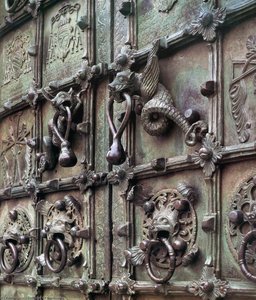
Oderisius’s fame rests almost entirely upon his monumental achievements in bronze, most notably the colossal doors that adorn the Troia Cathedral and the San Giovanni Cathedral in Capua. These are not merely functional entrances but are profound theological narratives rendered in metal. The doors of Troia, completed around 1119, serve as a breathtaking example of his ability to blend intricate detail with monumental scale. Within these panels, scenes from the Gospels—such as the figures of Saint John the Baptist and Saint Peter—are executed with a remarkable precision that commands the viewer's reverence.
To witness these works is to experience the intersection of art and liturgy. The artist utilized the following elements to achieve such impact:
- Symbolic Richness: Every fold of drapery and every gesture of a saint was imbued with layers of meaning, designed to instruct the faithful through visual iconography.
- Anatomical Mastery: Despite the stylistic constraints of the Romanesque period, Oderisius demonstrated an exceptional grasp of human form, lending a sense of presence and weight to his figures.
- Byzantine Influence: The lingering aesthetic of the East is visible in the formal, dignified compositions that evoke the eternal nature of the subjects depicted.
A Lasting Legacy in the Medieval Soul
The historical significance of Oderisius of Benevento extends far beyond the physical durability of his bronze works. He was a vital participant in the ecclesiastical patronage system of Southern Italy during the reign of Roger II, an era where art served as the primary vehicle for political and religious legitimacy. By translating the complex doctrines of the Church into accessible, magnificent imagery, he helped shape the visual identity of a burgeoning Mediterranean culture.
Though his life ended nearly nine centuries ago, the echoes of his hammer against bronze continue to resonate. His ability to marry the technical rigors of metalwork with the profound emotional needs of a religious society ensures his place in the pantheon of great medieval masters. In the enduring strength of his cathedral doors, we find a bridge to a lost world—a world where art was the ultimate expression of the human connection to the divine.