Parents: Edward Matthew Ward and Henrietta Ward. Both were accomplished artists; Edward was a historical genre painter, and Henrietta specialized in history paintings and portraits of children.
Family Background: Ward came from a long line of artists. His paternal grandfather was the renowned animal painter James Ward. His mother's family also had strong artistic ties, including engravers and miniature painters.
Early Education: Attended Eton College where he began creating caricatures of classmates and schoolmasters.
Artistic Training and Early Career
Initial Career Path: Initially apprenticed to the architect Sydney Smirke, but his passion lay in art.
Formal Training: Studied at the Royal Academy Schools starting in 1871.
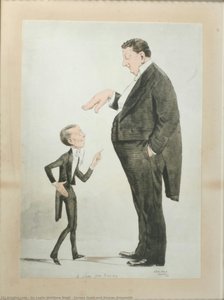
Entry into Vanity Fair: In 1873, he began contributing caricatures to *Vanity Fair* under the pseudonym "Spy," replacing Carlo Pellegrini ("Ape"). Thomas Gibson Bowles recognized his talent and hired him.
Early Style: His initial portraits were full-length and often featured exaggerated proportions, leaning towards caricature. He later refined his style into “characteristic portraits,” which aimed for a more realistic depiction while still capturing the subject's essence.
Major Works and Artistic Development
Prolific Output: Created over 1,325 portraits for *Vanity Fair* between 1873 and 1911.
Subject Matter: Primarily focused on portraits of prominent figures in British society, including royalty, nobility, politicians, artists, and writers.
Evolution of Style: Transitioned from exaggerated caricatures to more refined "characteristic portraits" as he gained acceptance within the social circles he depicted. This shift reflected a desire to avoid offending potential sitters.
Methodology: Ward often worked from memory, based on observations made at events like racecourses and parliamentary sessions. He emphasized the importance of capturing the atmosphere and personality of his subjects.
Notable Works: While many portraits remain popular, specific individual works are less widely known by name due to the sheer volume produced for *Vanity Fair*. His body of work as a whole is considered significant.
Legacy and Historical Significance
Influence on Caricature: Ward's influence was so profound that all caricatures in *Vanity Fair* became commonly referred to as "Spy cartoons," regardless of the artist.
Social Commentary: His portraits provided valuable insights into Victorian society and its prominent figures, capturing their personalities and social standing.
Artistic Technique: Ward's ability to blend caricature with realistic portraiture was a unique contribution to the art form.
Published Autobiography: Wrote "Forty Years of 'Spy'" (1915), providing insights into his life and artistic process.
Recognition: Knighted in 1910, solidifying his place as a respected artist within British society.
Редакцией ArtsDot.com
Тест по искусству
В каждом вопросе только один правильный ответ.
Вопрос 1:
What was Sir Leslie Ward's pseudonym for his Vanity Fair portraits?
Вопрос 2:
Approximately how many portraits did Sir Leslie Ward create for Vanity Fair?
Вопрос 3:
What was a key characteristic of Sir Leslie Ward's earlier portrait style?
Погрузитесь в мир Сира Джошуа Рейнольдса! 25 величайших портретов английского искусства XVIII века. Узнайте историю создания шедевров, технику живописи и вдохновитесь для декора интерьера. Репродукции картин высокого качества на ArtsDot.com.
Explore the life & work of Sir John Tenniel, Victorian England's master illustrator & political cartoonist. Discover his iconic 'Alice in Wonderland' art and lasting impact on satire & visual culture.
Explore the life & art of Charles Robert Leslie, a key figure bridging Romantic ideals with Victorian academic tradition. Discover his captivating portraits, literary scenes, and enduring legacy as Constable’s biographer.



![In The Clouds [hiram Stevens Maxim] — Sir Leslie Matthew Ward](/media/artworks/images-thumb/ca/3b/ca3bf8674e51531ce541c13cd104431b.jpg)