The Weaver of Tradition and Contemporary Flair
Valéria Fazekas stands as a luminous figure in the realm of contemporary Hungarian craftsmanship, an artist whose work serves as a bridge between the storied past of Central European millinery and the avant-garde spirit of modern design. Born in Hungary, her artistic journey was anchored by rigorous formal training at the prestigious Hungarian Academy of Crafts and Design. Graduating in 1987, she emerged with a profound mastery of material and form, initially dedicating her talents to the intricate world of apparel design. However, it was through the medium of millinery that Fazekas truly found her voice, transforming the humble hat into a vessel for complex storytelling and sculptural expression.
Her creative philosophy is deeply rooted in the landscape of her homeland. Drawing inspiration from the rugged beauty of the Carpathian Mountains, Fazekas weaves the very essence of nature into her creations. Her work often features organic motifs—delicate flowers, sweeping leaves, and ethereal feathers—that mirror the resilience and seasonal rhythms of the Hungarian countryside. To wear a piece by Fazekas is to engage with a living piece of folklore; her hats are not merely accessories but wearable sculptures that embody a deep respect for cultural identity and the enduring beauty of the natural world.
Innovation Through Heritage
What distinguishes Fazekas from her contemporaries is her ability to harmonize ancestral techniques with radical, modern innovation. She does not simply replicate tradition; she reimagines it through the lens of contemporary art. This is perhaps most evident in her celebrated participation in the Circulation in the Circle exhibition series launched by the Contemporary Design Department in 20 and18. In this profound creative exercise, she drew direct inspiration from the historical collections of the Museum of Applied Arts, selecting ornamental vessels from the legendary Zsolnay Factory and the Drasche Factory as her muses.
This dialogue between ceramics and millinery resulted in some of her most conceptually daring works:
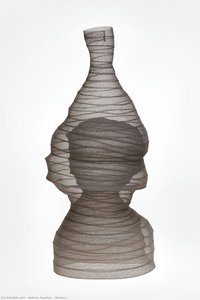
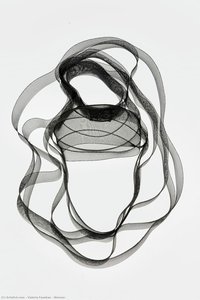
- The "ben-ben" hat: A transparent masterpiece that utilizes a "vase within a vase" concept, playing with light and depth to create the illusion of nested contours.
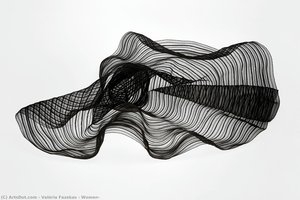
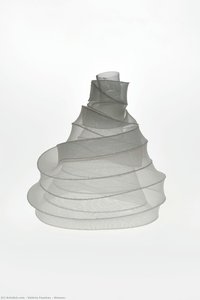
- The "soive" hat: A study in structural minimalism, constructed from a single element that can shift its form through a simple pinch, reminiscent of a large-brimmed skirt.
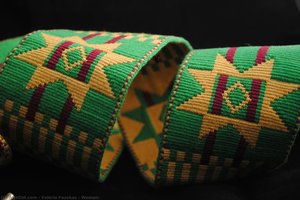
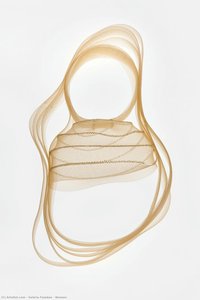
- The "lima" hat: An intricate construction built entirely from a single ribbon, where complex folding and stitching techniques mimic the reflected arcs of a Zsolnay vessel.
A Legacy of Craftsmanship
The impact of Valéria Fazekas’s work extends far beyond the borders of Hungary, reaching international audiences through prestigious exhibitions at venues such as Székesfehérvár’s Szent István Király Múzeum and Lisbon’s Galería Reverso. Her ability to communicate complex, abstract ideas through the tactile medium of fabric and form has earned her significant acclaim from critics and collectors alike. Each piece serves as a testament to her unwavering commitment to quality, where every stitch is an intentional act of preservation and progress.
As an artisan-maker, Fazekas continues to push the boundaries of what millinery can achieve, ensuring that the rich heritage of Hungarian craft remains vibrant and relevant in a rapidly changing world. Her legacy is one of continuity—a dedication to honoring the craftsmanship of the past while fearlessly embracing the possibilities of the future.