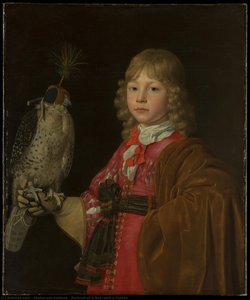
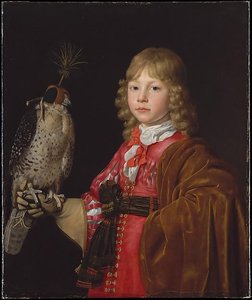
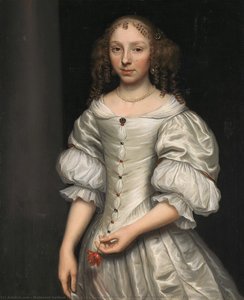
The Master of Light and Shadow: The Legacy of Wallerant Vaillant
In the luminous era of the Dutch Golden Age, few names resonate with as much technical ingenuity as Wallerant Vaillant. Born in Lille, France, on May 30, 1623, Vaillant was a man shaped by a profound artistic lineage. He descended from a family where the brush and burin were common tools; his father and brothers were all accomplished painters, creating an environment of intense creative rigor. This Flemish Baroque foundation, steeped in meticulous craftsmanship, provided the scaffolding for a career that would eventually transcend mere painting to redefine the very possibilities of printmaking. His early education under the esteemed Erasmus Quellinus II in Antwerp infused his work with the stylistic elegance and dramatic tension characteristic of the era's leading masters.
The trajectory of Vaillant’s life took a transformative turn in 1643 when he moved to Amsterdam alongside his family. This migration placed him at the beating heart of Europe’s most vibrant cultural and commercial hub. In the bustling atmosphere of Amsterdam, Vaillant did not merely exist; he flourished, establishing himself as a respected figure within a community of innovators. His early years were marked by a beautiful synergy with his brothers, Jacob and Pieter, fostering a collective spirit of experimentation. Perhaps his most prestigious connection was his role as tutor to Prince Rupert of the Rhine, a position that allowed him to engage in sophisticated experiments with etching and tonal depth, bridging the gap between fine art and technical innovation.
A Pioneer of the Mezzotint Technique
While Vaillant’s oil paintings captured the soul of his subjects, it is his contribution to the mezzotint technique that secures his place in the pantheon of art history. He was one of the first artists to master this "dark manner," a process that allowed for unparalleled tonal gradations and soft, velvety shadows. Unlike traditional etching, which relies on line, the mezzotint focuses on the manipulation of light emerging from darkness. Vaillant’ groundbreaking work in this medium helped develop a method that could replicate the subtle textures of skin, fabric, and atmosphere, effectively bringing a painterly quality to the printed page. This mastery of light and shadow became his hallmark, allowing him to push the boundaries of what printmaking could achieve as an expressive medium.
His technical prowess was matched by his ability to capture the human condition through portraiture and genre scenes. His works often reflected the humanist sensibilities of the 17th century, blending a sense of dignity with profound emotional resonance. Notable examples include:
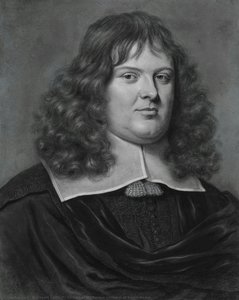
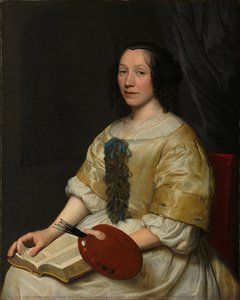
- Portrait of Maria van Oosterwijck: A captivating depiction that showcases his mastery of tonal gradation, presenting the florist with a quiet, commanding presence.
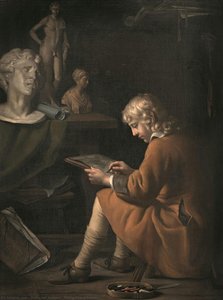
- Young Draughtsman: A meditative piece that captures the intense focus and intellectual awakening of an artist at work, surrounded by the silent echoes of antiquity.
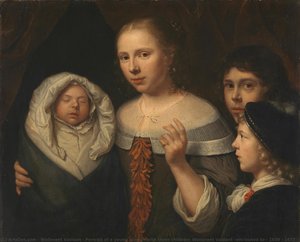
- Portrait of a Young Woman with Three Children: An intimate study of maternal connection, rendered with the delicate touch characteristic of his finest oil works.
Historical Significance and Artistic Enduring Spirit
The significance of Wallerant Vaillant extends far beyond the borders of the Netherlands. By refining the mezzotint, he provided a toolkit for future generations of engravers to explore the nuances of chiaroscuro. His life was a testament to the interconnectedness of the European art world—from his French roots and Flemish training to his Dutch triumphs and his influence on the German courts through his brother Jacques. Even as his brothers pursued their own paths in Rome and Berlin, Wallerant remained a cornerstone of the Amsterdam scene, leaving behind a legacy of innovation that bridged the gap between the tactile world of painting and the reproducible magic of print.
When he passed away on August 28, 1677, Vaillant left behind more than just a collection of images; he left a revolutionized way of seeing. His ability to coax light from the deepest blacks of a copper plate remains a profound metaphor for his entire career—a journey of bringing clarity, character, and beauty out of the shadows of history.