A Life Forged in Flight: The World of Adriaen Pietersz van de Venne
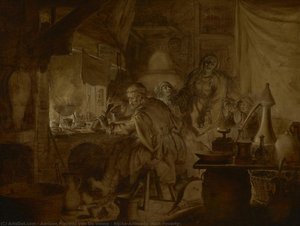
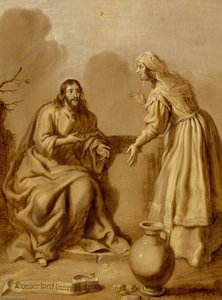
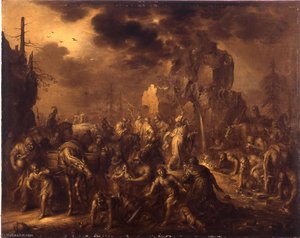
Adriaen Pietersz van de Venne, a name resonating with the vibrant energy of the Dutch Golden Age, was more than just a painter; he was a visual storyteller, a social commentator, and a versatile artist who navigated the complex currents of 17th-century life. Born in Delft in 1589, his very origins were steeped in upheaval. His parents, fleeing religious persecution in the Southern Netherlands, instilled within him a sense of displacement that perhaps fueled his keen observation of societal fractures and human foibles. This early experience shaped not only his artistic vision but also his commitment to using art as a mirror reflecting the world around him—its joys, its sorrows, and its often-pointed ironies. Van de Venne’s education began in Leiden, where he immersed himself in the intellectual ferment of the university town, acquiring a grounding in Latin that would later serve him well in understanding classical allegories and humanist thought. His formal artistic training commenced with Simon de Valk, a master goldsmith and painter, followed by an apprenticeship with Jeronimus van Diest, honing his skills in the delicate art of grisailles—monochrome paintings executed in shades of gray, a technique that would become a hallmark of his style.
Early Influences and Artistic Formation
The formative years of Adriaen Pietersz van de Venne’s artistic journey were marked by exposure to influential figures and artistic currents. Born into a family displaced by religious conflict—his parents sought refuge from persecution in the Southern Netherlands—he inherited a profound awareness of social instability, which undoubtedly shaped his worldview. Leiden University provided him with an unparalleled environment for intellectual exploration, fostering his passion for Latin and equipping him with the tools to engage critically with humanist thought. This academic grounding would prove invaluable as he pursued his artistic training under Simon de Valk, a respected goldsmith and painter who instilled in him a mastery of craftsmanship and visual representation. Subsequently, he apprenticed himself to Jeronimus van Diest, a celebrated grisailles artist—a technique characterized by its monochromatic palette—further refining his technical skills and establishing him as a student of one of the era’s foremost practitioners. This dual training ensured that Van de Venne possessed both artistic talent and intellectual acuity—qualities that would serve him well throughout his prolific career.
The Flowering of Talent: Middelburg and Bruegel's Legacy
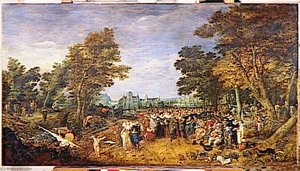
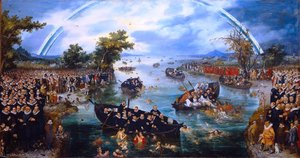
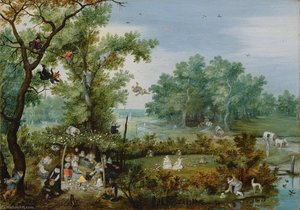
A pivotal moment in Adriaen Pietersz van de Venne’s artistic development arrived with his relocation to Middelburg in 1614. Here, he encountered the profound influence of Jan and Pieter Brueghel the Elder—artists who revolutionized genre painting by depicting peasant life with unflinching realism and imbued their canvases with moral lessons. The brothers' distinctive style—characterized by earthy palettes, detailed depictions of rural landscapes, and satirical portrayals of human folly—resonated deeply with Van de Venne’s sensibilities, inspiring him to adopt a similar approach in his own work. It was during this period that he created Fishing for Souls, arguably his most ambitious and symbolically laden masterpiece. This painting exemplifies Van de Venne's ability to translate complex theological and political ideas into compelling visual narratives—a hallmark of the Dutch Golden Age’s artistic tradition. The depiction of fishermen casting nets towards souls represents a powerful commentary on the religious divisions plaguing Europe during the Eighty Years’ War, skillfully blending allegory with meticulous observation of human behavior. This early work solidified Van de Venne's reputation as an artist capable of conveying profound messages through evocative imagery—a legacy that would endure throughout his lifetime.
A Master of Grisailles and Literary Collaboration
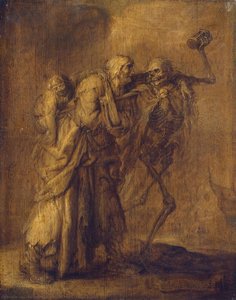
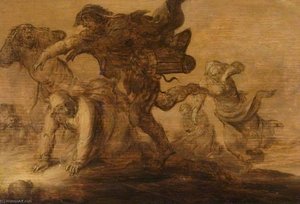
Adriaen Pietersz van de Venne distinguished himself as a virtuoso of grisailles—monochrome paintings executed in shades of gray—a technique favored by artists like Rembrandt and Rubens for its ability to convey emotion and nuance without the distraction of color. He mastered this demanding medium, producing numerous grisaille portraits and decorative panels that showcased his exceptional artistic skill. These works demonstrate Van de Venne’s meticulous attention to detail and his profound understanding of tonal shading—essential elements in achieving a sense of depth and realism. Beyond painting, he excelled as a printmaker and book illustrator, collaborating closely with Jacob Cats—a celebrated Dutch poet and playwright—to produce visually striking editions of Cats' works. This partnership exemplifies the interconnectedness of artistic disciplines during the Golden Age, where writers and artists often engaged in reciprocal influences. Van de Venne’s illustrations captured the spirit of his time—reflecting both intellectual sophistication and a keen awareness of social realities—further enhancing the impact of Cats’ poetry.
Later Years and Artistic Recognition
By 1625, Adriaen Pietersz van de Venne established himself in The Hague, where he continued to produce significant artistic achievements until his death in 1662. He became a respected member of the Guild of Saint Luke—a prestigious institution that governed artistic practice and ensured standards of excellence—serving as its dean from 1637 onwards. This position underscored his standing within the art world and allowed him to advocate for the interests of fellow artists, demonstrating his commitment to upholding professional traditions. He remained active as a printmaker and book illustrator throughout his life, producing works that celebrated Dutch culture and intellectual heritage. Notably, he was one of the founding members of The Hague painters’ confraternity, “Pictura schilders confrerie,” which aimed at elevating the status of artists and fostering a more academic approach to artistic training—a testament to Van de Venne's vision for the future of art in Holland. His enduring legacy rests on his masterful paintings, his innovative printmaking techniques, and his unwavering dedication to upholding artistic standards—solidifying his place as one of the most influential figures of the Dutch Golden Age.