Меню

Альдред Харви Мур

Alfred Harvey Moore: A Painter of Coastal Tranquility

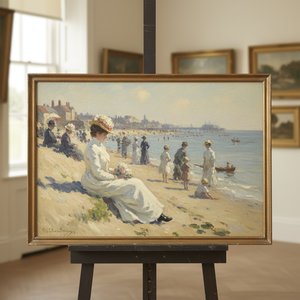
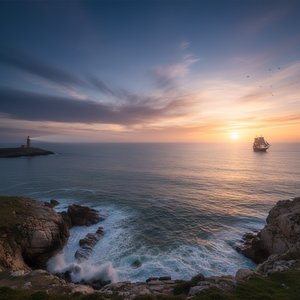
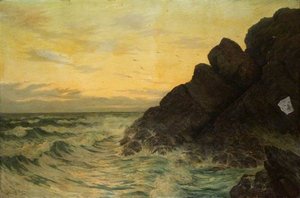
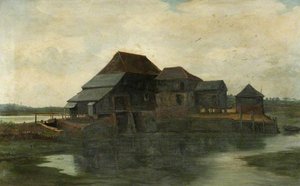
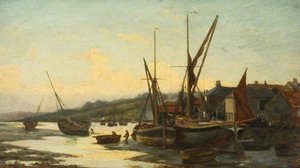
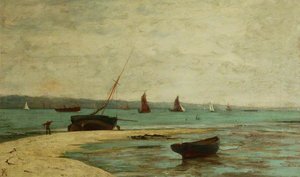
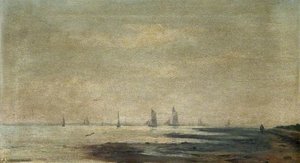
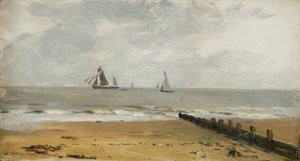
Alfred Harvey Moore (born circa 1879 – living) emerged as a prominent British seascape artist during the late Victorian and Edwardian eras, capturing the serene beauty of the English coastline with meticulous detail and imbued with a palpable sense of nostalgia. While biographical information remains somewhat sparse, his artistic legacy speaks volumes about his dedication to portraying the natural world and reflecting the spirit of his time. Moore’s formative years were spent in Liverpool, where he honed his artistic skills through self-study and observation—a practice that would profoundly shape his distinctive style. Unlike many artists of his generation who pursued formal training, Moore cultivated a deeply personal approach to artmaking, prioritizing direct engagement with the subject matter rather than academic conventions. This commitment to realism is evident in his canvases, which depict scenes of harbors, beaches, and estuaries with remarkable accuracy—down to subtle variations in light and texture. He meticulously rendered reflections on water surfaces and the interplay of sunlight and shadow, demonstrating a profound understanding of atmospheric perspective. His artistic influences can be traced back to Impressionism and Luminism, movements that championed capturing fleeting moments of atmospheric illumination and emphasizing tonal gradations over sharp outlines. Artists such as Frederic Church and George Inness served as models for Moore’s technique, inspiring him to adopt a painterly style characterized by soft brushstrokes and muted colors. Particularly noteworthy was Church's monumental landscapes—Moore absorbed the Luminist ethos, prioritizing tonal harmony and conveying an emotional response to the grandeur of nature. This resulted in canvases that exude tranquility and evoke memories of idyllic coastal summers. Moore gained considerable recognition during his lifetime, exhibiting extensively in London and establishing himself as a respected member of the Watermill Art Gallery. His paintings resonated deeply with audiences who appreciated their understated elegance and evocative portrayal of coastal life—a genre particularly favored by collectors seeking depictions of serene landscapes reminiscent of Victorian sensibilities. Notable works include “The Old Water Mill,” “Leigh,” and “The Thames off Yantlett Creek, Kent,” each showcasing his masterful command of tonal painting and capturing the essence of a bygone era. These paintings are celebrated for their luminous quality and ability to transport viewers back to a time of quiet contemplation amidst breathtaking scenery. His contribution to British art history lies in his unwavering commitment to portraying the natural world with honesty and sensitivity—a stance that aligns perfectly with the broader artistic currents of his time. Alfred Harvey Moore’s legacy endures not only through his stunning visual creations but also as an exemplar of artistic integrity and a testament to the enduring power of landscape painting to inspire awe and contemplation. He remains a significant figure in Watermill Art Gallery's history, cementing his place among Britain’s most beloved seascape artists.

Тест по искусству

В каждом вопросе только один правильный ответ.

Вопрос 1:
Где родился Альфред Гарвей Мур?
Вопрос 2:
Каким был стиль живописи Альфреда Гарвея Мура?
Вопрос 3:
Какие художники вдохновили Альфреда Гарвея Мура?
Вопрос 4:
В какой организации был активен Альфред Гарвей Мур?
Вопрос 5:
Какие музеи хранят работы Альфреда Гарвея Мура?