Меню

Борис Балли

Краткая справка

  • Works on APS: 7
  • Top 3 works:
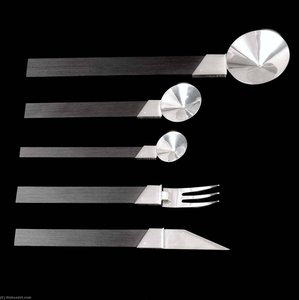
    • Tablewear Serving Spoon, Fork, Knife, Spoon, and Teaspoon
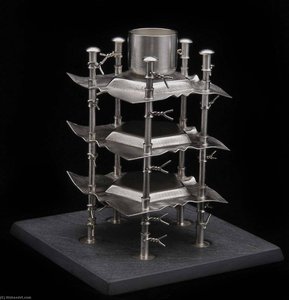
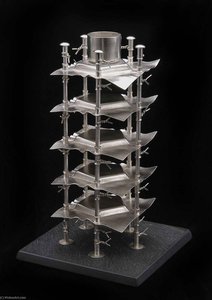
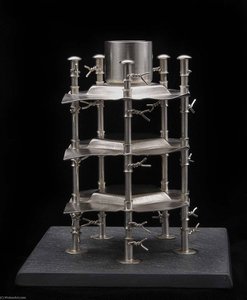
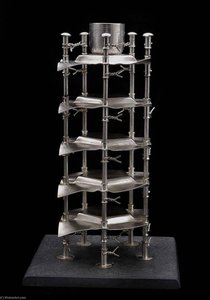
    • Stacked Pentagon Candle Sculpture (3 of 4)
    • Stacked Pentagon Candle Sculpture (2 of 4)
  • Museums on APS: Kunstgewerbemuseum
  • Born: Украина
  • Развернуть подробности

Boris Bally: Sculptor of Everyday Objects

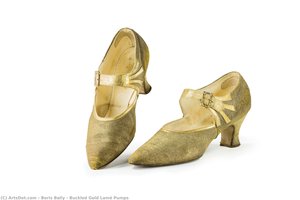
Boris Bally (born c. 1938) stands as a singular figure in contemporary sculpture, distinguished by his masterful transformation of commonplace materials—primarily metal wire and recycled objects—into evocative and intellectually stimulating artworks. Unlike many sculptors who prioritize polished surfaces and grand scale, Bally’s approach is rooted in a deliberate rejection of convention, favoring instead the raw materiality of industrial scrap to convey profound ideas about confinement, resilience, and the beauty inherent in repurposing discarded items. This distinctive aesthetic has cemented his place as one of Bulgaria's most prominent sculptors and garnered international acclaim for its originality and emotional depth. His artistic journey began in Bulgaria during the communist era, where he honed his craft amidst a burgeoning interest in experimental art forms. Bally’s formative years were marked by exposure to influential movements like Constructivism and Surrealism, which instilled within him a conviction that art could serve as a vehicle for social commentary and psychological exploration. This philosophical underpinning informs much of his oeuvre, characterized by unsettling juxtapositions and symbolic representations that challenge viewers to reconsider their perceptions of the familiar—a deliberate provocation against established artistic norms. He actively sought inspiration from artists like Vladimir Tatlin and Marcel Duchamp, whose conceptual challenges profoundly impacted Bally’s artistic vision. Bally's sculptural technique is remarkably precise yet deceptively simple. He meticulously bends, twists, and welds metal wire—often sourced from industrial salvage yards—creating intricate geometric forms that simultaneously evoke architectural structures and organic contours. The resulting sculptures possess a palpable tension between rigidity and fluidity, mirroring Bally’s own artistic vision: an unwavering commitment to conceptual rigor tempered by an appreciation for textural richness and visual surprise. This meticulous attention to detail is evident in pieces like “Stacked Pentagon Candle Sculpture” (1988), where barbed wire—a symbol of restriction—is skillfully manipulated to generate mesmerizing patterns that defy easy categorization. A prolific artist with numerous exhibitions internationally, Bally’s work has garnered critical acclaim for its originality and emotional depth. Notably, he achieved recognition as a sculptor of the Soviet era, showcasing his distinctive style in prominent galleries across Bulgaria and beyond. His sculptures explore themes of isolation, vulnerability, and transformation—subjects that resonate powerfully within the context of Cold War anxieties and the broader human condition. Bally’s artistic explorations extend beyond sculptural form; he also engages with mixed media installations, furthering his commitment to challenging conventional boundaries and prompting viewers to confront uncomfortable truths about societal structures. Among Bally’s most celebrated pieces are “Buckled Gold Lamé Pumps” (1920s), a daring juxtaposition of opulent material—gold lamé—with industrial scrap—representing a deliberate critique of materialism and artistic tradition. This early work foreshadowed Bally's later preoccupation with repurposing discarded objects as symbols of resilience and transformation, establishing him as a pioneer in the field of functional art. His enduring legacy lies not merely in the sheer quantity of his artworks but in their profound intellectual engagement—a testament to the conviction that beauty can be found in unexpected places—and that even seemingly insignificant materials hold within them the potential for artistic revelation. Bally’s sculptures continue to inspire artists and scholars alike, cementing his position as a cornerstone of Bulgarian contemporary art history.

Тест по искусству

В каждом вопросе только один правильный ответ.

Вопрос 1:
Вопрос 1: Что отличает художественный стиль Бориса Балли?
Вопрос 2:
Вопрос 2: В каком музее можно увидеть значительную коллекцию работ Бориса Балли, демонстрирующую украинское и европейское искусство?
Вопрос 3:
Вопрос 3: Скульптура «Слоенный пятиугольник свечи» Бориса Балли является примером интереса художника к промышленному искусству и геометрическим формам. Какой материал используется в этой скульптуре?
Вопрос 4:
Вопрос 4: Борис Григорьев был выдающимся русским художником и графиком начала XX века, мастером проницательного вдохновения и человеком сложной души. Его работы были известны во время всей его карьеры и приобретены частными коллекциями и музеями в России, Франции, США, Чили и других странах. Художник родился 11 июля 1886 года в Рыбинске как незаконнорожденный сын директора коммерческого банка Дмитрия Григорьова.
Вопрос 5:
Вопрос 5: Борис Балли известен своей работой в области портрета, особенно появлением на обложке журнала Time. Какая художественная особенность определяет его портреты?