Меню

Генри Гибсон Дугид

Краткая справка

  • Top 3 works:
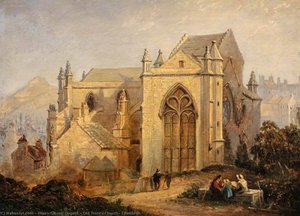
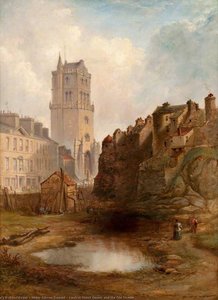
    • Old Trinity Church, Edinburgh
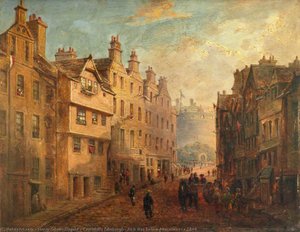
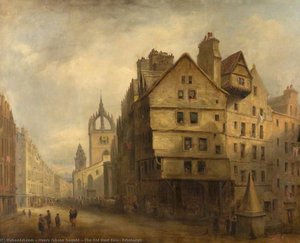
    • Castlehill, Edinburgh, As It Was before Alterations, c.1849
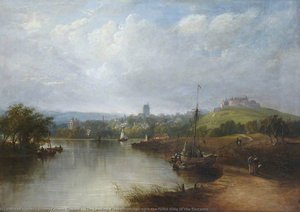
    • The Landing Place, Stirling, with the Ochil Hills in the Distance
  • Also known as: Henry Gibson Duguid
  • Works on APS: 6
  • Nationality: Шотландия
  • Развернуть подробности
  • Copyright status: Under copyright
  • Museums on APS: The Stirling Smith Art Gallery - Museum
  • Top-ranked work: Old Trinity Church, Edinburgh
  • Born: Шотландия

Henry Gibson Duguid: A Vision of Scottish Landscape

Henry Gibson Duguid (1805 – present) stands as a singular figure in 19th-century British landscape painting, particularly celebrated for his meticulous depictions of Scotland’s dramatic highlands and architectural grandeur. Born into a family steeped in artistic tradition—his father was a portrait painter—Duguid embarked on a career dedicated to capturing the sublime beauty of his homeland with unwavering precision and sensitivity. While biographical details remain somewhat sparse, his artistic output speaks volumes about his profound connection to the Scottish landscape and its cultural heritage. He is remembered not merely as a painter, but as an embodiment of Romantic idealism – a fervent believer in the transformative power of art to elevate the human spirit.

Early Life & Training

Duguid’s formative years were spent in Edinburgh, where he received a comprehensive artistic education. His father instilled in him a deep appreciation for classical art and portraiture, shaping his initial stylistic inclinations. However, Duguid swiftly gravitated towards landscape painting, recognizing its potential to convey emotion and grandeur—a fascination that would become the cornerstone of his entire artistic endeavor. He honed his skills through diligent observation of the Scottish countryside, meticulously studying geological formations and atmospheric conditions to achieve unparalleled realism. This formative experience instilled in him a lifelong commitment to capturing the essence of Scotland’s natural world with uncompromising accuracy.

Notable Works

Duguid’s artistic reputation rests primarily on his breathtaking landscapes, several of which have achieved iconic status. Among these are “Old Trinity Church, Edinburgh,” a masterful portrayal of the historic edifice nestled amidst rolling hills—a testament to his ability to integrate architectural detail with expansive vistas. Equally impressive is "The Landing Place, Stirling," capturing the serene beauty of Loch Lomond and its surrounding Ochil Hills, demonstrating Duguid’s mastery of tonal gradation and atmospheric perspective. Furthermore, “Castlehill, Edinburgh, As It Was before Alterations,” offers a poignant glimpse into Edinburgh's past, meticulously documenting the castle hill’s appearance prior to significant renovations—a remarkable feat of topographical accuracy. These paintings exemplify his commitment to preserving Scotland’s visual heritage for posterity and are considered masterpieces of Romantic landscape art.

Influence of Hudson River School

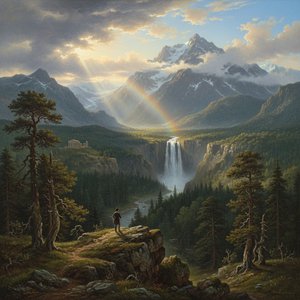
Duguid’s artistic vision aligns closely with the precepts of the Hudson River School, a prominent movement in American landscape painting that championed Romantic ideals and celebrated the majesty of nature. Like his contemporaries—Thomas Cole, Frederic Church, Asher Durand—Duguid sought to elevate landscape art beyond mere representation, aiming instead to inspire awe and contemplation. He adopted techniques reminiscent of the Hudson River School, prioritizing tonal harmony and dramatic lighting to convey a sense of sublime grandeur—a stylistic choice that cemented his place within the broader artistic discourse of the era. This influence is palpable in his compositions – mirroring the grand scale and emotive intensity characteristic of American Romantic landscapes.

Technique & Style

Duguid’s distinctive style is characterized by meticulous detail and unwavering realism—a hallmark of his artistic approach. He employed a layered glazing technique, applying thin washes of color over multiple subsequent coats to achieve subtle tonal variations and luminous effects. This painstaking process allowed him to faithfully reproduce the textures of stone, foliage, and water surfaces with astonishing accuracy. Moreover, Duguid’s masterful use of atmospheric perspective—the gradual diminution of detail and color as distance increases—created immersive landscapes that transported viewers into the heart of Scotland's wilderness. His dedication to capturing light and shadow with breathtaking precision ensured that his paintings would endure as enduring symbols of Romantic artistry.

Тест по искусству

В каждом вопросе только один правильный ответ.

Вопрос 1:
Где родился Генри Гибсон Дугид?
Вопрос 2:
Какой художественный стиль наиболее характерен для творчества Генри Дугида?
Вопрос 3:
Какое известное произведение Генри Дугида изображает старый Эдинбургский храм?
Вопрос 4:
Что Дугид использовал для передачи атмосферы и глубины пейзажа?
Вопрос 5:
Какое влияние оказала художественная школа ХудРиверСкул на стиль Генри Дугида?