Меню

Геррит Вилем Диссельхоф

1866 - 1924

Краткая справка

  • Creative periods:
    • mature period
    • late medieval
  • Also known as: Диссельхоф
  • Topics explored:
    • underwater scene
    • marine life
    • fish
    • dutch art style
    • aquarium
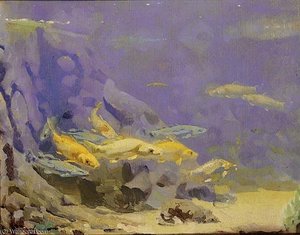
  • Top-ranked work: Fish in an Aquarium, Gerrit Willem Dijsselhof, 1890 - 1924
  • Died: 1924
  • Corpus themes: aquarium series focus
  • Copyright status: Public domain
  • Развернуть подробности
  • Nationality: Нидерланды
  • Art period: — XIX век
  • Born: 1866, Воллеркерк, Нидерланды
  • Works on APS: 41
  • Lifespan: 58 years
  • Movements:
    • arts & crafts
    • impressionism
  • Top 3 works:
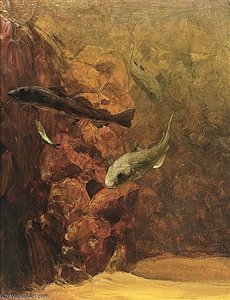
    • Fish in an Aquarium, Gerrit Willem Dijsselhof, 1890 - 1924
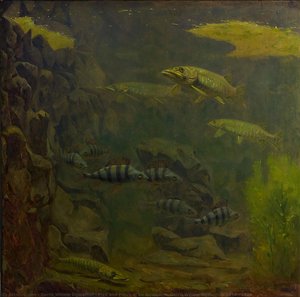
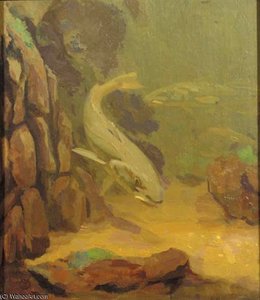
    • Pike and Perch in an Aquaruim, Gerrit Willem Dijsselhof, 1910 - 1920
    • Under The Sea

A Life Submerged in Tranquility: The World of Gerrit Willem Dijsselhof

Born in the quiet Dutch countryside of Vollerkerk in 1866, Gerrit Willem Dijsselhof cultivated a deep and abiding connection to the natural world—a sensibility that would profoundly shape his artistic vision. His early years, spent immersed in the landscapes of the Netherlands, instilled within him a reverence for organic forms and subtle atmospheric effects. This foundational appreciation led him first to the Art Academy in The Hague, but it was his relocation to Amsterdam in 1884, and enrollment at the Arts and Crafts School, that truly set the course for his creative journey. It was here, amidst the burgeoning ideals of craftsmanship and aesthetic unity, that Dijsselhof discovered his unique artistic voice.

The Allure of Aqua: Inspiration from Natura Artis Magistra

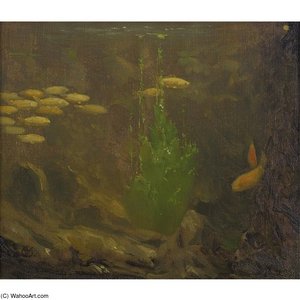
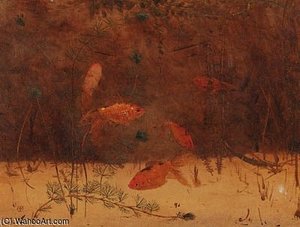
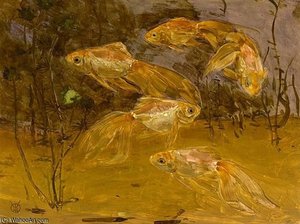
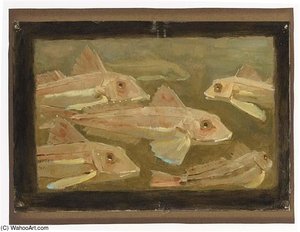
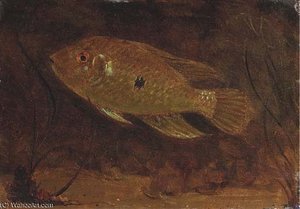
Dijsselhof’s artistic path took a distinctive turn with his discovery of Amsterdam’s renowned zoo and aquarium, Natura Artis Magistra, which had opened its doors just a decade prior. The mesmerizing world beneath the water's surface captivated him utterly. He became a frequent visitor, spending countless hours sketching and painting the fish within its glass walls. This wasn’t merely observational study; it was an immersion into a realm of ethereal beauty and tranquil movement. The aquarium provided not only subject matter but also a philosophical framework for his art—a microcosm reflecting the delicate balance and inherent harmony of nature. He began to translate this fascination onto canvas, initially employing delicate watercolor techniques that perfectly captured the play of light and color within the aquatic environment. Later, he expanded his repertoire to include oil painting, allowing for richer textures and more nuanced atmospheric effects. Pike and Perch in an Aquarium, and Gold- and Silverfish in an Aquarium stand as testaments to this enduring fascination, showcasing not just the physical forms of the fish but also their behavior and the serene ambiance of their underwater world. He was particularly moved by the meticulous care taken in maintaining the aquarium’s ecosystem—a testament to the Arts and Crafts movement's belief in integrating art into everyday life.

Arts & Crafts Ideals and a Versatile Talent

Dijsselhof’s artistic development was deeply intertwined with the principles of the Arts and Crafts movement. This philosophy, which championed craftsmanship, natural forms, and a rejection of industrial mass production, resonated profoundly with his sensibilities. He embraced the idea that art should be integrated into everyday life, and this belief led him to expand his creative pursuits beyond painting. From 1897 onwards, he collaborated with the firm E.J. van Wisselingh & Co., Amsterdam, designing furniture that reflected the same aesthetic principles as his paintings—organic forms, meticulous craftsmanship, and a harmonious blend of function and beauty. This versatility demonstrated Dijsselhof’s remarkable talent and his commitment to creating a holistic artistic vision. His designs for textiles and wallpaper further solidified his reputation as a master craftsman who sought to elevate the decorative arts. Notably, he undertook the ambitious project of illustrating Walter Crane's *Claims for Decorative Art*, collaborating closely with Jan Veth—a partnership that exemplifies the spirit of innovation and intellectual exchange characteristic of the Arts and Crafts movement.

Notable Achievements and Legacy

Dijsselhof’s artistic legacy resides in his ability to capture the essence of Dutch landscapes and aquatic life with unparalleled sensitivity and grace. His paintings, characterized by muted color palettes and meticulous attention to detail, evoke a profound sense of tranquility and contemplation—qualities that continue to resonate with viewers today. He achieved considerable renown as a designer of furniture, particularly the “Dijsselhof Room” created for Dr. W. van Hoorn—a space designed according to Arts and Crafts ideals and preserved as an exemplar of decorative art. His contribution lies in successfully blending meticulous naturalistic observation with an aesthetic deeply rooted in craftsmanship, creating artworks that are both visually captivating and emotionally resonant. Gerrit Willem Dijsselhof passed away peacefully in Overveen in 1924, leaving behind a rich artistic heritage—a testament to the enduring power of beauty, harmony, and dedication to traditional techniques.

Тест по искусству

В каждом вопросе только один правильный ответ.

Вопрос 1:
Вопрос 1: Какое художественное направление оказало наибольшее влияние на творчество Гиттерда Диссельхофа?
Вопрос 2:
Вопрос 2: Какую тему особенно любил изображать Гиттерда Диссельхофа в своих картинах?
Вопрос 3:
Вопрос 3: Помимо живописи, какой другой вид искусства занимался Гиттерда Диссельхофа?
Вопрос 4:
Вопрос 4: Где Диссельхофу особенно нравилось проводить время и наблюдать за жизнью животных?
Вопрос 5:
Вопрос 5: Кто был супругом Гиттерда Диссельхофа и работал в области текстильного искусства?