George Faulkner Wetherbee: A Painter of Romantic Landscapes
George Faulkner Wetherbee (1851–1920), born in Cincinnati, Ohio, was a British landscape painter who achieved considerable acclaim during the Victorian era. Primarily active in London and Cincinnati, his artistic vision centered on capturing the sublime beauty of nature with meticulous detail and expressive brushwork—a hallmark of Romanticism. Wetherbee’s oeuvre reflects an enduring fascination with pastoral scenes and evocative atmospheric effects, cementing his place as a significant contributor to British art history.
His early life was marked by a predisposition for artistic pursuits; he began his formal training at the Cincinnati Art Academy before embarking on comprehensive studies at the Royal Academy of Arts in London. This formative period instilled in him a disciplined approach to observation and representation—a cornerstone of his subsequent artistic endeavors, shaping his unwavering dedication to portraying the natural world with profound sensitivity and precision.
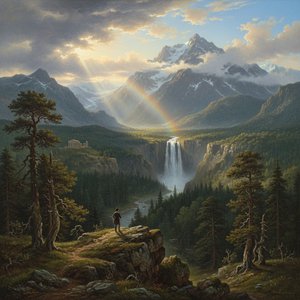
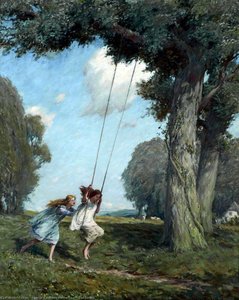
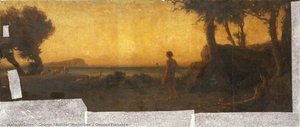
Wetherbee’s distinctive style is instantly recognizable for its bold impasto technique—the deliberate application of paint thickly onto the canvas—resulting in textured surfaces that convey remarkable depth and luminosity. He skillfully utilized ochre hues and muted tones to depict landscapes bathed in soft light, prioritizing atmospheric perspective and capturing subtle nuances of color that would transport viewers directly into the heart of his envisioned scenes. This masterful manipulation of tonal harmony and compositional balance is evident throughout his entire body of work.
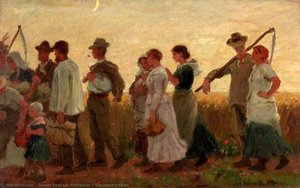
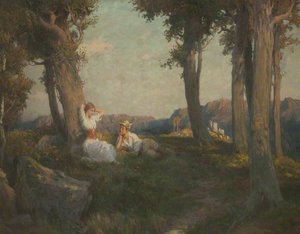
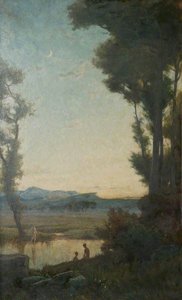
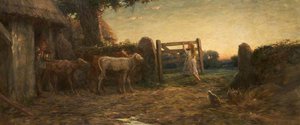
Among Wetherbee’s most celebrated paintings are “The Harvest Moon,” “Oenone Forsaken,” and “Dawn at the Gate.” Each piece exemplifies Wetherbee’s mastery of landscape painting, demonstrating a profound understanding of tonal harmony and compositional balance. Particularly noteworthy is "Oenone Forsaken," which utilizes expressive brushstrokes to convey melancholy and serenity amidst a tranquil rural setting—a testament to his ability to evoke powerful emotions through visual artistry. His artistic inspirations stemmed largely from the Romantic movement’s fervent embrace of emotion, imagination, and reverence for nature; he drew considerable inspiration from the monumental canvases of JMW Turner and John Constable, artists who championed atmospheric grandeur and conveyed profound spiritual contemplation within their landscapes.
Recognized during his lifetime for his artistic talent and unwavering commitment to portraying the natural world with sensitivity and precision, Wetherbee was elected into the Royal Institute of Painters in Water Colours and Oil Paints in 1897—a prestigious honor reflecting his standing within the British art community. His paintings continue to resonate with collectors and enthusiasts today, representing a timeless celebration of pastoral beauty and artistic excellence. He died peacefully on July 23rd, 1920, and was laid to rest at Highgate Cemetery—a final resting place that honors his legacy as one of Britain’s foremost Romantic landscape painters.
Source: Wikipedia