Johan Mari Henri Ten Kate: A Dutch Romantic Landscape Painter
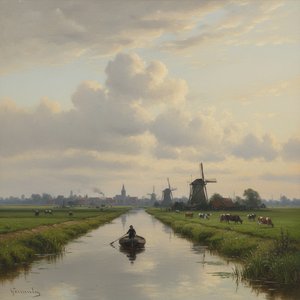
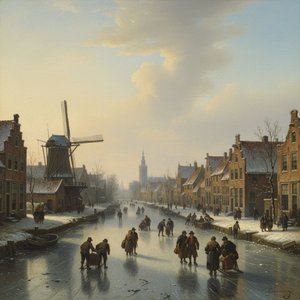
Johan Mari Henri Ten Kate (1859 – 1896) emerged as a prominent figure in the Dutch Romantic landscape movement, captivating audiences with his masterful depictions of serene Dutch countryside and evocative portrayals of human figures amidst natural beauty. Though overshadowed by contemporaries like Israëls and Maris during his lifetime, Ten Kate’s distinctive style—characterized by luminous color palettes and meticulous attention to detail—continues to resonate with collectors and art historians today.
Early Life & Artistic Training:
Born in Amsterdam in 1859, Ten Kate received a formal artistic education at the Koninklijke Academie voor Beeldende Künsten (Royal Academy of Fine Arts) in Antwerp, Belgium. His instructors included Willem Maris and Anton Mauve, influential figures who championed Impressionistic techniques and encouraged students to capture fleeting moments of light and atmosphere—a crucial element shaping Ten Kate’s artistic vision. He diligently studied under Maris and Mauve, absorbing their innovative approaches to color and composition, which would profoundly influence his subsequent work.
A Distinctive Romantic Style:
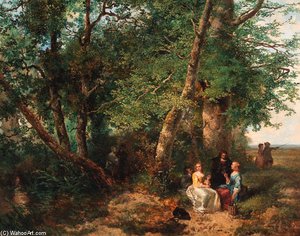
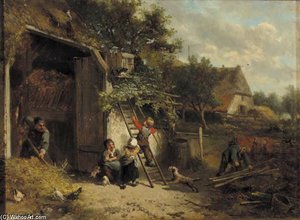
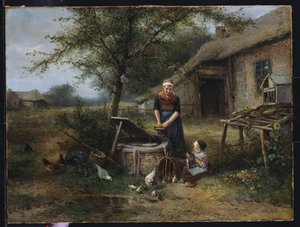
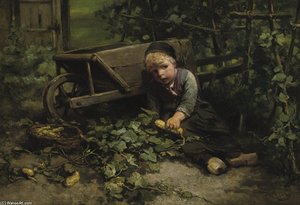
Ten Kate's oeuvre distinguishes itself from the prevailing trends of his era through a remarkable sensitivity to color and texture. Unlike many artists who favored muted tones, he embraced vibrant hues—particularly blues and greens—to convey the grandeur and tranquility of Dutch landscapes. His brushstrokes were deliberate yet fluid, layering pigments with painstaking precision to achieve an unparalleled sense of realism while simultaneously imbuing his canvases with emotional depth. He skillfully rendered atmospheric effects like mist and haze, creating scenes that felt alive with movement and imbued with a palpable feeling for the natural world—a characteristic hallmark of Romantic painting. This meticulous technique allowed him to convey not merely visual accuracy but also psychological resonance, inviting viewers into contemplative communion with nature’s majesty.
Notable Landscapes:
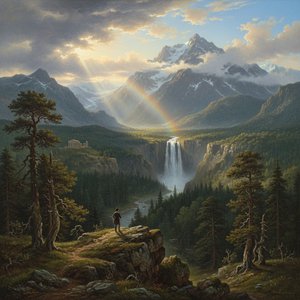
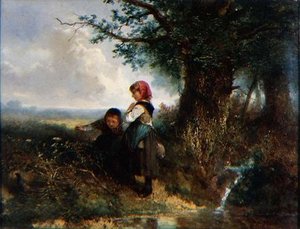
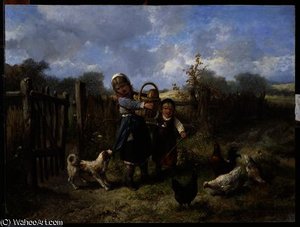
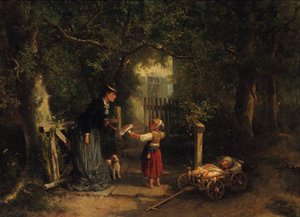
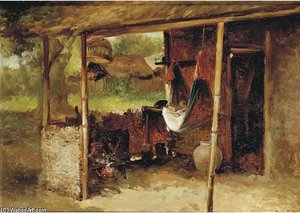
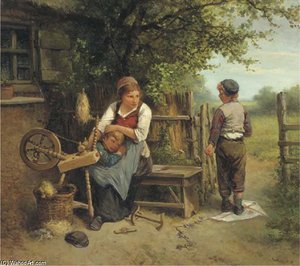
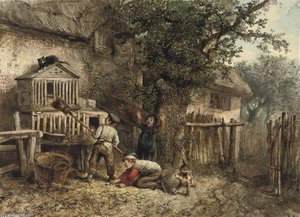
Among Ten Kate’s most celebrated works are “Kite Flying” (1883) and “Seeking Shelter,” both capturing quintessential Dutch vistas. These paintings exemplify his ability to convey not merely visual accuracy but also psychological resonance—the viewer is transported into the quiet contemplation of a breezy afternoon or the comforting embrace of a sheltered grove. The artist’s masterful use of color and light captures the ethereal beauty of these landscapes, reflecting the Romantic preoccupation with sublime grandeur and emotional intensity. “Kite Flying” depicts a young boy soaring aloft on a kite string against a backdrop of azure sky and rolling hills—a scene brimming with youthful exuberance and symbolic representation of aspiration. Similarly, "Seeking Shelter" portrays a solitary figure nestled beneath the protective canopy of an ancient oak tree, symbolizing resilience and connection to the enduring rhythms of the natural world.
Influences & Artistic Development:
Ten Kate’s artistic trajectory was significantly shaped by the burgeoning Impressionist movement, spearheaded by Claude Monet and Pierre-Auguste Renoir. Recognizing the transformative potential of capturing fleeting moments of light and color—a core principle championed by Impressionists—he adopted similar techniques into his own distinctive style. He meticulously observed the interplay between sunlight and shadow, experimenting with broken brushstrokes to achieve an unprecedented level of luminosity and atmospheric depth. Furthermore, he drew inspiration from Romantic painters like Casper David Friedrich and Eugène Delacroix, whose emphasis on sublime landscapes and dramatic emotional narratives instilled in him a profound appreciation for conveying powerful feelings through visual art—a legacy that continues to inform his artistic vision.
Legacy & Historical Significance:
Despite facing relative obscurity during his lifetime, Johan Mari Henri Ten Kate’s enduring influence extends beyond the confines of his own era. His canvases continue to captivate viewers with their luminous color palettes and masterful rendering of atmospheric effects—a testament to the timeless beauty of Romantic landscape painting. Today, Ten Kate's work is appreciated for its understated elegance and profound connection to the natural world, securing his position as an important contributor to Dutch artistic history and a poignant reminder of the Romantic ideal’s fascination with capturing the sublime grandeur of nature.