Patrizio di Massimo: A Visionary Bridging Tradition and Innovation
Patrizio di Massimo (born 1983, Jesi, Italy) represents a significant voice in the landscape of contemporary Italian art—a figure distinguished by his singular approach to figurative painting. His artistic vision seamlessly blends the rigor of movements like Return to Order and New Objectivity with an unmistakable personal aesthetic, resulting in works that resonate with both intellectual depth and emotional intensity. His journey began in Marche, where he cultivated his craft at the Brera Academy before embarking on postgraduate studies at Slade School of Fine Art in London, establishing himself within a dynamic international artistic community.
Early Influences: Seeds of Artistic Sensibility
Massimo’s formative years were profoundly shaped by encounters with the humanist ideals of Renaissance Italy and the stylistic precision championed by European avant-garde traditions. These influences instilled in him an unwavering fascination for meticulous detail—a characteristic that would become a cornerstone of his artistic practice—coupled with a deep engagement with psychological exploration. The legacy of artists like Domenico Ghirlandaio, renowned for his monumental frescoes depicting contemporary life and imbued with humanist values, served as an enduring inspiration. Similarly, the stylistic boldness of European avant-garde movements instilled in Massimo a willingness to challenge established conventions and embrace perspectives that defied easy categorization.
The Slade School Years: Experimentation and Collaborative Spirit
Studying at Slade School of Fine Art in London proved invaluable for Massimo’s artistic development. The institution fostered an environment conducive to experimentation, encouraging him to push boundaries and explore unconventional techniques—a crucial step toward forging his distinctive artistic language. Collaborative projects honed his ability to engage with diverse viewpoints and contributed to a broader understanding of the creative process. This experience instilled in him a spirit of intellectual curiosity that would continue to guide his artistic endeavors throughout his career.
A Distinctive Artistic Language: Glazing Technique and Psychological Portraiture
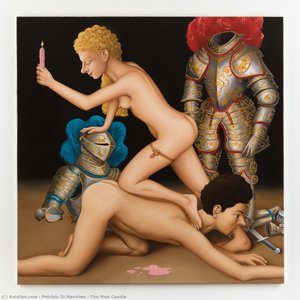
Massimo’s artistic language is characterized by several key elements, foremost among them being the glazing technique—a painstaking method involving layering translucent pigments onto successive coats of paint. This meticulous process yields surfaces that capture subtle nuances of color and texture with remarkable fidelity, mirroring the spirit of Return to Order and elevating painting beyond mere visual representation. It demands patience and observation, reflecting Massimo’s unwavering commitment to artistic precision. Furthermore, his portraits delve into the complexities of human emotion and identity—capturing subjects with an arresting blend of realism and theatricality. He frequently employs self-portraiture, presenting himself in disguise as a deliberate exploration of themes such as power, vulnerability, and the elusive nature of perception. Like Giorgio Ghirlandaio’s masterful depictions of Florentine society, Massimo strives to convey not just likeness but also psychological truth.
Achievements and Recognition: Exhibitions Across Europe
Massimo's artistic reputation has gained considerable momentum through appearances in prestigious galleries and museums across Europe. Notably, his exhibitions at T293 Gallery, Rodolphe Janssen, Cassina Projects, Basement Roma, Certosa di San Martino, Cathedral, Santa Maria di Campagna and Stedelijk Museum have garnered critical acclaim—a testament to the enduring appeal of his work. His images were featured prominently in publications like Artforum and Vogue Italia, solidifying his position as one of Italy’s most respected figurative painters. Collaborations with filmmakers like Vincenzo De Bellis (“Il Mostro di Firenze”) underscore his versatility and engagement with broader cultural narratives. He participated in international events such as Frieze and showcased his artistic vision at Casa Museo Massimiliano e Giulia Vigoni, demonstrating a commitment to disseminating his ideas and fostering dialogue within the art world.
Legacy: Confronting Societal Norms Through Art
Patrizio di Massimo’s contribution to contemporary art lies not merely in his stylistic innovations but also in his courageous willingness to confront challenging themes—particularly masculinity and queer identity—with honesty and sensitivity. His paintings and video installations engage with profound conceptual questions concerning societal expectations and invite viewers to contemplate notions of desire, repression, and liberation—a characteristic that aligns perfectly with the spirit of New Objectivity’s critical engagement with artistic conventions. Like Michelangelo Buonarroti's exploration of human anatomy and emotion, Massimo strives to provoke contemplation and inspire a deeper understanding of the human condition. His ongoing artistic endeavors continue to resonate with audiences worldwide, cementing his place as a visionary artist shaping the discourse surrounding identity and representation in the 21st century.