



A Bastion of British Resolve: The Soul of the Ministry of Defence
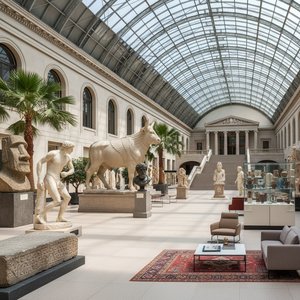
Nestled in the heart of London, a stone’s throw from the Houses of and Banqueting House, lies a repository not of artistic masterpieces in the traditional sense, but of a different kind of creation – the meticulously crafted narrative of British defence. The Ministry of Defence (MOD) Museum isn't simply a display of weaponry and uniforms; it is an immersive journey through centuries of strategic thinking, courageous action, and the evolving relationship between a nation and its armed forces. Housed within the imposing Grade I listed Main Building, designed by E. Vincent Harris and constructed over decades beginning in 1939, the museum itself stands as a testament to enduring strength and architectural ambition. The very foundations of this building echo with history, built upon part of the site once occupied by the Palace of Whitehall, the former residence of English monarchs. Its grandeur speaks volumes about Britain’s unwavering commitment to safeguarding its sovereignty throughout time—a visual embodiment of resilience that immediately captivates visitors.
Stepping inside is akin to entering a living chronicle of British military prowess. The collection isn't presented as static displays but rather unfolds as a series of compelling stories, where the gleam of historic swords and the intricate textures of meticulously preserved uniforms serve as tactile links to the past. Visitors can trace the evolution of land, sea, and air power, witnessing how innovation and adaptation have consistently shaped Britain’s defensive capabilities. Interactive exhibits breathe life into these narratives, allowing guests to engage with the past in a dynamic way. Imagine exploring the tactical challenges faced by naval commanders during the Napoleonic Wars or understanding the intricacies of aerial combat through immersive simulations—experiences designed not just to inform but to inspire contemplation on the human element within military history. The museum’s curators skillfully weave together archival documents, detailed reconstructions, and multimedia presentations to create a holistic picture of Britain's defense heritage.
Architectural Grandeur and Hidden Histories
Beyond the exhibits themselves, the building’s architecture adds another layer to the visitor experience, offering a profound sense of continuity. A significant refurbishment between 2000 and 2004 ensured that this historic landmark remained both functional and a fitting tribute to its purpose. Intriguingly, preserved rooms from Pembroke House, Cromwell House, and Cadogan House have been seamlessly integrated into the building’s fabric, now serving as elegant conference spaces – a subtle reminder of the continuity between past governance and present operations. These spaces offer a glimpse into the lives of those who shaped defence policy through the ages, adding an intimate dimension to the museum's grand scale. The architectural design itself reflects Britain’s enduring spirit—a deliberate fusion of traditional grandeur with modern practicality that underscores the institution’s role as both guardian of heritage and facilitator of progress.
What truly distinguishes the MOD Museum is its willingness to confront challenging aspects of British defence history, moving beyond a sanitized version of events to delve into controversial episodes. Most notably, the museum addresses the secret germ warfare tests conducted between 1940 and 1979 with remarkable transparency and critical analysis. These experiments, involving the release of bacteria and chemicals over populated areas as simulations, represent a dark chapter that the museum explores to prompt deeper reflection. This commitment to presenting a complete picture – acknowledging both triumphs and failures – is what elevates the MOD Museum beyond a simple collection of military hardware. It is a space for learning, reflection, and a deeper understanding of the complexities inherent in national security, where the curators' meticulous attention to detail extends beyond the artifacts themselves to contextualize events within broader social and political landscapes.
Located in Central London, the MOD Museum benefits from its prominent position—easily accessible by public transport and surrounded by iconic landmarks—making it an invaluable resource for researchers, students, and anyone seeking to understand the forces that have shaped the nation. Its comprehensive overview spans from ancient times to modern-day operations, cementing its status as a cornerstone of British military heritage. More than just a museum; it’s a living testament to British resilience, innovation, and its enduring commitment to freedom—a truly enlightening and memorable experience for visitors of all ages.