Mrs. William F. Milton: A Portrait of Refinement Embodied in Late Victorian Aestheticism
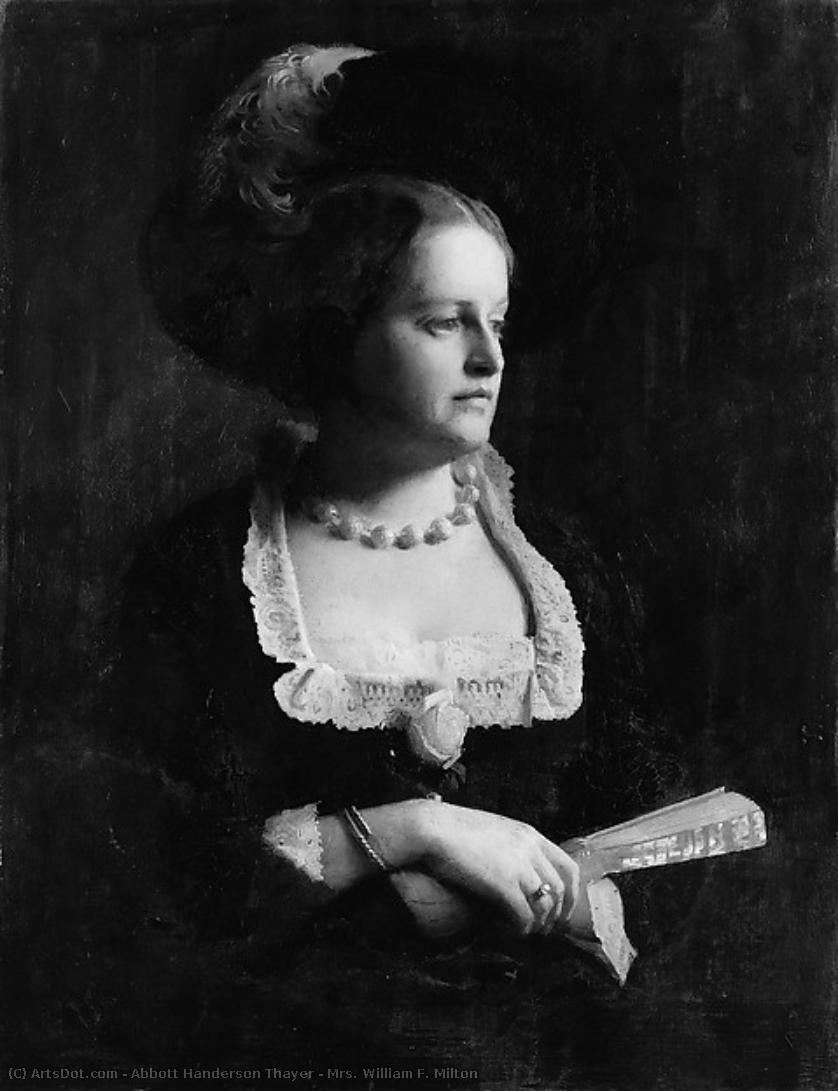
Abbott Handerson Thayer’s 1881 portrait of Mrs. William F. Milton stands as a testament to the artistic sensibilities of late Victorian England—specifically, the burgeoning movement known as Aestheticism. More than just a likeness, it's an exquisitely crafted visual meditation on beauty, dignity, and societal expectations, reflecting the influence of classical art and a desire for elevated craftsmanship.
Subject Matter & Context
The portrait depicts Mrs. William F. Milton, a woman of considerable social standing, dressed in attire characteristic of the era—a dark gown adorned with lace detailing, complemented by a pearl necklace and an elaborate hairstyle indicative of wealth and refinement. Created in 1881 by Abbott Handerson Thayer, this artwork embodies the Victorian fascination with idealized femininity and domestic tranquility – themes prevalent during the period’s artistic landscape. The portrait reflects the influence of classical art principles, prioritizing realism while subtly elevating it through masterful compositional choices.
## Subject Matter & Context
Mrs. William F. Milton stands as a quintessential representation of Victorian elegance and refinement. Abbott Handerson Thayer skillfully captures her likeness in 1881, presenting her against a stark black backdrop that amplifies the luminosity of her face and attire. The subject embodies the ideals of femininity and social status prevalent during the era—a woman adorned in lace, pearls, and an elaborate hairstyle—reflecting the wealth and sophistication of her milieu.
The artwork’s stylistic lineage traces back to academic portraiture of the late 19th century, inheriting its commitment to realism and meticulous attention to detail. Abbot Handerson Thayer's approach aligns with the broader artistic movement striving for classical influences while simultaneously embracing innovative techniques. He skillfully blended traditional conventions with Impressionistic sensibilities, resulting in a captivating visual experience that transcends time.
Mrs. William F. Milton: A Portrait of Dignity and Refinement
The artwork depicts Mrs. William F. Milton by Abbott Handerson Thayer, created in 1881. It’s an oil painting on canvas measuring 81 x 61 cm—a substantial piece reflecting the artistic ambitions of its era. The portrait captures a moment frozen in time, presenting a formal three-quarter view of Mrs. Milton against a backdrop of profound darkness. This deliberate choice of composition immediately establishes a sense of intimacy despite the formality inherent in Victorian portraiture.
## Overall Impression: An Elegance Defined by Shadow and Light
Abbott Handerson Thayer’s *Mrs. William F. Milton*, completed in 1881, is more than just a depiction of a woman; it's an embodiment of late Victorian artistic sensibilities—a masterful blend of realism and spiritual contemplation captured on canvas with meticulous detail. The stark contrast between luminous highlights and enveloping darkness immediately establishes a dramatic mood, inviting the viewer into a space where beauty resides alongside solemn reflection.
Subject Matter & Context
The artwork portrays Mrs. William F. Milton, a woman of considerable social standing during the Victorian era. Abbott Handerson Thayer’s portrait meticulously captures her likeness against a starkly contrasting dark background—a deliberate stylistic choice that elevates the subject's presence and underscores the formality of the occasion. Created in 1881, this piece exemplifies the prevalent artistic conventions of its time, reflecting the influence of academic painting and prioritizing realism alongside meticulous craftsmanship. The artwork’s provenance traces back to Boston, Massachusetts, where it was gifted by Mrs. William F. Milton to the Metropolitan Museum of Art.
## Subject Matter & Context
Mrs. William F. Milton is a portrait depicting a woman of considerable social standing during the late Victorian era—specifically created in 1881. Abbott Handerson Thayer skillfully captured her likeness, presenting her against a starkly contrasting dark background that emphasizes her presence and dignity. The artwork reflects the prevailing artistic sensibilities of its time, aligning with the academic tradition’s focus on realism and meticulous observation. It speaks to the broader cultural fascination with portraying individuals—particularly women—of social standing—a hallmark of Victorian portraiture.
Subject Matter & Context
“Mrs. William F. Milton,” painted in 1881 by Abbott Handerson Thayer, depicts Mrs. William F. Milton, a woman embodying the elegance and refinement characteristic of her era. The portrait captures her serene gaze and dignified posture against a backdrop that speaks to both formality and intimacy. Created during the height of American Impressionism, it reflects a fascination with capturing fleeting moments of beauty and emotion—a departure from traditional academic painting’s emphasis on idealized representations. Thayer's meticulous attention to detail—particularly in rendering textures like lace and jewelry—demonstrates his mastery of oil paint and chiaroscuro techniques. The artwork speaks volumes about the social status of Mrs. Milton, embodying Victorian ideals of femininity and refinement. Its subdued palette and dramatic lighting contribute to a mood of quiet dignity and contemplation. Consider adding a brief paragraph on why this particular painting resonates with viewers today.