A Window Into Victorian Bohemia: Adolph von Menzel’s Interior of a Room with Balcon
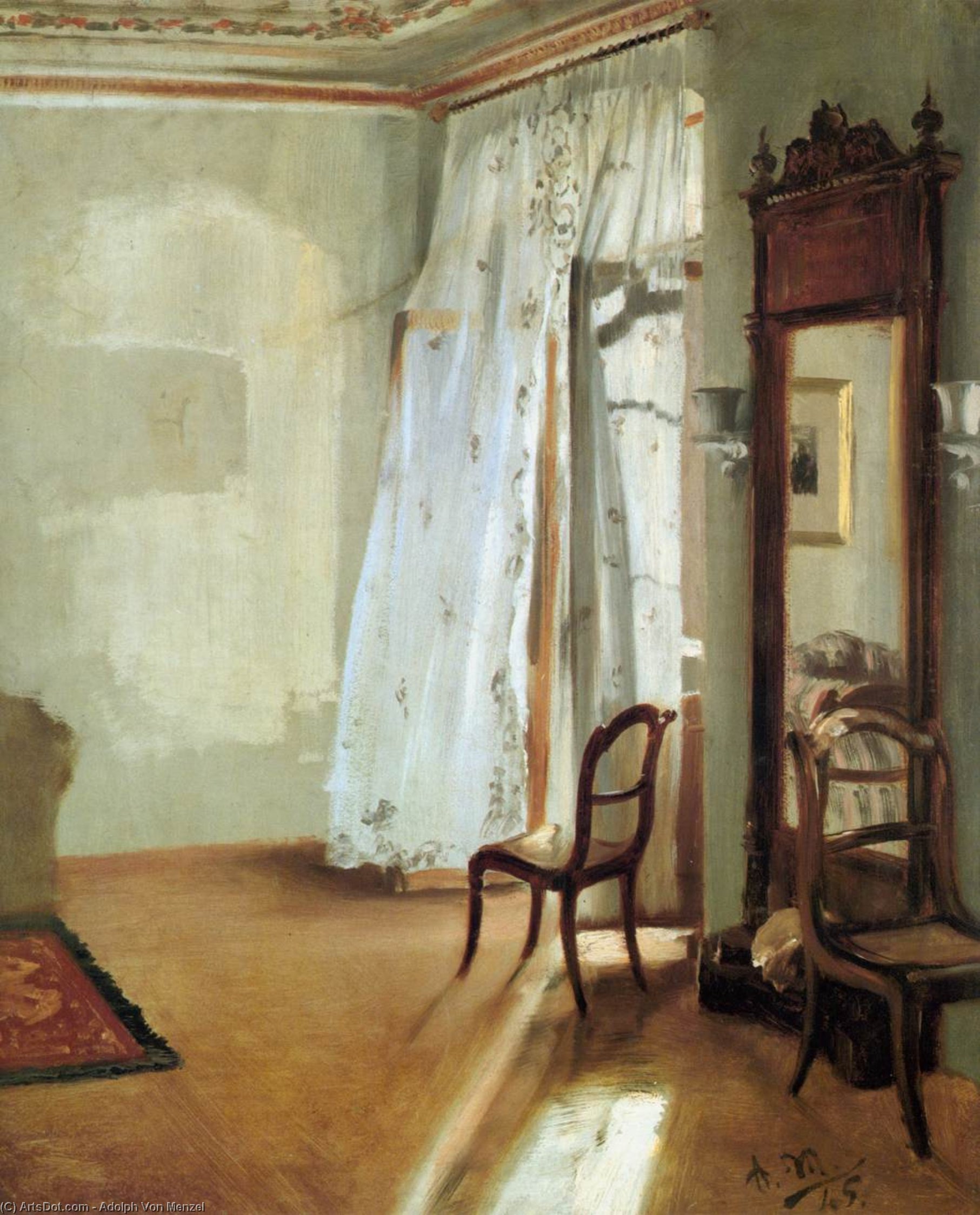
Adolph von Menzel's “Interior of a Room with Balcon,” completed in 1845, isn’t merely a depiction of domestic space; it’s a meticulously crafted snapshot of Victorian intellectual life—a scene brimming with subtle gestures and unspoken conversations that resonate across time.
The painting captures a moment within the bohemian circles of Düsseldorf, where Menzel sought to portray not idealized beauty but the gritty realities of human experience. Observe the carefully positioned chair near the center, its occupant absorbed in contemplation; the second chair on the right side hints at animated discussion. A couch dominates the left background, while a mirror strategically placed above reflects the tranquil expanse of the balcony outside—a deliberate juxtaposition designed to emphasize both inner reflection and connection with nature.
- Style: Menzel’s style is firmly rooted in German Realism, rejecting Romantic sentimentality for an unflinching gaze upon observable detail. He eschewed grand narratives in favor of capturing the nuances of everyday life, prioritizing accuracy over embellishment.
- Technique: Primarily executed in oil paint on canvas, Menzel employed a technique characterized by layering and blending—a masterful manipulation of pigment to achieve remarkable tonal gradations and textural richness. His meticulous draftsmanship is evident throughout, informing the composition and contributing to the painting’s palpable sense of presence.
Beyond its aesthetic merits, “Interior” carries significant symbolic weight. The balcony represents a yearning for freedom and escape from societal constraints—a common preoccupation within Victorian intellectual discourse. The dog symbolizes loyalty and companionship, grounding the scene in familiar domestic values. Furthermore, the solitary figure gazing out the window embodies the artist’s own introspective spirit, mirroring Menzel's dedication to portraying human psychology with profound sensitivity.
The painting evokes a feeling of quiet melancholy—a poignant reminder of fleeting moments and unspoken emotions. It invites viewers to linger upon its surface, absorbing the subtle interplay of light and shadow and appreciating the artist’s extraordinary ability to convey complex psychological states through visual imagery. “Interior of a Room with Balcon” remains an enduring testament to Menzel's artistic vision and his unwavering commitment to capturing the spirit of his era.
- Historical Context: Düsseldorf in 1845 was a hub for avant-garde artists and thinkers, fostering debates about art’s role in society. Menzel aimed to elevate Realism beyond mere imitation, asserting its capacity to illuminate the human condition.
A reproduction of “Interior” would bring this evocative scene into any home—capturing not just a visual likeness but also the intangible atmosphere of Victorian intellectual curiosity and artistic contemplation.